8 things that quietly happen to people who cannot accept a compliment about their home without immediately pointing out the crack in the ceiling or the carpet that needs replacing - because a child who grew up where the state of the house was a source of shame learned that the safest response to any praise was to beat the criticism to the punch, according to psychology
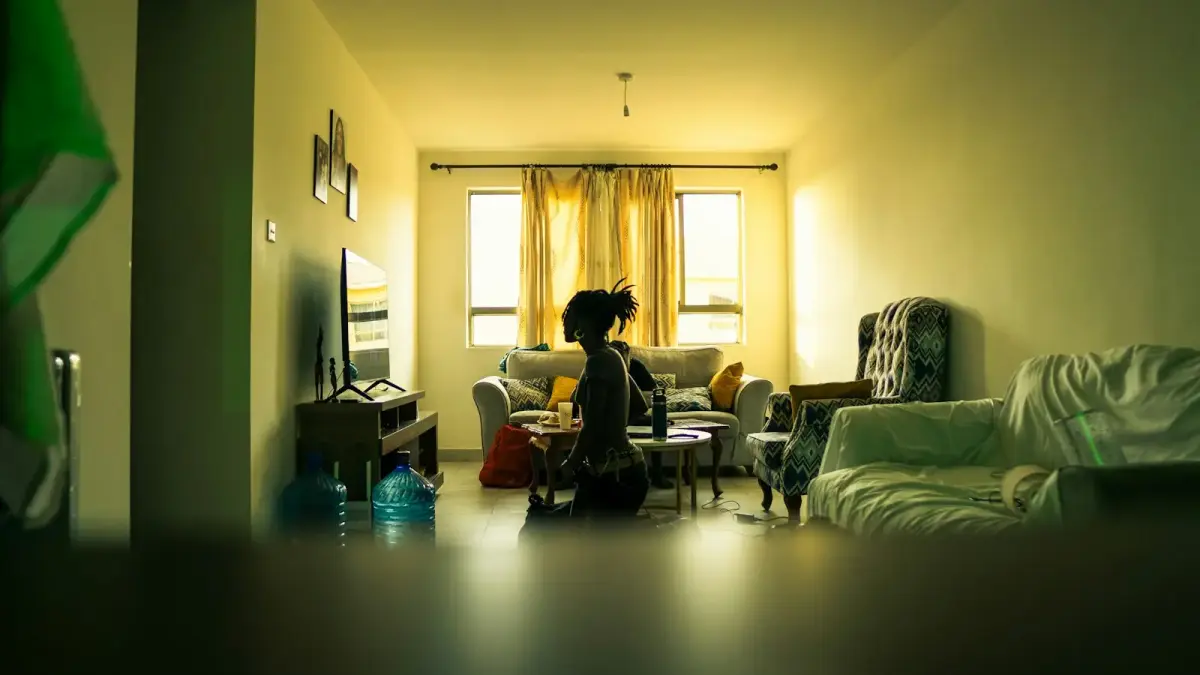
A friend told me my apartment looked cozy last week. Warm, she said. Inviting.
I watched my mouth open before I could stop it. “Oh, don’t look too closely at the baseboard near the kitchen, the paint is chipping. And I’ve been meaning to replace that curtain rod for about two years. The bathroom grout is a whole situation I won’t even get into.”
She just wanted to say something nice. And I turned it into a walking tour of everything that was wrong.
I knew exactly what I was doing. I’ve always known. I just couldn’t stop, because the part of me that does it is older than the part of me that understands why.
I grew up in a house where unexpected visitors sent a jolt of panic through the whole family. Not because we were doing anything wrong. Because the house was never quite good enough to be seen by outsiders. The carpet was stained. The wallpaper was peeling near the bathroom. There was a towel over the recliner to cover where the upholstery had split.
And I learned, before I had language for it, that the only safe way to let someone into your space was to announce its failures before they noticed them on their own. If you named the flaw first, nobody could use it against you.
That lesson followed me into every home I’ve ever lived in. And if you recognize it - if you’ve ever watched yourself apologize for your own living room while someone was trying to tell you it was lovely - then you already know what I’m about to describe.
1. You apologize for the mess when the house is clean
This is the first one because it’s the most universal, and the most revealing.
The house is not messy. You cleaned it before they arrived. You may have cleaned it twice. You may have gotten up early to vacuum the hallway and wipe down the counters and make sure there were no dishes visible in the sink.
And then the doorbell rings and the first thing out of your mouth is, “Sorry about the mess.”
A 2019 study published in the journal Self and Identity found that preemptive self-deprecation - apologizing for a perceived failure before it’s been noticed - is a common strategy among people who grew up in environments where external judgment felt constant and unpredictable. The researchers called it “anticipatory shame management.” The person isn’t responding to the current situation. They’re responding to a much older one.
You say “sorry about the mess” the way a soldier flinches at a car backfiring. The threat isn’t real anymore. But the reflex is.
2. You give a tour that is actually a pre-emptive apology
Someone walks into your house for the first time and you start guiding them through the rooms. But you’re not showing them the things you love. You’re cataloging the things you haven’t fixed yet.
“This is the kitchen - we’re going to redo the backsplash eventually. And the grout needs attention. The dining room is through here, ignore the ceiling, there was a leak last year and we haven’t gotten around to repainting.”
You call it a tour. It’s a confession.
You’re walking them through the evidence before they can draw their own conclusions. Because in the house you grew up in, someone always drew conclusions. About the state of the floors, the age of the furniture, the things your family couldn’t afford to replace.
And you learned that if you named it first - if you pointed to the flaw and acknowledged it with a little self-deprecating laugh - then it couldn’t be used as proof that you were less than. You had already entered it into the record yourself.
3. You never sit down when guests first arrive
This one is subtle, but if you watch for it, it’s unmistakable.
People come over. You let them in, take their coats, offer drinks. And then while they settle onto the sofa, you stay standing. You hover near the kitchen counter. You wipe something down. You adjust a pillow. You ask if anyone needs anything.
You might stay on your feet for the first twenty or thirty minutes of their visit. Not because you’re a particularly attentive host. Because sitting down means stopping, and stopping means the house is on display and you are just a person in it, and that level of exposure feels dangerous in a way you can’t explain.
Research on hypervigilance in developmental psychology has shown that children raised in unpredictable or judgment-heavy environments often carry a heightened need for environmental control into adulthood. Dr. Gabor Mate has written extensively about how the body stores these patterns - how the nervous system continues to manage threats that ended decades ago.
When you stay standing, you’re not hosting. You’re patrolling.
4. You cannot hear “I love your home” without flinching internally
Someone says your home is beautiful. Genuinely, warmly, with no agenda.
And something inside you tightens.
Not because you don’t want to hear it. Because you don’t believe it. Or worse - you believe they believe it, and that makes you anxious, because what if they look more closely and change their mind?
This is the core wound. The compliment doesn’t register as kindness. It registers as the opening move in a process that will eventually end in judgment. Praise is just the first half of a sentence that hasn’t finished yet.
A child who grew up in a home that was a source of shame learned that compliments about the house were either rare or insincere. When an aunt said “the place looks nice,” it sometimes meant “the place looks nicer than usual, which means it usually doesn’t.” When a teacher came for a home visit, the whole family scrambled to make things presentable, which taught you that the house in its natural state was something to hide.
So now when someone says your home is lovely, you hear the unspoken second clause. And you rush to fill it in yourself, before they can.
5. You clean before the cleaner comes
If you’ve ever hired someone to clean your house and then spent the morning before they arrived making sure it wasn’t too dirty, you understand this particular breed of shame.
You’re not confused about why you hired them. You know their job is to clean. You just cannot bear the thought of someone seeing the unmanaged version of where you live.
Because the unmanaged version is the real version. And the real version is the one that was never good enough. The real version is the stained carpet, the broken drawer, the bathroom with the lock that didn’t work. The real version is what you were taught to hide.
So you clean before they come. You apologize for the state of things when they arrive. You hover while they work, pointing out areas that need attention while simultaneously assuring them it’s not usually this bad.
You are managing their perception the way you learned to manage everyone’s perception - by controlling the narrative before they can form their own.
6. You can never just say “thank you”
Someone compliments the throw pillows. You say, “Oh, those are old, I got them on clearance.” Someone says the kitchen smells amazing. You say, “The oven is on its last legs, honestly.”
Every compliment is met with a qualifier. A redirect. A small but deliberate act of sabotage that ensures no one leaves your house thinking it was better than it is.
A 2021 study in the Journal of Research in Personality examined what researchers called “compliment deflection patterns” and found a significant correlation between habitual deflection and childhood environments where praise was scarce, conditional, or followed by criticism. The participants who deflected most aggressively also scored highest on measures of shame-proneness.
This isn’t modesty. Modesty is “oh, it’s nothing special.” This is something sharper than that. This is “let me make sure you know it’s flawed before you leave here thinking I have something worth admiring.”
Because admiration is exposure. And exposure, for a child who grew up in a house that was never quite right, was never safe.
7. You compare your home to other people’s homes and always lose
You go to a friend’s house and notice the hardwood floors, the built-in shelves, the kitchen island with the waterfall edge. And something in your chest sinks.
Not envy, exactly. Something older than envy. A quiet confirmation of a belief you’ve carried since childhood - that other people’s houses are real homes and yours is something you’re still getting away with.
You drive home and walk through your own front door and suddenly the things that were fine an hour ago - the couch, the rug, the light fixture you chose and installed yourself - all look lesser. They look like what someone who doesn’t have enough settles for.
This is the internalized gaze. You’re not seeing your home through your own eyes. You’re seeing it through the eyes of whoever made you feel, as a child, that the house you lived in was a reflection of your family’s inadequacy.
Susan Cain, in her work on quiet temperaments and inner experience, has described how early environments shape the lens through which we evaluate ourselves for decades afterward. The house you grew up in didn’t just house you. It became the standard against which you measure every home you’ll ever live in - and you will always find your own lacking.
8. You feel most at peace in your home when no one else is there
This is the one that catches in your throat a little, because it sounds like introversion but it’s not. It’s not that you prefer being alone. It’s that you can only relax in your house when there’s no one around to see it.
When you’re alone, the stain on the carpet is just a stain. The crack in the ceiling is just a crack. The mismatched furniture is just your furniture, and it’s fine, and you don’t have to explain it or apologize for it or pre-emptively list its shortcomings.
But the moment someone else walks through the door, the house becomes a test again. Every surface becomes something that could be judged. Every corner becomes something you should have gotten to. And you - the person standing in the middle of it - become a child again, bracing for someone to notice what’s wrong.
You love your home the way a person loves something they’ve been taught to be ashamed of. Fully and privately and with the door locked.
Here is what I want you to know, if you’ve read this far and recognized yourself in more of these than feels comfortable.
You are not fussy. You are not ungrateful. You are not incapable of accepting kindness.
You are a person whose nervous system learned, very early, that your home was not neutral territory. It was evidence. It was a report card that visitors could read. It was a thing that could confirm or deny your family’s worth, and by extension, yours.
And so you developed a strategy that worked. You learned to name the flaw before anyone else could. You learned to apologize before anyone asked. You learned to keep moving, keep cleaning, keep qualifying, keep deflecting - because stillness meant visibility, and visibility meant judgment.
That strategy kept you safe when you were small. It cost you something, though. It cost you the ability to stand in your own living room while someone you love says “this place is wonderful” and simply believe them.
You can learn that. It’s not a switch you flip. It’s a practice. It starts with noticing the impulse - the urge to point to the crack in the ceiling the moment someone says something warm - and letting it pass without acting on it.
Just once. Just to see what happens when you let the compliment land.
Nothing bad will happen. The ceiling will still be cracked. The carpet will still need replacing. And you will still be standing in a home that is yours - imperfect and lived-in and more than good enough.
It always was.