Children who always knew the price of everything in the grocery cart - who added up the total in their head as their mother shopped, who put things back on the shelf before anyone asked them to - often become adults who cannot enjoy a meal at a restaurant without calculating the bill, because a child who learned that money was a source of household tension became an adult whose nervous system still monitors every purchase for danger
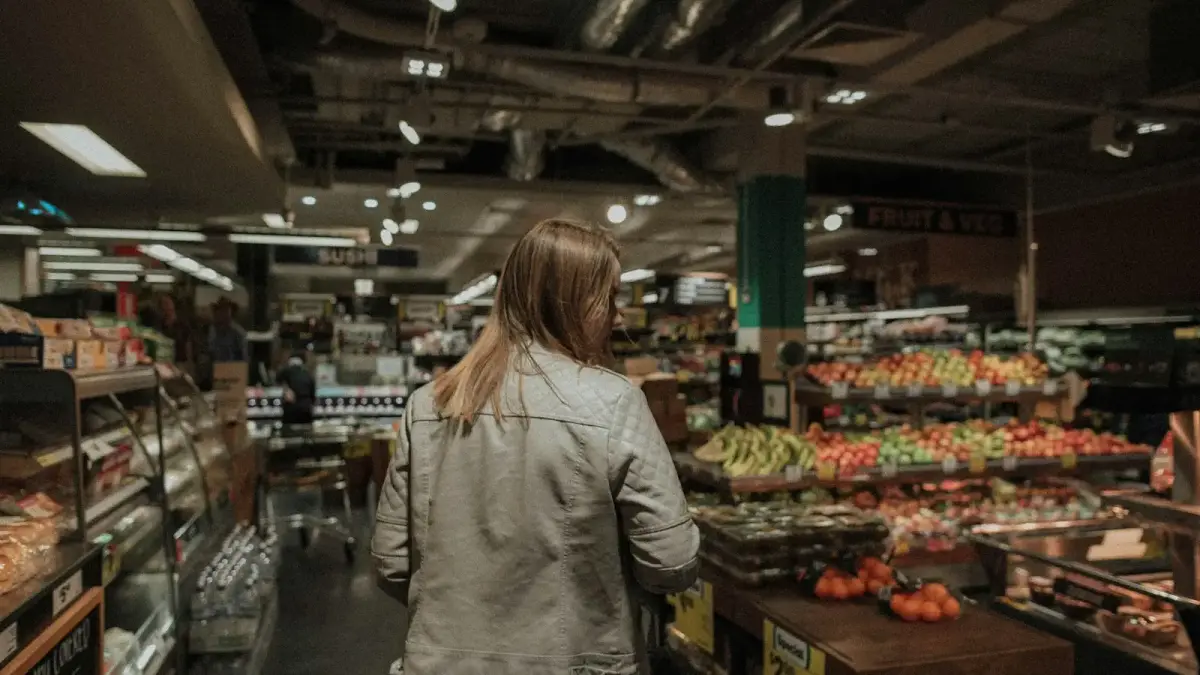
I was nine years old the first time I put something back on the shelf.
It was a box of strawberry Pop-Tarts. Not the off-brand ones we usually got - the real ones, in the silver foil packaging that crinkled in a way that sounded like Saturday mornings were supposed to sound. I’d already placed them in the cart. I’d already imagined tearing the wrapper open. And then I saw my mother pause in front of the milk, pick up the gallon, check the price, and set it down to reach for the half-gallon instead.
She didn’t say a word. She didn’t have to.
I walked back to the cereal aisle and returned the Pop-Tarts to the shelf. I did it quietly, the way you learn to do everything quietly when money is the thing that makes the house go tense. When I came back, she hadn’t noticed they were gone. That was the point. The whole operation was designed to be invisible.
I was not doing math in that grocery store. I was doing surveillance.
The grocery store was never just a grocery store
For children who grow up in financially strained households, the weekly trip to the store is not an errand. It is a diagnostic test.
You learn to read the situation before anyone speaks. You watch which aisle your parent skips entirely. You notice when they pick up an item, look at the price, and put it back with a small exhale that carries the weight of something they’ll never say out loud.
And you start calculating. Not because anyone taught you to - because your nervous system figured out that if you could predict the total, you could predict the mood in the car on the way home.
A 2019 study published in the journal Developmental Psychology found that children in financially stressed households demonstrate significantly heightened attentional vigilance to economic cues - price tags, sale signs, parental facial expressions during transactions - compared to peers in financially stable homes. The researchers called it “economic threat monitoring.” The children called it Tuesday.
This is not about being good at math. This is about a child who built an early warning system out of unit prices and mental arithmetic, because the alternative was being caught off guard by a tension they couldn’t name and couldn’t fix.
You were not frugal - you were a child on patrol
There’s a difference between learning the value of money and learning that money is dangerous.
Frugality is a choice. It comes with a sense of agency - you decide to save, to wait, to spend intentionally. What happens to children who track grocery prices in their heads is something else entirely. It’s not a decision. It’s a reflex.
You didn’t choose to add up the cart total. You couldn’t stop.
You knew the price of bread, the price of eggs, the price of the generic cereal versus the name brand. You knew which items your parent would hesitate over and which ones they’d grab without looking. You knew, with a precision that no child should have needed, exactly when the total was getting close to the number that would make the checkout feel like holding your breath underwater.
And here’s what nobody tells you about that: you were performing an extraordinary act of emotional labor. You were a small person with no income, no power, and no ability to change the financial situation - and you found the one thing you could do. You could monitor. You could calculate. You could quietly put things back.
Dr. Gabor Mate has written extensively about how children in stressful environments develop hypervigilance not as a disorder but as an adaptation - a brilliant, exhausting, completely logical response to an environment where safety felt conditional. The child who tracks grocery prices is doing exactly this. They’ve identified the variable that predicts household peace, and they’re watching it the way a weather forecaster watches a pressure system.
The nervous system remembers what the mind forgets
You grow up. You get a stable job. You have money in your checking account - maybe more than your parents ever had. You can afford the name-brand cereal now. You can afford the restaurant.
And yet.
You sit down at a table with friends, open the menu, and the first thing you look at is the right-hand column. The prices. Before the descriptions, before the specials, before you even consider what you might want to eat - you scan for the numbers.
You order something in the middle of the price range. Not too cheap, because you don’t want anyone to notice. Not too expensive, because something in your chest tightens at the thought. When the bill comes, you’ve already calculated your share to the cent, including tax and tip, before anyone reaches for their phone.
This is not stinginess. This is a nervous system that learned, decades ago, that unmonitored spending is a precursor to household instability. And nervous systems don’t update their threat assessments just because your tax bracket changed.
A 2021 study in Psychological Science found that adults who experienced financial instability in childhood showed heightened amygdala activation when processing economic decisions, even when their current financial situation was secure. The researchers described it as a “poverty imprint” - the neural pathways carved by early financial stress that continue to fire long after the original threat has passed.
Your body is still in that grocery store. Your body is still adding things up.
The guilt of spending on yourself
There’s a particular kind of guilt that belongs to people who grew up watching money cause pain.
It shows up when you buy yourself something nice. Not something extravagant - just something that isn’t strictly necessary. A candle. A book you could have gotten from the library. A slightly better cut of meat.
You buy it, and then you feel a low hum of unease. Not buyer’s remorse exactly - something deeper. Something that whispers you don’t get to have this. Something that says every dollar spent on pleasure is a dollar stolen from safety.
I know this feeling intimately. I have a career. I have savings. And I still cannot buy a cup of coffee without a small internal negotiation about whether I deserve it. Not whether I can afford it. Whether I deserve it. Those are two entirely different calculations, and only one of them has anything to do with money.
The other one has to do with a nine-year-old girl putting Pop-Tarts back on a shelf and feeling, for one brief moment, like she had done something useful. Like she had protected someone. Like her smallness had mattered.
When spending feels dangerous, it’s not because you’re bad with money. It’s because a part of you still believes that your job is to keep the total low enough that nobody gets upset.
What you built was extraordinary
I want to be careful here, because I’m not interested in telling you that your anxiety is a gift. Anxiety is not a gift. It’s exhausting. It costs you meals you could have enjoyed, purchases you could have made without guilt, and an ease around money that other people seem to carry without effort.
But I do want you to see what you actually did as a child.
You built a financial monitoring system before you could drive. You developed the ability to read emotional states through economic behavior. You learned to predict household tension by tracking variables that most adults don’t consciously notice. You became fluent in a language of prices and tensions and silent sacrifices that made you, in a very real way, one of the most emotionally intelligent people in the room.
A 2020 study in the Journal of Personality and Social Psychology found that individuals who grew up in resource-scarce environments demonstrated superior attention to social-contextual cues and more accurate predictions of others’ emotional states. The researchers framed it as a cognitive advantage born from necessity - the same attentional systems that tracked prices also tracked people.
You were never just counting groceries. You were reading the room. And you got very, very good at it.
The price of the price-checking
The cost of this adaptation, though, is real.
It shows up in relationships. You might struggle to let a partner pay for dinner because receiving generosity feels like accruing a debt. You might keep a mental ledger of who paid for what, not because you’re petty but because unbalanced accounts feel unsafe in your body.
It shows up in parenting. You might overcompensate - buying your children everything they want, trying to give them the ease you never had, and then feeling a sickening guilt because spending freely triggers the old alarm.
It shows up in your relationship with rest. You might struggle to take a vacation, not because of the money but because pleasure without productivity feels like the kind of indulgence that destabilizes things.
And it shows up at the grocery store. Still. Even now. You might catch yourself reaching for the generic brand out of habit, not preference. You might still add things up in your head. You might still feel a quiet relief when the total is lower than expected - a relief that has nothing to do with your bank balance and everything to do with a child who learned that low totals meant safe car rides home.
You are allowed to put things in the cart now
If you recognize yourself in this - if you were the child who knew the price of milk before you knew your multiplication tables - I want you to know something.
You are not cheap. You are not anxious in some fundamental, broken way. You are a person whose nervous system was shaped by real circumstances, and it did exactly what it was supposed to do. It kept you alert. It kept you useful. It kept you safe, in the only way a child with no power could be safe.
But you are not in that grocery store anymore.
You are allowed to order what you actually want. You are allowed to stop calculating before the bill arrives. You are allowed to buy the name-brand cereal, the good coffee, the thing that is not strictly necessary but brings you a small, uncomplicated joy.
Not because the money doesn’t matter. But because you matter. And the child who spent years putting things back on the shelf - quietly, invisibly, without anyone ever knowing - that child deserves to finally put something in the cart and keep it there.