Children who always noticed when something in their room had been moved - who could tell when a book on the shelf had been pulled out and replaced slightly crooked, who felt a physical unease when a drawer had been opened in their absence, who knew the precise position of every object on their desk the way a sentry knows the perimeter - often become adults who scan every room for what has changed before they can settle into it, because a child whose only sanctuary was a space arranged exactly as she left it learned that noticing was the first and last line of defense against a world that could rearrange itself without asking her permission
I was eleven when I came home from school and knew, before I’d fully opened my bedroom door, that someone had been in my room.
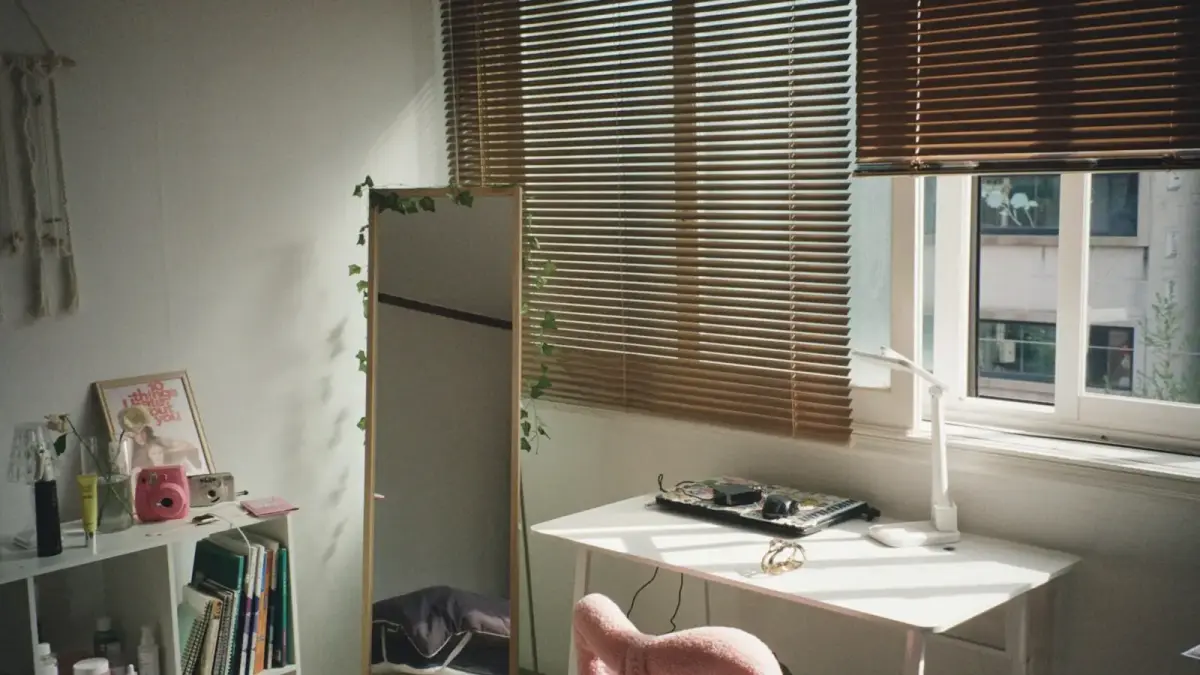
Nothing was wrong, exactly. My mother had put away laundry - folded it neatly, even. But the stack of books on my nightstand had been moved an inch to the left to make room for the clothes. The pen I kept parallel to the edge of my desk was now diagonal. My closet door, which I always left open at exactly the same angle, had been pushed wider.
I stood there in the doorway with my backpack still on, scanning, cataloguing every displacement like a detective arriving at a scene. My chest felt tight. Not angry, not anxious - just unsettled in a way I couldn’t name.
I didn’t say anything to my mother. What would I say? “You moved my pen”? Even at eleven, I knew that would sound absurd.
So I quietly put everything back. Book stack shifted right. Pen rotated to parallel. Closet door pulled to its correct angle. And only then - only when the room matched the map I carried in my head - could I sit down and breathe.
If you recognize this, I want you to know something. You were not being difficult. You were not being controlling. You were doing the only thing a quiet child knows how to do when the world feels like too much - you were governing the one square of territory that was yours.
What spatial vigilance actually is
Before we go further, I want to be clear about something. This is not about obsessive tendencies or clinical anxiety. This is about something much more ordinary and much more interesting.
A 2019 study published in the Journal of Research in Personality found that introverted individuals demonstrate heightened environmental monitoring - they process more sensory details from their surroundings and are more attuned to changes in familiar spaces. The researchers connected this to the introvert’s deeper cortical arousal, which means the brain is already doing more processing with less stimulation.
In other words, noticing the moved book wasn’t a quirk. It was your nervous system doing exactly what it was built to do - paying exquisite attention to the one environment you had complete authority over.
Here are the ways that childhood spatial vigilance follows us into adulthood - not as a disorder, but as a deeply rooted form of self-governance.
1. The crooked book on the shelf becomes the shifted stack of papers at work
You were the child who could glance at a bookshelf and know that someone had pulled out a title and slid it back in slightly wrong. The spine didn’t line up. The gap was off by a centimeter. It nagged at you the way a crooked picture frame nags at some people - except it wasn’t about aesthetics. It was about evidence. Someone had been there. Someone had touched your things without telling you.
As an adult, you walk into your office on Monday morning and immediately notice that the stack of papers on your desk has been nudged sideways. The mug you left handle-facing-right is now handle-facing-left. Someone sat in your chair over the weekend - you can tell because the height has been adjusted down half an inch.
You don’t mention it. You just quietly fix everything before you open your laptop.
2. The precisely arranged desk becomes the pre-work ritual you can’t skip
Your childhood desk was a map of your inner world. The pencils went here. The notebook went there. Everything had a position, and the position meant something - not because you were fastidious, but because that desk was the cockpit of your private life.
Now you’re an adult, and you cannot start working until your workspace is arranged. Coffee on the left. Phone face-down on the right. Notebook open to a blank page at a specific angle. People see this and call it routine. What it actually is, according to environmental psychology research by Sally Augustin, is territorial establishment - the act of claiming a space as yours before you can feel safe enough to think inside it.
You’re not being rigid. You’re building the walls of your concentration.
3. The drawer opened in your absence becomes the physical unease of someone going through your bag
You remember the feeling exactly. You’d open your desk drawer or your dresser and something would be fractionally different. The socks were folded but not the way you fold them. The ruler was on top of the scissors instead of underneath.
The sensation wasn’t anger. It was exposure. As if someone had read a page of your diary without knowing it was a diary.
That same feeling arrives now when someone reaches into your bag to grab a pen. When a colleague opens your desk drawer looking for a stapler. When a family member reorganizes your kitchen “to help.” The discomfort isn’t about the objects. It’s about the breach - the reminder that your space is not entirely yours, that someone else’s hands have been where only your hands were supposed to go.
4. The closed bedroom door becomes the adult need for a physical threshold
You kept your bedroom door closed. Not because you were hiding anything - you were eleven, there was nothing to hide - but because a closed door meant the space behind it was sealed. Yours. Uncontaminated by the noise and movement of the rest of the house.
A 2021 study in Frontiers in Psychology found that introverts show measurably lower stress responses when they have access to enclosed, controllable spaces. The door isn’t a barrier against people. It’s a signal to your nervous system that the perimeter is secure.
This is why, as an adult, you struggle in open offices. Why you close the bathroom door even when you’re home alone. Why you feel a subtle but real relief when you shut your car door after a long day - that click of enclosure, that momentary seal between you and the world. You are not antisocial. You are an animal who knows that safety starts at the threshold.
5. Knowing someone had been in your room becomes reading every room before entering it
You didn’t just notice changes in your own room. You walked into any room and immediately clocked the layout. Where the exits were. How the furniture was arranged. Whether the energy felt settled or recently disturbed.
As an adult, you do this everywhere. You walk into a restaurant and scan before sitting. You enter a meeting room and note who is where, which seats are taken, where the empty chair is that will give you a wall at your back. You step into a friend’s house and can tell within seconds if the atmosphere is off - if there’s been an argument, if someone is tense, if the room carries the residue of something unspoken.
People call this intuition. It’s not. It’s pattern recognition trained in a childhood bedroom, applied to every space you enter for the rest of your life.
6. The bed made a specific way becomes the hotel room sweep
You made your bed the same way every morning. Not because anyone told you to, but because a made bed - your way - meant the room was reset. Ready. Undisturbed. The pillows had positions. The blanket had a correct fold. You could glance at your bed from the doorway and know whether anyone had sat on it while you were gone.
Now you check into hotel rooms and do something your travel companions find baffling. You survey. You open drawers, check the closet, move the curtain, adjust the thermostat, reposition the chair. You’re not looking for anything. You’re mapping. You’re converting a stranger’s space into a temporary version of your own by learning where everything is so that you’ll notice if it changes.
Susan Cain described this kind of behavior in Quiet as part of the introvert’s deep processing - the tendency to observe and internalize environments rather than simply passing through them. You don’t just enter rooms. You memorize them.
7. The carefully arranged shelf becomes the resistance to “helpful” reorganization
Perhaps the most loaded moment of your childhood was when a well-meaning parent cleaned your room. Reorganized your bookshelf by size instead of the secret system you’d designed. Rearranged your desk because it looked messy to them but was perfectly organized to you.
The frustration you felt wasn’t bratty. It was existential. Someone had overwritten your map. The internal coordinates you used to navigate your private world had been scrambled by a person who didn’t even know the map existed.
As an adult, you feel this same dislocation when a partner rearranges the kitchen cabinets. When a new manager restructures your workflow. When someone moves your files into a different folder “for efficiency.” The objects aren’t the point. The sovereignty is. What you’re protecting is not a coffee mug or a filing system. It’s the knowledge that your space reflects your mind, and when someone rearranges the space, they’re - without knowing it - suggesting that your mind needs rearranging too.
8. The silent inventory becomes the reason you need fifteen minutes alone when you get home
Every evening when you came home from school, you needed a few minutes in your room before you could join the family. Not to rest - to verify. To walk your little perimeter and confirm that everything was where you left it. That the world hadn’t shifted while you were gone.
You still do this. You come home from work and you need a buffer. Not because the day was terrible, but because you need to transition from someone else’s space back to your own. You check the kitchen, glance at the living room, maybe straighten a pillow. Your partner thinks you’re tidying. You’re actually resetting your spatial coordinates - re-establishing yourself as the primary consciousness in the room.
Daniel Goleman’s work on emotional self-regulation supports this. The decompression ritual isn’t avoidance. It’s the introvert’s way of reclaiming cognitive territory after hours of sharing it.
You were never being difficult
I think about that eleven-year-old standing in her doorway, scanning her room with the quiet intensity of someone who has been gently invaded.
She wasn’t controlling. She wasn’t rigid. She was doing something remarkably sophisticated - she was maintaining an internal map of the only world she had authority over, and she was defending it with the only tool available to a child who couldn’t lock her door, couldn’t set boundaries with words, couldn’t say “please don’t touch my things” without being told she was overreacting.
So she noticed instead. She tracked. She memorized. She arranged and rearranged until the room matched the picture in her head, and only then did the tightness in her chest release.
If you still do this - if you still scan rooms, straighten objects, need a few minutes to settle into a space before you can think inside it - I want you to sit with this for a moment.
That habit is not a flaw. It is the adult echo of a child who figured out, long before anyone taught her the word “introvert,” that paying attention to her environment was the quietest and most effective way of taking care of herself.
Your noticing is not neurotic. It is the opposite. It is a child’s first act of self-governance, still running in the background, still keeping you safe, still doing exactly what it was designed to do.