Children who always stayed through the entire credits of every movie - who could not leave the theater while names were still scrolling, who needed to see the lights come up before they believed the story was truly finished - often become adults who cannot leave anything unresolved, because a child who learned that endings arrive without warning never stopped making sure the story was actually over
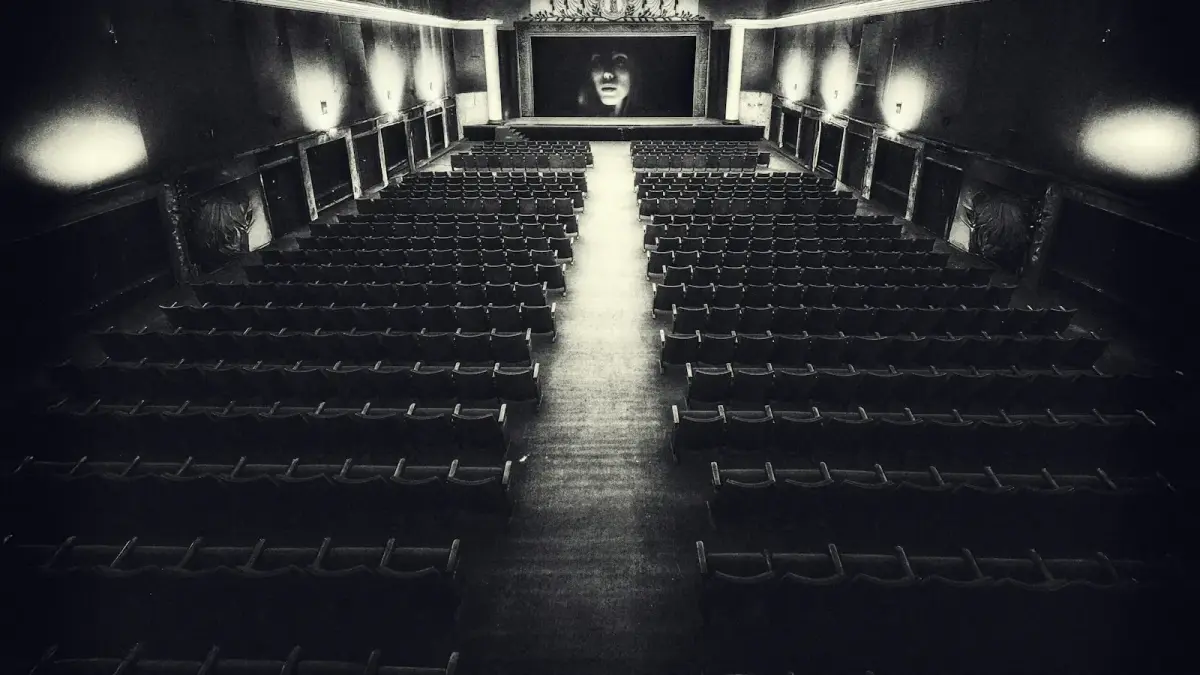
I remember sitting in a darkened theater at nine years old, my mother already standing, her coat already on, her purse already over her shoulder. The credits were rolling. Names I would never recognize were sliding up the screen in small white letters against black.
She said, “Come on, it’s over.”
But I could not move. Something in me needed to watch every name pass. Every grip, every caterer, every “additional photography by.” Not because I cared about their contributions - I was nine, I did not know what a gaffer was. But because the movie was still technically happening. The screen was still lit. The music was still playing. And I had learned, in ways I could not yet articulate, that things that seem finished are not always finished. That a door closing does not always mean the person is gone for good. That a calm evening does not guarantee a calm night.
Staying until the lights came up was my proof. My receipt. My evidence that this particular story had reached its actual end and nothing more was coming.
I did not know then that I was rehearsing something I would do for the rest of my life.
A 2019 study published in the Journal of Personality and Social Psychology found that individuals with high “need for closure” - a term psychologist Arie Kruglanski coined in the early 1990s - often developed this trait not from personality alone, but from early environments where resolution was unpredictable. When a child cannot trust that an ending is final, she builds her own systems for confirming it. The movie credits were one of mine.
If you were that child, here is what it probably looks like now.
1. You cannot hang up the phone without one last confirmation
The conversation is done. You have said goodbye. The other person has said goodbye. But your thumb hovers over the red button because you need to hear it one more time - “Okay, so we’re good?” or “Alright, talk soon” - some final syllable that seals the interaction shut.
You are not being clingy. You are performing the same ritual you performed in the theater. You are waiting for the lights to come up.
People who grew up in homes where a phone call could end in silence, where a parent could hang up mid-sentence or where the tone of “goodbye” carried information about whether you were still loved - those people learn to listen past the ending. They need the extra beat. The confirmation after the confirmation.
It is not insecurity. It is a child’s logic, still running: if I stay long enough, I will know for certain that it is over and that “over” does not mean something terrible.
2. You reread the last paragraph of every email before you close it
Not the whole email. Just the last few lines. You scroll back down after you have already finished reading, already absorbed the information, already decided how to respond. You go back to the ending.
You are checking if the tone shifted. If there was something you missed. If the final sentence carried a weight you did not catch the first time.
This is the credits again. You are sitting in the dark, watching the names scroll, making sure nothing changes between the last line and the moment the screen goes black. A 2021 study in Frontiers in Psychology found that people who experienced unpredictable emotional environments in childhood showed heightened attention to the final moments of social exchanges - the closing lines of conversations, the last expression on someone’s face before they turned away. The researchers called it “terminal vigilance.”
You are not overthinking. You are completing a scan that started when you were seven years old.
3. You circle back to conversations hours later to make sure they ended well
You had a perfectly normal exchange with a friend at lunch. It was warm, easy, full of laughter. You drove home feeling fine.
And then, somewhere around four in the afternoon, you texted: “Hey, was everything okay earlier? You seemed a little off at the end.”
They were not off. You know they were not off. But the conversation ended without a clear closing ceremony - no hug, no explicit “this was great,” no final note that tied the interaction into a bow. It just… stopped. Someone’s phone rang. Someone had to leave. The ending was functional, not emotional.
And for you, a functional ending is not an ending. It is an ellipsis. And an ellipsis is a threat.
You are not being needy. You are a person whose early endings were unmarked - who learned that the space between “everything is fine” and “everything has fallen apart” can be crossed without any warning. You go back to check because the child in you learned that unchecked endings are where the danger lives.
4. You cannot leave a restaurant until you are absolutely certain the bill is settled
Not just paid. Settled. You need to see the receipt. You need to calculate the tip a second time. You need to watch the server take the folder away and confirm with a nod or a “you’re all set.” You might even linger at the table for a moment after everyone else has stood up, scanning for any sign that something was missed.
This is not about money. This is about completion.
Psychologist Daniel Goleman wrote about how emotional learning in childhood creates templates that we overlay onto unrelated situations for the rest of our lives. The restaurant bill has nothing to do with your father leaving or your mother’s mood swings. But the feeling is the same - the need to verify that the transaction is truly closed, that nothing will come back to haunt you, that you will not get a call later saying there was a problem.
You are not anxious about dining. You are anxious about things that pretend to be over.
5. You proofread texts after you have already sent them
Not before. After. You open the thread, scroll to your message, and read it again. You are looking for the sentence that might have landed wrong. The joke that might have been misread. The period that might have felt cold.
The message is sent. It is, by every definition, finished. But you cannot stop auditing it because the version of you that sat in that dark theater knows that “sent” does not mean “safe.” An ending is only an ending if nothing bad follows it.
A 2023 study in Psychological Science found that people with anxious attachment styles spent significantly more time reviewing their own sent messages than secure individuals - not to catch typos, but to reassess emotional tone. The researchers noted that this behavior spiked in participants who reported childhood environments where communication had unpredictable consequences.
You are not obsessive. You are watching the credits. You are making sure the story ended the way you thought it did.
6. You cannot fall asleep after a disagreement without resolving it first
It does not matter if it is midnight. It does not matter if the other person has said, “Can we talk about this tomorrow?” It does not matter if you are exhausted and the argument was small - a misunderstanding about whose turn it was to call the plumber, a tone that came out sharper than intended.
You cannot close your eyes on an open loop.
Because sleep is an ending. And you learned, as a child, that endings without resolution are dangerous. That going to bed angry meant waking up to a different version of the person you fell asleep beside. That the story could change while you were unconscious, and you would have no way to witness it, no way to stay through the credits, no way to confirm that the lights came up and the theater was safe.
Susan Cain has written beautifully about how the interior lives of quiet, watchful children often go unrecognized by the adults around them. The child who could not sleep until every voice in the house was calm was not sensitive in the fragile sense. She was doing surveillance. She was the last one watching.
7. You feel a strange grief when a book or show ends, even if the ending was good
Not because it was sad. Because it is over. And “over” does not feel neutral to you. It feels like a small loss. A small absence. A small reminder that things end whether you are ready or not.
You might reread the last chapter. You might sit with the closed book in your lap for a minute. You might scroll through reviews afterward, looking for other people’s reactions, trying to extend the experience just a little longer - not because you are avoiding reality, but because the transition from “inside a story” to “the story is done” requires a buffer. A decompression chamber. A gentle proof that the ending was real and complete and will not be revised when you are not looking.
Adam Grant has described how certain minds process transitions more slowly - not because they are less capable, but because they are encoding more information at each threshold. Your brain does not skim endings. It studies them. It catalogs them. It holds them up to the light and checks for cracks.
That is not a flaw. That is thoroughness born from a childhood where the cracks were real.
8. You always say “let me know you got home safe” - and you mean it literally
This is not a pleasantry for you. When you say it, you are issuing a quiet request: confirm the ending. Tell me the story had a safe conclusion. Let me know that the last scene played out the way it was supposed to.
You wait for the text. If it does not come within a reasonable window, you feel a small tightness in your chest. Not panic - just the old familiar hum of an unfinished thing. An ending you could not witness. Credits still rolling in an empty theater you can no longer see.
Gabor Mate has written about how early attachment disruptions create what he calls “the wound of the unlanded goodbye” - the child who watched someone leave and did not know if they would come back. That child grows up to build arrival confirmations into every departure. Not because she expects tragedy. But because she learned, long before she had words for it, that the space between someone leaving and someone confirming they arrived is not empty. It is full of every unresolved ending she has ever lived through.
You are not broken for needing to see things through to their final frame. You are not too much for circling back, for double-checking, for lingering at the threshold between “happening” and “done.”
You are a person who learned early that endings are not always announced. That the music can stop without warning. That a story can change after you have left the room.
So you stay. You watch. You wait for the lights.
And the truth that no one told you when you were small, sitting in that darkening theater with your coat still folded on your lap, is that your vigil was never about the movie.
It was about making sure the world would still be there when the screen went black.
It always was. And it still is. You can stand up now.