Children who gave names to everything they owned - the bicycle was Margaret, the stuffed bear was Oliver, the tree in the backyard had a name the neighbors never knew, and even the loose floorboard in the bedroom was someone - often become adults who talk to their plants, apologize to furniture they bump into, and grieve old cars they know they should have replaced years ago, because a child who needed companions and could not find them in the people around them learned to build personhood out of anything that would hold still long enough to receive a name
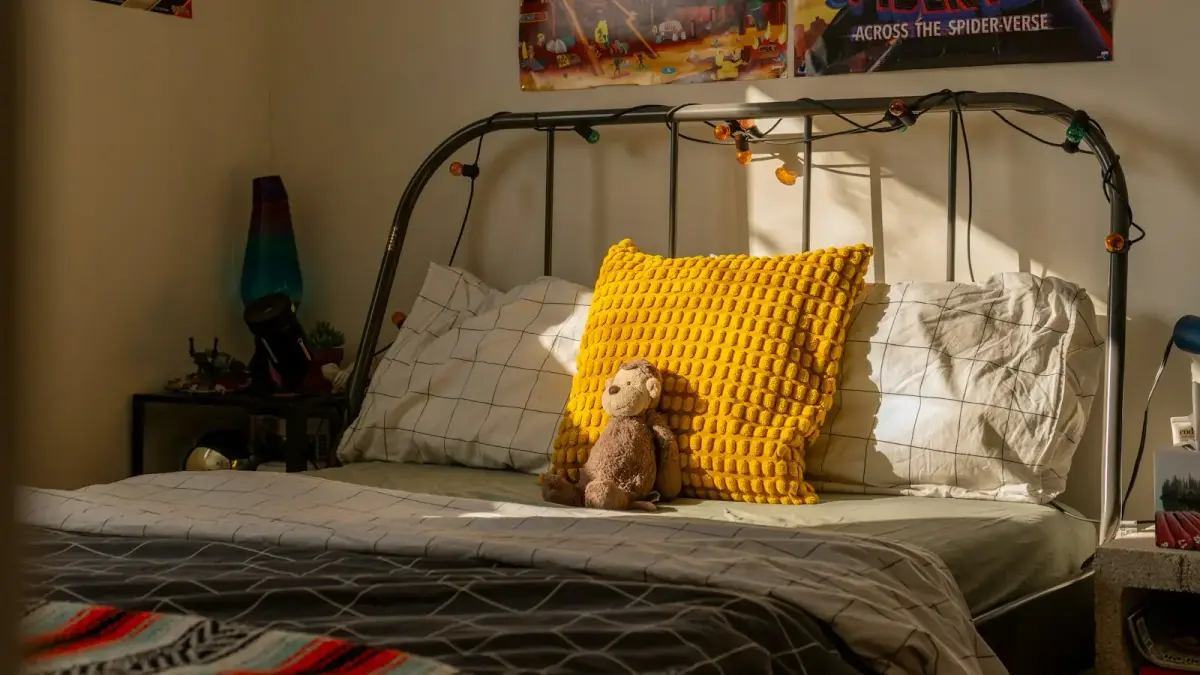
The bear’s name was Thomas.
Not Teddy. Not Bear. Thomas. I picked the name when I was five, and I remember the gravity of that decision - the way I tried different names on him like outfits, waiting to see which one he answered to. Thomas felt right. Thomas felt like someone who would be quiet and steady and would never leave the room while I was still talking.
The bicycle leaning against the garage wall was Harriet. The oak tree at the edge of our yard was Mr. Calloway. The floorboard in my bedroom that creaked when I stepped on it just right - the one I visited every night like a ritual - was Penny. I never told anyone their names. I knew, even then, that this was something private. Something that might sound strange if I said it out loud. But I also knew I wasn’t pretending. I was doing something that felt necessary, the way breathing feels necessary. I was making sure I wasn’t alone.
If you recognize yourself in this, I want you to stay here for a minute. Because what you did as a child was not silly. It was one of the most sophisticated emotional strategies a young mind can develop. And it shaped the adult you became in ways you probably still feel every single day.
1. You were naming things because the people around you weren’t nameable
Here is what most people miss about children who name objects. It is not about imagination. It is not about play. It is about need.
When the emotional landscape around a child is sparse - when the adults are distracted or overwhelmed, when affection is inconsistent, when the house is quiet in the wrong way - the child does not simply endure the emptiness. The child fills it. A name is the first act of relationship. When you name something, you are saying: you exist, I see you, and now we are connected.
Donald Winnicott, the British psychoanalyst who spent decades studying how children attach, described what he called transitional objects - the blankets and bears and soft things children cling to as stand-ins for the comfort they need but cannot always access from their caregivers. But Winnicott focused on the object itself. What he talked about less was the naming - the moment a child stops holding a thing and starts holding a someone.
That distinction matters enormously. A thing can be replaced. A someone cannot. And the child who names the bicycle and the tree and the floorboard is a child who has decided, unconsciously but absolutely, that replacement is not acceptable. That everything deserves to stay.
2. The names were never random
You did not name your bear Fluffy. You did not call the tree Tree. You chose names with weight to them. Names that sounded like they belonged to real, specific people.
This is because you were not decorating your world. You were populating it.
The name Margaret for a bicycle is not whimsy. It is a casting decision. Margaret is sturdy and reliable. Margaret waits for you after school. Oliver, the bear, is gentle. Oliver does not raise his voice. The names carried the qualities you needed most from the people around you - steadiness, patience, presence - and you assigned those qualities to things that could never disappoint you by failing to deliver them.
A 2010 study by Nicholas Epley, Adam Waytz, and John Cacioppo published in Psychological Review found that people are significantly more likely to anthropomorphize - to attribute human qualities to nonhuman things - when they are experiencing social disconnection. The researchers called it a motivated social cognition. Your brain, hungry for connection, begins to find it everywhere. In the shape of a cloud. In the hum of a refrigerator. In the creak of a floorboard that seems to greet you when you step on it.
But you were not hallucinating companionship. You were creating it. And the specificity of the names proves it. You were not confused about what was alive. You were simply unwilling to live in a world where so few things were.
3. The secret quality of it was the point
You knew not to tell anyone. That awareness - that this was private, maybe even a little strange - is itself revealing.
Children who name objects are not performing. They are not doing it for attention or for the charm of it. They are doing it in private, often in their bedrooms, often at night, often in the quiet hours when the house has settled and there is no one left to talk to. The secrecy is not shame. It is protection. If you tell someone the floorboard’s name is Penny, and they laugh, then Penny becomes ridiculous. And a companion who becomes ridiculous is a companion you lose.
So you kept it quiet. You carried these relationships like small, warm stones in your pocket, touching them throughout the day without anyone knowing. And that practice - of holding tenderness privately, of loving something without needing the love to be witnessed or validated - became a template for how you would move through the world as an adult.
4. The objects became places to rehearse feeling
Here is something no one tells you about children who are emotionally under-resourced. They do not stop feeling. They feel enormously. They just have nowhere safe to put it.
A named object becomes a container. You tell Thomas the bear about your day. You whisper to Mr. Calloway the oak tree about the thing that happened at school. You apologize to Penny the floorboard when you step too hard. What you are doing is practicing. You are rehearsing the full range of human emotional exchange - confession, apology, gratitude, grief - on recipients who will never reject you for it.
This is not a lesser form of connection. Research published in the Journal of Experimental Social Psychology in 2008 found that individuals who scored higher on loneliness measures were more likely to attribute intentions, emotions, and personalities to everyday objects. But the researchers noted something important: this tendency was not a sign of dysfunction. It was a sign of the person’s social motivation remaining intact. The lonely child who names the bicycle is not retreating from relationships. They are keeping the machinery of relationship warm and running, waiting for the day a person comes along who is safe enough to receive what the bicycle has been holding.
5. And then you grew up, and you still do it
You talk to your plants. Not performatively, not as a joke, but genuinely. You say good morning to the fiddle leaf fig. You encourage the basil. You feel a pang of real guilt when you forget to water the succulent and its leaves go soft.
You apologize to the corner of the table when you bang your hip into it. Not to your hip. To the table.
You have kept a coffee mug for fourteen years even though it is chipped and stained and objectively ready to be thrown away. But you cannot throw it away because it has been with you through three apartments and a divorce and the first morning you woke up in a city where you knew no one. That mug is not a mug. That mug is a witness to your life.
And the car. The car that makes a sound now, the one the mechanic says is not worth fixing. You know he is right. You know the numbers do not make sense. But when you sit in the driver’s seat and put your hands on the wheel, you feel something that has nothing to do with transportation. You feel accompanied. And trading it in feels like a betrayal.
6. The grief when something breaks is real grief
When the blender finally dies - the one that still works fine, except now it doesn’t - you do not simply go buy a new blender. You stand in the kitchen holding it and you feel something that an outside observer might call disproportionate.
It is not disproportionate. It is accurate. Because to you, that blender was never just a blender. It was a relationship. You talked to it. You thanked it after it ran. You felt, in some quiet way, that it was trying for you. And now it is gone, and the space it leaves is not the space of a missing appliance. It is the space of a missing companion.
This is the echo of every named object from childhood. The bear that was eventually put in a box in the attic. The bicycle that was given away. The tree that was cut down by the new owners after your family moved. Each loss was a small death, and you grieved it privately because you knew no one would understand the size of what you were feeling.
A 2013 study in the Journal of Consumer Psychology found that people who form strong attachments to possessions experience genuine grief responses when those possessions are lost or damaged - elevated cortisol, disrupted sleep, the same neurological signatures as social loss. The researchers were surprised. They should not have been. If you built a relationship with something, then losing it is losing a relationship. The brain does not distinguish between a companion with a heartbeat and a companion with a name.
7. You were never confused about what was alive
This is the part I need you to hear most clearly.
You were not confused. You did not actually believe the floorboard had feelings. You did not think the bicycle could hear you. You knew, even as a child, the difference between alive and not alive.
What you did was more extraordinary than confusion. You chose to extend care anyway. You looked at a world full of silent, inanimate things and you said: I will treat you as if you matter. I will give you a name. I will be gentle with you. I will notice when you are gone.
That is not childishness. That is a moral philosophy. It is the decision to live as if everything around you deserves tenderness, not because it can feel your tenderness, but because you can feel your own. Because the act of caring for something - anything - kept you human in a house where being human sometimes felt like too much to carry alone.
8. You built a world where nothing was disposable
The adult who grieves a broken appliance, who apologizes to furniture, who cannot throw away a chipped mug - this person is often told they are too sentimental. Too attached. That they need to learn to let go.
But letting go was never your problem. Your problem, as a child, was that things let go of you. People were inconsistent. Attention came and went. The house was full of bodies but empty of presence. So you built a world where nothing was disposable. Where everything earned its place by being named, and once named, could not be casually discarded.
That instinct followed you into adulthood, and it shows up everywhere. In the way you keep clothes you no longer wear because they “did their job.” In the way you feel a duty to finish a book you are not enjoying because you started a relationship with it. In the way you cannot walk past a stuffed animal in a thrift store without feeling a pull of rescue in your chest.
You are not too sentimental. You are someone who learned, before you had the language for it, that the world becomes bearable when nothing in it is treated as disposable. Including you.
9. This was always about you
The floorboard named Penny was never really about the floorboard. The bear named Thomas was never really about the bear.
It was about you. A child who needed to believe that companionship was possible. That steadiness existed somewhere, even if it had to be built from wood and thread and the quiet creak of a board in the night. That naming something was a kind of promise - I see you, and I will not forget you - and that the promise itself was proof that you were capable of the very thing you were not receiving. Faithfulness. Attention. The willingness to stay.
You named everything because you needed to know that someone in that house would never leave. And since the people could not be trusted to stay the way you needed them to, you turned to the things. And the things held. The things always held.
If you are someone who still talks to your car, who still apologizes to the table, who still feels a small, private grief when the toaster finally gives out - I want you to know that you are not being ridiculous. You are being exactly who you were always going to be. A person who refuses to live in an empty world. A person who learned that everything around you becomes more real when you give it a name.
And that instinct - to find life where others see objects, to build connection where others see nothing worth connecting to - is not your wound.
It is your gift. It always was.