Children who reread the same book dozens of times - who returned to the same characters and the same ending while a shelf full of new stories waited - often become adults who rewatch the same films, order the same meal at every restaurant, and choose the same seat in every room, because a child who discovered that familiarity was the only experience that never disappointed never learned to trust that something new could feel as safe as something already known
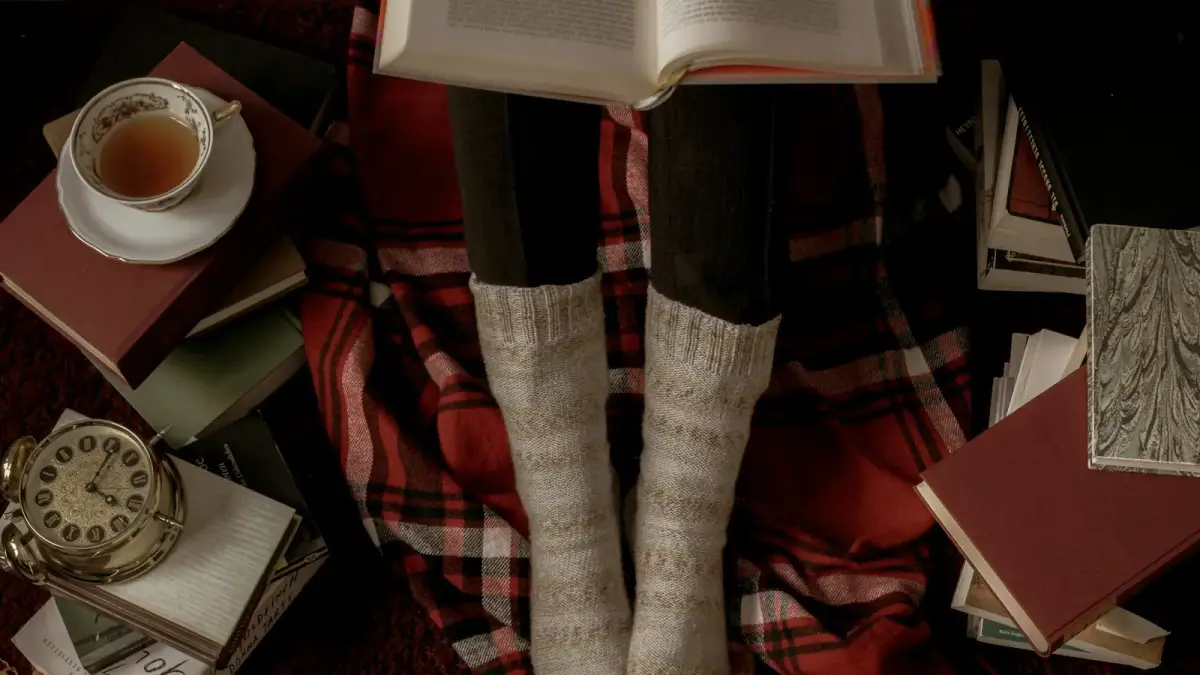
I must have read Charlotte’s Web forty times before I turned nine. Not because I didn’t have other books. I had a whole shelf of them - birthday gifts, library sale finds, hand-me-downs from cousins. Some of them still had the plastic wrap on.
But I didn’t want a new story. I wanted the story I already knew. I wanted to feel Wilbur’s panic in the exact same place, and Charlotte’s kindness in the exact same words, and the ending that made me cry every single time even though I knew it was coming. Especially because I knew it was coming.
My mother would find me in my room, curled against the headboard with that same beaten-up paperback, and she’d say, “You have so many books you haven’t opened.” She meant it as encouragement. But what she didn’t understand was that the unopened books were the problem. They were full of things I couldn’t predict. And prediction, for a child like me, was the closest thing to safety I had.
If you were that child - the one who returned to the same story, the same show, the same corner of the house - I want you to know something. That wasn’t a failure of curiosity. That was a child building the only reliable world available to them.
And the adult you became? The one who still does this? That person makes perfect sense.
1. The child who reread the same book becomes the adult who rewatches the same film every year
You already know how it ends. That’s the entire point.
A 2020 study published in the Journal of Consumer Research found that people who voluntarily re-consume familiar media report higher emotional satisfaction than those consuming something new - not because the content itself is better, but because the predictability allows deeper emotional processing. Your brain isn’t lazy. It’s freed from the work of anticipation and can instead sink fully into the feeling.
As a child, rereading was the one place where nothing could go wrong. The villain lost on the same page. The dog came home in the same chapter. You could close the book and know that tomorrow, if you needed it, everything would still be exactly where you left it.
The adult version looks like watching the same film every holiday season. Or restarting a show you’ve seen four times instead of trying the one everyone keeps recommending. People around you might call it boring. But you know what it actually is - a form of emotional homecoming.
2. The child who ate the same snack every day becomes the adult who orders the same meal at every restaurant
There’s a particular kind of child who finds one food they trust and refuses to deviate. Not out of pickiness, really. Out of a need to have one experience in the day that contains zero uncertainty.
You knew exactly what that peanut butter sandwich would taste like. You knew the texture, the temperature, the way it felt in your hands. In a household where a parent’s mood could shift between breakfast and lunch, that sandwich was the one constant. It never changed its mind about you.
Now you’re an adult who sits down at a restaurant and orders the same thing you ordered last time. Your friends scan the menu with excitement. You scan it with something closer to dread - not because you’re afraid of food, but because choosing something unknown carries a weight other people don’t feel. The familiar meal isn’t a lack of adventure. It’s a quiet promise you make to yourself that this one part of dinner will go exactly as planned.
3. The child who watched the same movie on repeat becomes the adult who keeps a rotation of comfort shows
There were children who watched the same VHS tape until the ribbon wore thin. I was one of them. My parents thought I was obsessed. But what I was doing was something much more functional - I was building an emotional environment I could control.
Research by psychologist Cristel Russell, published in the Journal of Consumer Research, found that repeated media consumption serves a regulatory function, particularly for individuals with higher sensitivity to uncertainty. The familiar narrative acts as a kind of psychological container. You know the shape of it, so your nervous system can relax inside it.
The adult version is the comfort show rotation. You’ve seen every episode of that series three times, and you’ll watch it again this winter. Not because you’ve run out of things to watch. Because those characters feel like people who live in your house. They’re reliable in a way that real relationships sometimes weren’t.
4. The child who sat in the same seat every day becomes the adult who needs “their spot” in every room
This one is quieter, and people rarely talk about it.
But some children chose a seat - at the dinner table, in the classroom, on the school bus - and returned to it with a devotion that looked like preference but was actually survival. That seat was mapped. You knew what was to your left, your right, behind you. You knew the light, the distance to the door, the angle of the teacher’s gaze.
A child who needed to map their environment that carefully was usually a child whose environment had proven itself unmappable in other ways. Maybe the rules at home shifted. Maybe the emotional weather was impossible to forecast. The seat was the one geography that stayed fixed.
As an adult, you still do this. You have a side of the couch. A chair at the kitchen table. A spot in the meeting room. And when someone sits in it, you feel a flicker of something that seems disproportionate - a tightness, a quiet sense of displacement. That’s not quirky. That’s your nervous system reaching for the one coordinate it already trusts.
5. The child who replayed the same song becomes the adult who listens to the same album for months
Music is emotional architecture. And some children found one song - one melody, one set of lyrics - that matched something they felt but couldn’t say.
So they played it again. And again. And forty more times after that. Not because the song was their favorite in any ranked sense, but because it held a feeling they needed to revisit. The song became a room they could walk into whenever the rest of the world felt too large.
The adult version is the album you’ve been listening to for six weeks straight. The playlist that hasn’t changed since March. The song you play in the car when you need to feel like yourself again. People might joke about your lack of musical range. But what you’re really doing is returning to an emotional location that has never once locked you out.
6. The child who kept the same stuffed animal long past the “appropriate” age becomes the adult who can’t throw anything away
There’s a specific grief that comes with being told you’re too old for the thing that comforts you.
Some children held onto a stuffed animal or a blanket or a particular object well into an age when other kids had moved on. Not because they didn’t know it was “just a toy.” But because that object had been present through things no child should have to navigate alone. It had absorbed tears and silence and the particular stillness of lying in bed waiting for a door to stop slamming.
As an adult, you might struggle to throw things away. Not in a hoarding sense - in a loyalty sense. You keep the mug with the chipped handle. The jacket that doesn’t fit. The shoes you haven’t worn in years. These objects carry a kind of emotional credit. They were there. Letting them go feels like betrayal, and you’ve had enough of that already.
7. The child who stuck with one best friend becomes the adult who keeps a very small circle
Some children didn’t collect friends. They found one person - one safe, predictable, known person - and gave them everything.
This wasn’t shyness, exactly. It was resource management. In an environment where emotional energy was being spent on reading a parent’s mood or adapting to instability at home, there simply wasn’t enough left over to navigate the complexity of a large friend group. One friend was manageable. One friend could be learned, predicted, trusted.
A 2012 study in Developmental Psychology found that children in unpredictable home environments tended to form fewer but deeper peer attachments, prioritizing reliability over social breadth. The researchers called it a “depth over range” social strategy.
The adult version is the person with three close friends and no interest in expanding the circle. You’re not antisocial. You’re not even particularly introverted in the clinical sense. You simply learned early that trust is expensive, and you’d rather invest deeply in a few accounts than spread yourself thin across dozens.
8. The child who followed the same routine every morning becomes the adult who feels destabilized by schedule changes
Some children built rituals. Shoes on before coat. Cereal before juice. Backpack by the door in the same position every night. To an outside observer, this looked like a well-organized kid. To the child, it was a seawall.
When the inside of your home was unpredictable - when you didn’t know which version of a parent you’d encounter, or whether today would be calm or chaotic - the morning routine became the one script you could follow without improvisation. You wrote it yourself. You performed it yourself. And as long as you stayed inside it, the first hour of the day belonged to you.
As an adult, a cancelled plan or a last-minute change doesn’t just annoy you. It disorients you. You feel it in your chest. The people around you might say you’re rigid or inflexible, but what’s actually happening is that your nervous system briefly loses the floor it was standing on. The routine isn’t rigidity. It’s the architecture of a self that learned to build its own stability because nobody else was building it for them.
9. The child who returned to the same hiding spot becomes the adult who needs a room of their own
Every child who grew up in an emotionally unpredictable home had a place. A closet. A space behind the couch. A spot under the stairs, or in the backyard behind the shed where the voices from inside became muffled enough to breathe.
That place wasn’t about hiding from danger, necessarily. It was about having one location in the entire world that belonged only to you. Where no one’s mood could reach you. Where the walls were close enough to feel held, and quiet enough to hear your own thoughts return.
As an adult, you need a room. Or a corner. Or a car you can sit in for ten minutes before you walk into the house. Virginia Woolf wrote about a room of one’s own as a creative necessity, but for many of us, it’s something more primal than that. It’s the grown-up version of that hiding spot - the place where your nervous system finally unclenches because it knows, for certain, that no one is about to walk in with a mood you’ll have to manage.
You are not antisocial for needing this. You are not cold, or avoidant, or difficult to love. You are a person who learned very early that the only guaranteed peace was the peace you built with your own walls.
If you recognized yourself in any of this - in the rereading, the rewatching, the same meal and the same seat and the same three friends you’ve had since college - I want to say something clearly.
You are not stuck. You are not boring. You are not failing to grow.
You are a person who learned, as a very young child, that the world was not always a safe place to explore. And so you found the corners of it that were safe, and you loved them fiercely, and you returned to them again and again because they were the only things that never let you down.
That’s not a flaw. That’s one of the most intelligent adaptations a child can make.
And if, over time, you want to let a little more novelty in - a new restaurant, an unfamiliar book, a friendship that doesn’t come with a decades-long track record - you can. Not because your old patterns were wrong, but because you’re finally safe enough to discover that some new things might hold you just as gently as the familiar ones always have.
The worn-out paperback isn’t going anywhere. It’ll be on the shelf when you get back. It always is.