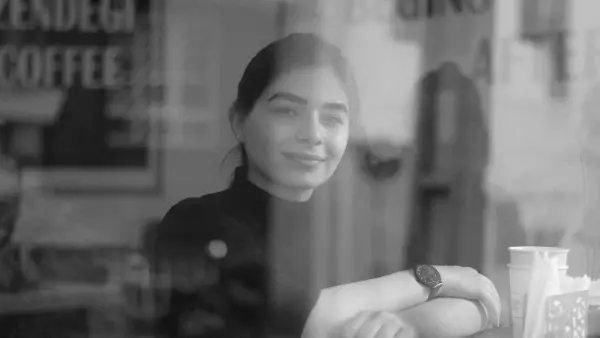
There is a particular kind of man who cooks one meal perfectly - his mother's recipe, the exact seasoning, in the same order she showed him at twelve - and he only makes it when someone he loves is having a hard time, not because anyone asks but because a boy who watched food appear on the table every night without anyone naming it as love learned that a kitchen is the one room where a man is allowed to be tender without explanation
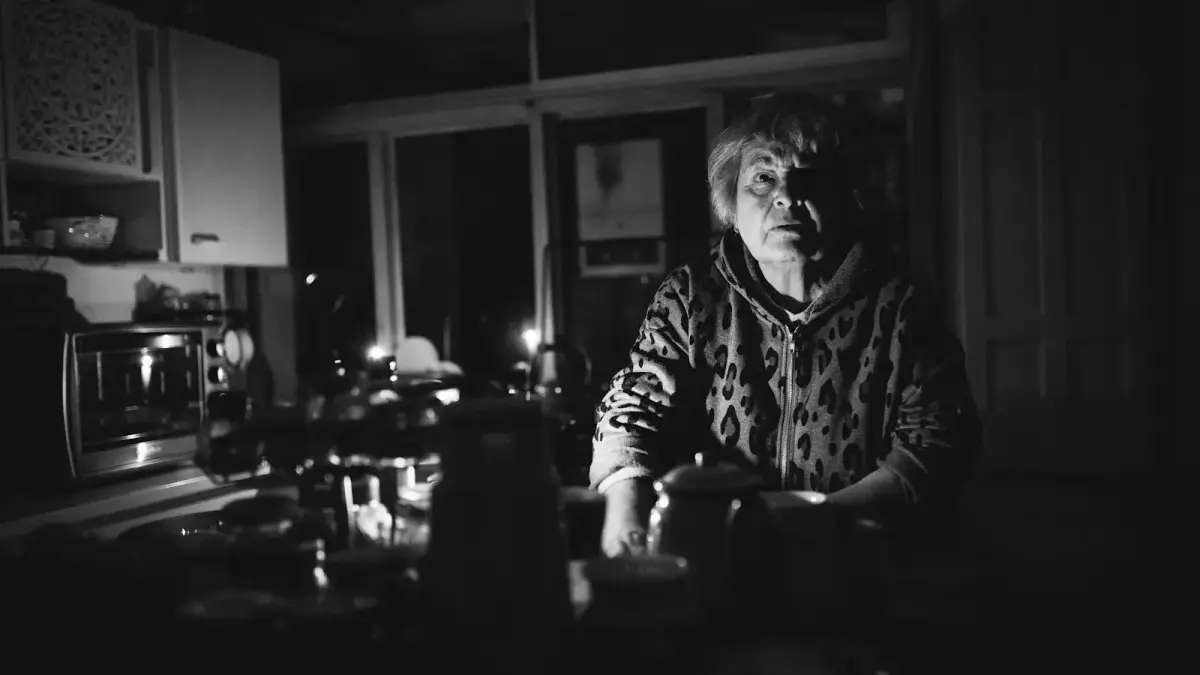
My father made exactly one thing well.
Beef stew. Heavy pot. Onions cut thick, not thin, because that was how his mother did it and he never thought to question it. He peeled potatoes the same way every time - one long spiral of skin curling into the sink, the knife held too close to his thumb in a way that would have made any cooking instructor wince.
He made it maybe four times a year. Never on holidays. Never when company was coming. He made it the night my sister called from college sobbing about a boy who’d broken something in her she couldn’t name. He made it the Saturday after his brother’s funeral. He made it the evening I came home from school at fourteen with a black eye and a story I wouldn’t tell.
I didn’t understand what I was watching until I was old enough to need the recipe myself.
The pot on the top shelf
There is a heavy pot in almost every family. The kind that takes two hands to bring down. Cast iron or enamel or something dented and discolored that has no business still being in the kitchen except that throwing it away would feel like throwing away a person.
The man I’m describing - and you know him, or you are him - doesn’t reach for that pot on ordinary nights. Ordinary nights are takeout, or sandwiches, or whatever his wife or partner puts together. He is not, by anyone’s definition, a cook.
But when the phone rings at nine on a Tuesday and his daughter’s voice is doing that thing where it’s steady on the surface and shaking underneath - when his buddy from work admits over a beer that his marriage might be ending - when his wife comes home from the doctor with news that isn’t terrible but isn’t nothing - his hands know before his mind does.
He’s already reaching for the flour.
Already pulling onions from the bag.
Already filling the kitchen with the sound of a knife against a cutting board, which is the sound of a man saying something he cannot say out loud.
What the kitchen taught him
I grew up in a house where I love you was not a sentence anyone said. It wasn’t cruelty. It was simply the way things were. My parents were born in the early 1950s to parents who were born in the 1920s, and somewhere in that chain of inheritance, the words got lost while the feeling didn’t.
A 2019 study in the Journal of Family Psychology found that men who grew up in households with limited verbal emotional expression were significantly more likely to develop what researchers call “instrumental caregiving patterns” - showing love through acts of service rather than words. Not because they feel less, but because they were given fewer channels through which to express what they feel.
My father felt enormously. I know this now. I did not know it at fourteen.
What I knew at fourteen was that when something went wrong - really wrong, the kind of wrong that made the house go quiet in a specific way - my father would appear in the kitchen around five o’clock. And by six-thirty, the house would smell like his mother’s recipe. And nobody would talk about why. And somehow, that was enough.
The kitchen was the room where tenderness was permitted. Where a man could stand with his back to his family and stir something slowly and be, for that hour, soft. Present. Attending to the needs of people he loved in a language that required no vocabulary, no vulnerability of the spoken kind, no moment where he had to look someone in the eye and admit he was frightened too.
The recipe is never written down
Here is something I’ve noticed about these men and their one perfect dish.
They never write the recipe down. Ask them for it and they’ll laugh or wave you off or say something like “I just throw it together.” But watch them cook and you’ll see they are precise to the degree of ritual. The onion is always cut the same way. The seasoning goes in the same order. The heat is adjusted at the same moment, as though they’re following a clock only they can see.
Because they are.
They’re following the memory of standing beside their mother - or their grandmother, or their aunt - at an age when they were still allowed to be small. Before the world told them to be something harder. Before adolescence arrived and rearranged the rules about where a boy was allowed to stand and what a boy was allowed to care about.
The recipe lives in the body. In muscle memory. In the weight of a hand reaching for a pot lid and knowing, without checking, whether the stew needs another twenty minutes.
Dr. Gabor Mate has written extensively about how emotional memory is stored not just in the mind but in the physical body - in gestures, in posture, in the hands. The man who cooks his mother’s stew is not following a recipe. He’s following a feeling. And the feeling is: this is how someone showed up for me before I had words for what showing up meant.
What he’s really saying
When my daughter was nineteen, she called me from her apartment at eleven at night, crying about something I won’t share here because it’s hers. I listened. I said the things I thought a modern, emotionally literate father was supposed to say. I told her I loved her. I told her it would be okay.
And then I hung up and walked into the kitchen and started making my father’s beef stew at eleven-fifteen on a Wednesday night.
Nobody was going to eat it. My wife was asleep. My daughter was two hundred miles away. The stew would sit in the refrigerator for three days before I brought it to her that weekend in a container she probably still hasn’t returned.
But I needed to make it. Not for her. For me.
Because when you grow up watching love expressed through a cutting board and a heavy pot, that becomes the place where your body goes to process the unbearable tenderness of caring about someone you cannot protect. The kitchen becomes a prayer room. The act of cooking becomes the act of saying: I cannot fix this, but I can feed you, and maybe that’s enough, and if it’s not enough, at least you’ll know that someone stood in a warm room for two hours thinking about nothing but you.
A 2021 study published in Frontiers in Psychology examined what researchers termed “food-based emotional communication” and found that the act of preparing food for someone in distress activates the same neural caregiving circuits as physical comfort - holding, rocking, soothing touch. The brain does not distinguish between the warmth of an embrace and the warmth of a meal prepared with attention.
The man stirring the pot at midnight knows this without knowing it.
The inheritance
I have a son. He is eleven.
Last month, his best friend moved to another state. It was the first real loss of his young life - not a death, not a catastrophe, but the specific grief of someone who was always there suddenly not being there anymore.
He came home from school and sat on the couch and didn’t cry and didn’t talk and did that thing where a child tries very hard to be fine because they’ve already started learning that being fine is what people expect.
I sat with him. I asked if he wanted to talk. He said no. I told him it was okay to be sad. He nodded but didn’t look at me.
And then I said something I hadn’t planned.
“You want to help me make Grandpa’s stew?”
He looked up. He said okay.
We stood in the kitchen together for an hour and a half. I showed him how to cut the onion thick, not thin. How to peel the potato in one long spiral. How to know when the stew needs more time without lifting the lid - you listen for the sound, the low bubbling that means the meat is tender, that everything is breaking down into something softer than it started.
We didn’t talk about his friend. We didn’t talk about sadness or loss or how to cope. We stood side by side and cooked and at one point he leaned into me slightly, the way children do when they don’t have words yet but they need you to know.
I leaned back.
That was the conversation.
The room where it’s allowed
I think about all the men I know who carry tenderness like a secret. Not because they’re ashamed of it but because no one ever showed them a door marked “this way to your feelings” that didn’t feel like a trap.
The kitchen is not a trap.
The kitchen is the room where your hands are busy and your guard comes down. Where the act of feeding someone is so obviously, inarguably good that no one - not even the harshest voice in your own head - can call it weakness.
Brene Brown has talked about how vulnerability requires what she calls “a container” - a context that feels safe enough to hold the rawness of real feeling. For a lot of men, the kitchen is that container. Not the therapist’s office. Not the bar. Not the conversation after midnight where someone says “tell me how you really feel.” Those rooms ask men to perform vulnerability as language, and many men were never given that language.
But a kitchen only asks you to show up.
To chop, to stir, to season, to wait.
To hand someone a bowl and say nothing, or everything, depending on how you listen.
A bowl that asks nothing in return
My father died six years ago. I have almost nothing of his. A watch that doesn’t work. A photograph where he’s squinting into the sun and almost smiling.
And I have his stew.
Not the recipe - he never wrote it down, remember. But the feel of it. The instinct of knowing when the onion is soft enough. The patience of letting it cook longer than you think it needs. The specific weight of ladling it into a bowl for someone who is hurting and setting it in front of them without ceremony.
Here. I made this.
That’s what the man at fifty-six is saying when he makes his mother’s stew for his daughter who called home crying. He’s not saying I can fix this. He’s not saying don’t worry or it’ll be okay or let me tell you what to do.
He’s saying: Someone once stood in a kitchen and made this for me when I was small and frightened and could not explain what I needed. And I understood, without anyone telling me, that the food was not the point. The point was that someone cared enough to stand in a warm room and make something with their hands and set it in front of me and ask nothing back.
I am doing that now. For you.
That is the whole language. The entire vocabulary. The complete and sufficient grammar of a love that was never spoken but was always, always served warm.