There is a particular kind of man who has never once left a room without turning the lights off behind him - who walks through the house at night clicking switches like a watchman making his rounds, who has said 'we don't own the electric company' so many times it has become a family joke that nobody laughs at anymore - because a boy who watched his father open the electricity bill and go quiet at the kitchen table learned that a light left on in an empty room is not waste but evidence that someone in this house does not understand what things cost
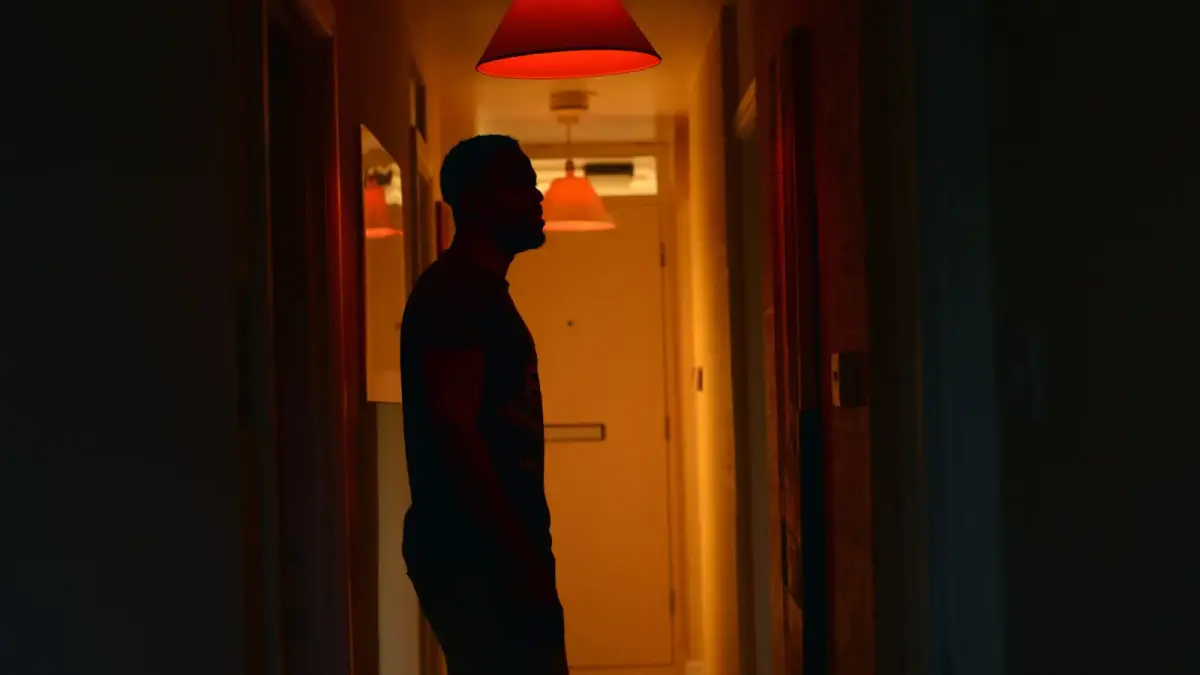
My father did his rounds every night at ten o’clock.
He would start in the basement, where nobody had been since dinner, and work his way up through the house like a man closing a building for the night. The basement light. The hallway light. The bathroom light my sister always left on. The porch light, which my mother turned on at dusk and which he turned off the moment the last person was inside, as though the electricity knew the difference between hospitality and extravagance.
He never announced it. He just moved through the house in his socks, and you could track his progress by the rooms going dark behind him. Click. Click. Click. A man dimming the world one switch at a time.
I am forty-seven years old and I do the same thing. My wife calls it my patrol. My children call it something less kind. And I do it every single night without thinking about it, the way some people lock the front door or check the stove - except that I do those things too, and the lights are the one that started first.
The arithmetic of the envelope
To understand why a man turns off lights, you have to understand what a bill looked like in certain houses.
Not all houses. In some houses, the electricity bill arrived and was paid and filed and never mentioned again. It was a line on a ledger, not a conversation. But in other houses - in the house where I grew up, in the houses where a lot of men I know grew up - the electricity bill was an envelope that could change the weather in a room.
My father would open it standing at the kitchen counter. He would look at the number. And something in his posture would shift - not dramatically, not in any way that would show up in a photograph, but in the way that a child who is watching very carefully can detect the difference between a man who is fine and a man who is doing math in his head that does not come out right.
He never yelled about it. He never said we couldn’t afford it. He just went quiet, and quiet in my father was the loudest sound in the house.
A 2020 study published in the Journal of Family and Economic Issues found that children who grew up in economically strained households often develop what the researchers called “resource vigilance” - an ongoing, low-level monitoring of consumption patterns that persists well into adulthood, regardless of current financial status. The man who turns off the light in the bathroom his daughter just left is not reacting to the cost of electricity in 2026. He is reacting to the cost of electricity in 1987, when the number on that envelope could determine whether his father spoke at dinner or sat in a silence that made everyone else eat faster.
What the light switch actually controls
I want to be honest about something. I make a comfortable living. My electricity bill is not a hardship. I know this. My wife knows this. My accountant knows this. The light I just turned off in the hallway cost approximately one-fifth of a cent to burn for the twenty minutes it was on while nobody was in the hallway.
It does not matter.
The part of me that reaches for that switch is not consulting my bank balance. It is consulting a boy who learned that wastefulness was a moral category, not a financial one. Leaving a light on was not expensive. Leaving a light on was careless. And careless, in a house where every dollar was managed with the precision of a man keeping something from tipping over, was the worst thing you could be.
Brene Brown talks about how shame is not guilt - guilt says I did something bad, shame says I am something bad. The boy who left the basement light on was not guilty of wasting electricity. He was guilty of being the kind of person who wastes, and in a family where waste was the distance between getting through the month and not getting through the month, that identity carried a weight that had nothing to do with the wattage.
The patrol as inheritance
My son is twelve. Last week I watched him walk out of the kitchen, stop in the doorway, turn around, and flip the light switch off before continuing down the hall. Nobody asked him to do it. Nobody was watching him - or so he thought. He did it the way I do it, the way my father did it. Automatically. As though the hand and the switch were connected by something older than thought.
I stood there in the dark kitchen and felt two things at once. Pride, which I am not proud of. And grief, which I did not expect.
Because what I was watching was a boy learning a lesson I never meant to teach him. Not the lesson about electricity - the real lesson underneath it. That resources are fragile. That comfort can be revoked. That the man who manages the small things is the man who keeps the large things from falling apart. And that you prove your worth to a household not by what you earn but by what you do not waste.
I never sat my son down and told him any of this. But a child does not need to be told. A child only needs to watch his father walk through the house at ten o’clock, clicking switches in a pattern that never varies, and the lesson installs itself like software running in the background.
What the family learns to see
My wife told me once that she can tell what kind of day I’ve had by how aggressively I do the patrol. On a good day, it is gentle - a casual sweep, almost absentminded. On a hard day, it is pointed. She can hear the switches from the bedroom, and she says the speed tells her everything.
She is not wrong. On the days when something at work has reminded me that stability is never permanent, the patrol gets tighter. More thorough. I check rooms I already checked. I stand in the hallway and listen for the hum of something still drawing power behind a closed door.
A 2018 study in Psychological Science found that financial anxiety in men often manifests not as spending reduction but as “consumption monitoring” - an increased vigilance around small, symbolic expenditures that represent control rather than savings. The man who turns off every light is not saving money. He is saving the feeling of having managed something. Of having walked through his house and confirmed that nothing is being wasted, nothing is leaking, nothing is costing more than it should. And that feeling - of a house that is tight and dark and under control - is the closest thing to peace that a certain kind of boyhood ever taught him to feel.
The rooms that stay dark
Here is what I want to say to the man who does this. The man who is reading this in a room where the only light on is the one directly above his head because he turned off the other two when he sat down.
You are not cheap. You are not controlling. You are not the joke your family makes about you at Thanksgiving, the one where they say “don’t leave a light on or Dad will have a stroke” and everyone laughs and you laugh too because laughing is easier than explaining what that light switch actually means to you.
You are a man who learned, before you had the language for it, that the difference between a household that holds together and one that comes apart can be measured in small things. Not big things. Not the mortgage or the car payment. The small things. The light in the hallway. The heat turned up one degree too high. The faucet that drips. The evidence, accumulating quietly on a bill that arrives once a month, that someone in this house is not paying attention.
And you decided, at seven or nine or eleven years old, standing in a dark hallway after your father had done his rounds, that you would always pay attention. That you would never be the reason the number on the envelope went up. That you would walk through your own house someday and make sure every room was dark and tight and accounted for.
You are still that boy. You are still making those rounds. And the house you are protecting is not just the one with the light switches and the electricity meter. It is the one inside you, where a man who grew up counting the cost of every kilowatt learned that love is not a feeling - it is a vigilance. It is the willingness to walk through every room, every night, and make sure nothing has been left burning that might cost the people you love more than they can afford.
The lights are off. The house is quiet. The man in the hallway can rest now.
Not because the patrol is finished. But because, for tonight, the number on the envelope will be small enough that nobody has to go quiet.