People who grew up as the family photographer - the one always behind the camera at birthdays and holidays, making sure every moment was captured - often become adults who are present at every important occasion in the lives of the people they love but cannot find themselves in a single frame, because a child who learned to document everyone else's joy never quite trusted the room to hold still long enough for someone to capture theirs
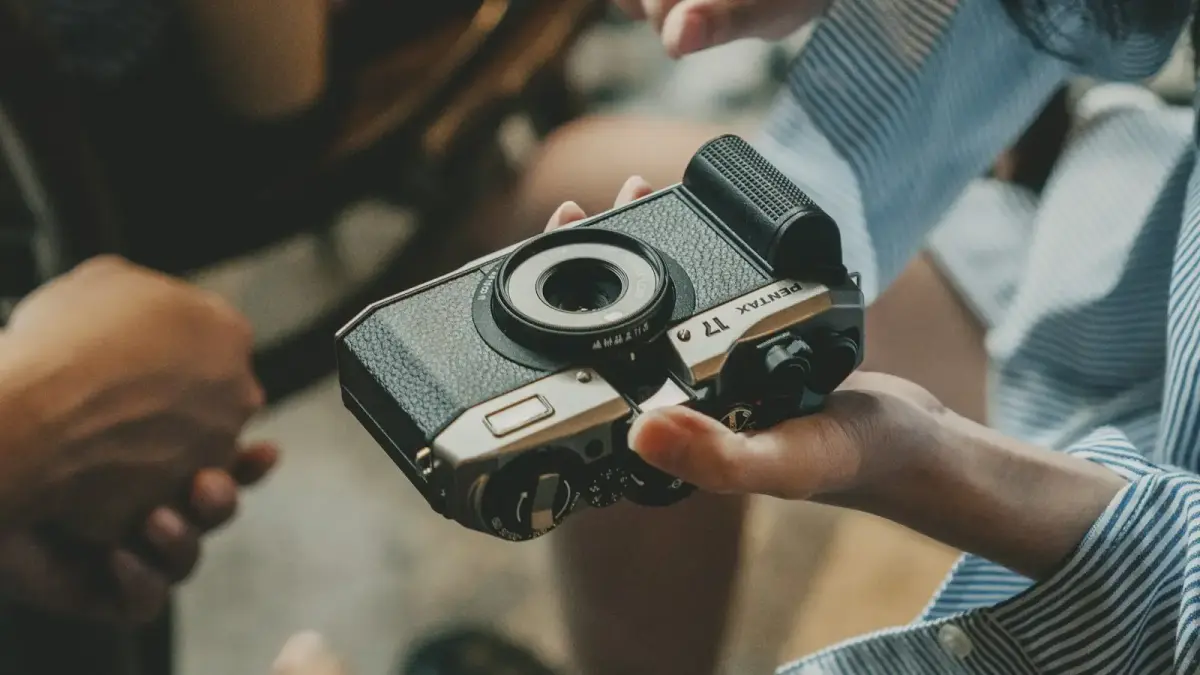
The box in the closet
My mother brought a box of old photographs to my house last December. She’d been downsizing, sorting through decades of accumulated life, and she thought I’d want these.
I sat on the living room floor and went through them for an hour. Birthdays with frosting-smeared faces, Thanksgivings where everyone squeezed onto one side of the table so the whole group fit in frame. My sister’s graduation, my brother’s first baseball trophy, my grandmother asleep in the recliner with a paper plate still balanced on her knee.
Hundreds of photographs spanning twenty-five years of a family’s life. I was in eleven of them.
Not because I missed those events. I was at every single one - the most reliably present person in my family for a quarter century.
But I was the one holding the camera, and somehow, over all those years, it never occurred to anyone - including me - that the person composing the frame was also someone who deserved to be inside it.
How the role begins
It never starts as a decision. No child sits down one morning and thinks, “I will become the person who records everyone else’s happiness.” It happens the way most childhood roles happen - through a small moment that gets quietly repeated until it becomes an identity.
For me, it was Thanksgiving 1993. I was nine, and my father was wrestling with a disposable camera, getting frustrated because the little winding wheel was stuck. My grandmother was laughing at something my uncle had said, and the light from the kitchen was warm and gold, and the whole scene looked like something that could slip away in a breath.
I took the camera from my father’s hand and figured it out.
The picture came out perfect. And the look on my father’s face when he saw it - the surprise, the pride, the way he held it up and said “Elena got this one” - was the most seen I had felt in months.
That was the origin. Not of a hobby. Of a way to earn belonging.
By twelve, it was simply understood. Someone would hand me the camera at holidays without asking, and my mother would say “make sure you get one of Grandpa” before dessert. At my sister’s recitals, I sat in the third row with a camera in my lap, already framing the shot before the curtains opened.
I wasn’t doing this because I loved photography. I was doing it because the camera solved a problem I didn’t have the words for yet - it gave me a way to be essential without being examined. A way to participate in every gathering without anyone turning to look at me directly.
The safest way to belong
A 2019 study published in the Journal of Research in Personality found that children who consistently adopted facilitative roles in family settings - organizing, documenting, mediating - scored high on what researchers called “structural belonging.” They felt deeply embedded in the family’s operations. But they scored significantly lower on a separate measure: “subjective visibility,” or the sense that their own inner experience was seen and valued by the group.
The distinction matters. You can belong to something completely and still feel invisible inside it.
That was the camera’s gift. Behind the lens, I was indispensable but unexamined. I could love everyone around the table and express it through the act of preserving them - without ever needing to stand still and let someone do the same for me.
It was connection without exposure. Devotion without vulnerability.
And the people around me never questioned it, because the pictures were good and everyone wanted copies. The arrangement was seamless - I gave, they received, and the family’s memory of itself was richer because of my attention.
What no one noticed was that the family’s memory was also incomplete. The person most responsible for its existence barely appeared in it.
Chronicling as a language of love
I want to name something that took me until my late thirties to understand. The camera wasn’t just a shield. It was also genuinely a form of love - the only form I trusted myself to give.
I didn’t know how to tell my grandmother that watching her stir soup at the stove made me feel like the world was safer than it looked on the news. But I could photograph her doing it, and keep that image in a drawer for twenty years, and look at it on hard nights when I needed proof that tenderness existed somewhere.
I didn’t know how to tell my father I wanted him to look at me with the softness I saw him give my sister. But I could take a photo of him looking at her that way, and hold the evidence that he was capable of it.
Susan Cain, whose work on introversion reshaped how we understand quiet children, writes about a pattern she calls “peripheral participation” - a way of being deeply engaged with a group while holding a position just outside its center. It’s not withdrawal. It’s connection from a vantage point that doesn’t require you to risk the full vulnerability of being looked at.
The camera was my version of that. And I think it was the version used by every quiet, watchful child who figured out early that love was easier to give through a viewfinder than face to face.
The adult with no record of their own life
Here is where the pattern stops being charming and starts being heavy.
I am forty-four years old, and I have photographs of almost everyone I have ever cared about. My best friend’s wedding from four angles, my niece’s first steps, my mother’s sixtieth birthday the exact second she opened the gift that made her cry.
My phone holds thousands of images. My hard drives are labeled by year.
And if you asked me to find a single good photograph of myself from the last fifteen years - just me, not cropped from a group shot, not a blurry afterthought taken while I was already turning away - I would struggle. Because the child who became the family chronicler never built the habit of being chronicled. She never quite trusted the room to pause for her.
A 2022 study published in Frontiers in Psychology examined what researchers called “documentary identity” - the way a person’s sense of self is shaped by the visual record of their own existence. They found that individuals with sparse photographic self-documentation reported a measurably weaker sense of personal continuity. When you cannot see yourself threaded through the timeline of your own life, something in your self-narrative starts to thin.
I know this feeling. I have meticulous proof that I was present for every milestone in my family’s history. But the proof is a record of everyone else, and where I should be, there is only the angle of the shot.
Why no one turned the camera around
This is the part that stings, and I want to hold it carefully.
The people in your life did not deliberately exclude you. They didn’t decide your face didn’t belong in the album. What happened was quieter and, in some ways, harder to grieve than intentional exclusion.
They got used to you being behind the camera. It became so seamless, so natural, so much a part of how every gathering functioned, that it stopped occurring to anyone to say “wait - get in here.” You were not forgotten. You were invisible the way load-bearing things are invisible - like the wall that holds the painting, like the shelf that holds the books.
And you helped. That’s the painful part. You volunteered before anyone could offer.
On the rare occasion someone said “come on, get in the picture,” you resisted. You said the lighting was wrong. You said you’d get in the next one, and the next one came and you were already reaching for the camera again.
Because being photographed asks something of you that being the photographer does not. It asks you to believe the room will hold still for you. That your face, your presence, your particular configuration in this light and this moment, is worth someone else pausing their life to preserve.
That trust - the trust that you are worth documenting - was the one thing the camera never taught you.
What it becomes beyond the lens
The pattern doesn’t stay confined to photography. The child who chronically documented everyone else’s experience often grows into the adult who plans the reunion but isn’t in the group photo, who organizes the birthday party but forgets to save herself a slice of cake. Who remembers every friend’s anniversary but has never once been thrown a surprise herself.
Daniel Goleman’s research on emotional intelligence describes a pattern he calls sustained “other-directed attention” - a habitual outward focus on the needs and emotions of others, often at the expense of self-awareness. People high in this trait are extraordinary at making others feel seen. They are frequently terrible at letting themselves be seen in return.
You notice it in quiet ways. You deflect compliments by redirecting them, and you change the subject when conversation turns toward you. You’re the friend who always asks “how are you doing” first and who accepts “fine” as your own answer even when it’s not remotely true.
You learned to chronicle other people’s lives because it was a way of loving them that felt safe. You didn’t have to be vulnerable. You just had to pay attention and press the shutter at the right moment.
Staying in the frame
I’m not going to tell you the fix is simple, because this was never really about cameras. The camera was the clearest expression of something deeper - a way of moving through the world that says: I will be the one who preserves, I will be the one who notices, and in exchange, I will not ask anyone to notice me.
That exchange felt fair when you were nine and the room’s emotional bandwidth was already spoken for. It doesn’t feel fair anymore, even if you can’t quite say why.
What I want to offer is not an instruction but a recognition. If you grew up as the family photographer - if chronicling was your love language, if you have decades of evidence that you were present at every meaningful moment and almost none that anyone was looking back at you - you are not broken. You are someone who found a profoundly creative way to belong in a room that didn’t have enough space for your full presence.
You turned watching into devotion. You made a gift of your attention, year after year, holiday after holiday. That was real generosity.
But attention is not the same as presence. And devoting yourself to recording a life is not the same as being in one.
The next time someone picks up a camera at a gathering, try something that will feel unfamiliar. Stay where you are, and don’t reach for the lens. Let someone else hold the frame for once, and let yourself be the subject - imperfect, unprepared, visible.
You were always there. It’s time the photographs knew it too.