The person everyone calls when they are falling apart scrolls through her contacts at three in the morning during her own crisis and realizes there is nobody she can call, not because nobody loves her but because she spent thirty years building herself into the kind of person people lean on and never the kind who leans
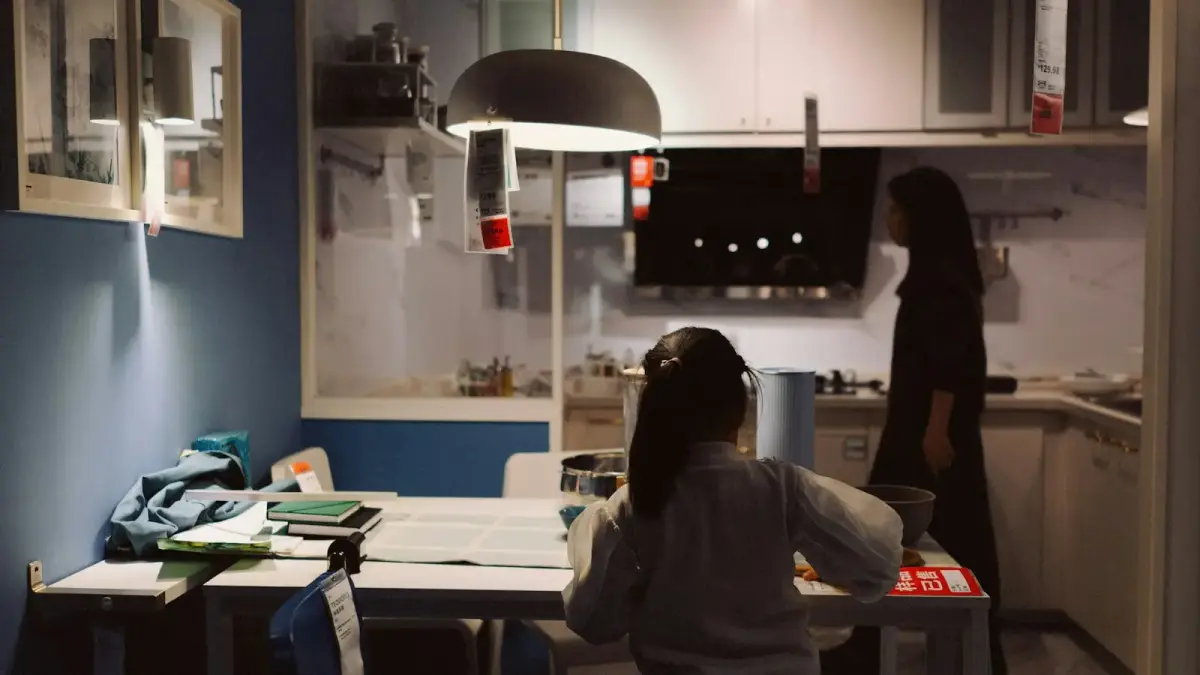
She is the one who answered the phone at two in the morning when her sister’s husband moved out. She drove forty minutes in the rain, made tea, slept on the couch, and got up early to take the kids to school so her sister could fall apart in private.
She wrote the eulogy for her father. She organized the reception afterward. She held her mother’s hand and answered every question from every cousin and then sat in her car in the parking lot of the funeral home and cried alone for six minutes before driving to pick up her son from practice.
She is the person everyone calls.
And tonight, sitting in her kitchen at three in the morning with something heavy pressing on her chest - something she cannot name but cannot ignore - she opens her phone and scrolls through every name she knows. And she puts the phone down. Not because nobody would answer. But because she cannot imagine saying the words.
I need help.
She has never said them. Not once in thirty years.
She did not become this person overnight
There was no single moment when she decided to be the strong one. It happened the way most things happen in families - slowly, then completely.
Maybe it started when she was twelve and her mother was sick and somebody had to make sure her younger brother ate breakfast. Maybe it started the first time she swallowed her own tears because someone else’s felt more urgent. Maybe it started the day she realized that being needed felt like the closest thing to being loved that she could reliably access.
By her twenties, the role was settled. She was the one you called. The one who showed up with a plan. The one who remembered the allergies and packed the extra blanket and knew which friend needed a text after a hard doctor’s appointment.
By her forties, it was her identity.
A 2000 study by psychologist Shelley Taylor and colleagues at UCLA introduced the tend-and-befriend model of stress response - the idea that many women, under pressure, don’t fight or flee. They care for others. They tend. They befriend. It is a survival mechanism wired deep into biology and reinforced by every culture that rewards women for selflessness.
But Taylor’s research also revealed something quieter. The tending doesn’t stop when the crisis ends. It becomes a default setting. A way of moving through the world that eventually makes rest feel like failure and asking for help feel like weakness.
She didn’t just become the strong one. She practiced it until it was the only thing she knew how to be.
The invisible training she gave everyone around her
Here is the part nobody talks about.
She trained them.
Not deliberately. Not maliciously. But consistently, over decades, she taught the people who love her that she does not need anything. She answered “I’m fine” so many times that they stopped hearing it as a sentence and started hearing it as a fact. She deflected every concern so smoothly that they forgot concern was something she might need.
When her best friend asked how she was doing after her own mother’s diagnosis, she said she was handling it. And her best friend believed her. Not because her best friend is selfish. But because she had spent twenty-five years making “I’m handling it” sound like the truth.
Research on emotional labor - the kind sociologist Arlie Hochschild first described in 1983 - shows that people who consistently manage the emotions of others eventually lose access to their own. Not because the feelings disappear. But because the muscle for expressing them atrophies from disuse.
She knows how to hold space for grief that isn’t hers. She does not know how to take up space with grief that is.
And so the people around her - her sister, her friends, her husband, her kids - learned to lean. They learned that she was the wall you could press your weight against. They never learned that walls get tired. That walls have dreams. That sometimes a wall just wants to sit on the floor and be held.
What three in the morning actually sounds like
It doesn’t sound like sobbing. Not for her.
It sounds like the hum of the refrigerator. The tick of the kitchen clock. The particular silence of a house where everyone is asleep and nobody knows she is awake.
She sits at the table with her hands around a mug that has gone cold. She is not having a breakdown. She is having a reckoning.
The kids are gone - the youngest left for college last fall, and the house has a different weight now. Her mother needs more help every month, and the coordination falls to her because it always falls to her. Her marriage is not bad, but it is quiet in a way that has started to feel like distance. Something in her body has been hurting, and she has been ignoring it because she is good at ignoring things that need attention when the thing that needs attention is herself.
She is not falling apart. She is standing still long enough to notice that she has been falling apart for years, just very quietly, in ways that nobody could see because she never let them look.
A 2019 study in the journal Health Psychology found that people who provide high levels of emotional support to others while receiving little in return show elevated cortisol levels and increased markers of chronic inflammation. The researchers called it the cost of caring - and it compounds over decades the way interest compounds. Silently. Relentlessly.
She has been paying that cost for thirty years. The bill just arrived.
The loneliness of competence
There is a specific kind of loneliness that belongs to people who are good at things.
Not the loneliness of being disliked. Not the loneliness of isolation. The loneliness of being so capable that nobody worries about you. The loneliness of walking into a room and having everyone relax because you are there, because your presence means that someone competent is handling it, and nobody stops to wonder what it costs you to always be the one handling it.
She has friends. She has a family. She is loved. She knows this.
But love and support are not the same thing. Love is what people feel. Support is what people do. And somewhere along the way, the people who love her stopped doing the thing that support requires - which is noticing. Which is asking. Which is sitting with someone who insists she is fine and saying, gently, “I don’t think you are.”
Nobody says that to her. Because she has made it unnecessary. Because she performs okayness with the fluency of someone who has been rehearsing it since childhood.
Brene Brown has written about how vulnerability is the birthplace of connection - that we cannot be truly close to people we refuse to be honest with. But what Brown’s work sometimes glosses over is how terrifying vulnerability is for someone whose entire relational identity is built on strength. For her, being vulnerable doesn’t just mean being seen. It means dismantling the version of herself that everyone depends on. It means risking the possibility that if she stops being the strong one, she might stop being needed. And if she stops being needed, she might stop being loved.
That math is wrong. She knows it is wrong. But she learned it young, and the body does not forget what the mind corrects.
What she is not asking for
She is not asking for someone to fix her. She is not asking for a therapist’s number or a self-care routine or a list of boundaries she should set.
She is asking - silently, at three in the morning, in a kitchen that smells like coffee and dish soap - for someone to show up for her the way she has shown up for everyone else. Without being asked. Without needing a crisis as permission. Just because they noticed.
Just because they wondered.
She wants someone to call her on a Tuesday and say, “I’ve been thinking about you and I wanted to check in, and I don’t want the version of you that says everything is great. I want the real one.”
She wants to be the person someone worries about. Not because she is fragile. But because worrying about someone is a form of love, and she has been excluded from it by her own competence.
A 2022 study published in the Journal of Social and Personal Relationships found that individuals who are perceived as emotionally strong receive significantly less emotional support from their social networks - even when those individuals are experiencing equivalent levels of distress. The researchers noted that perceived strength functions as a barrier to care. People assume the strong one is okay. The strong one makes it easy to assume.
She made it easy. She made it so easy that it became invisible.
The part where this starts to change
She puts her phone down. She does not call anyone tonight.
But something shifts. Something small and internal and hard to name. A crack in the wall she built - not a collapse, just an opening. A hairline fracture that lets a little light through.
Maybe tomorrow she will answer differently when someone asks how she is. Maybe she will pause instead of deflecting. Maybe she will say, “Actually, I’ve been struggling,” and the sky will not fall and the people who love her will not leave and the world will not end because she admitted that she is human.
Maybe it will take longer than tomorrow. Maybe it will take a year of small, terrifying admissions. A slow unlearning of the idea that needing people is a burden. A gradual understanding that the people who love her have been waiting - not because they are oblivious, but because she locked the door so well that they forgot there was a room behind it.
She is not broken. She was never broken. She was just so good at holding everything together that nobody noticed she was holding herself apart.
The mug is cold. The house is quiet. The clock ticks.
She doesn’t call anyone tonight. But she stops pretending she doesn’t want to. And that, after thirty years, is where it begins.