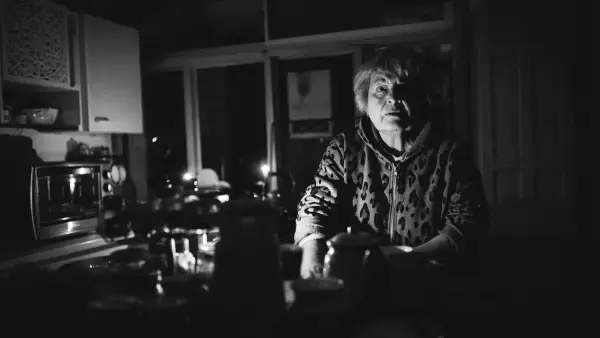
Psychology says people who always keep the television on in an empty house even when nobody is watching are not wasting electricity or avoiding silence - they are running a nervous system that learned early that quiet in a home was the forecast for something about to go wrong, and the constant low murmur of voices from another room is not a habit but a handmade version of the safety a predictable house was supposed to provide
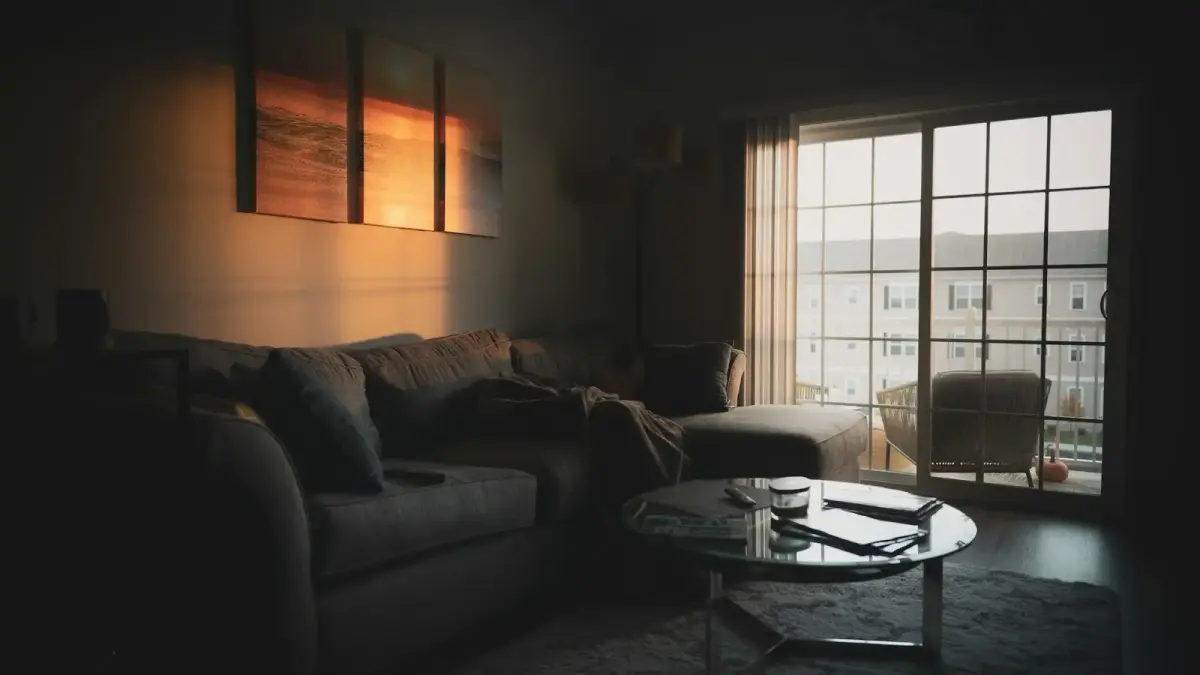
I walk through my front door at the end of a long day, grocery bags cutting into my fingers, shoes not even off yet, and the very first thing I do - before I set anything down, before I check the mail on the counter, before I even turn on the kitchen light - is reach for the remote.
The television flickers on. A cooking show. The news. It doesn’t really matter what. What matters is that the house has a voice now.
I used to feel a little embarrassed about this. My partner would tease me gently about the electric bill, about the fact that nobody was watching the TV in the living room while I was cooking in the kitchen. I would laugh it off and say I just liked the background noise. But the truth is something quieter and older than preference. The truth is that an empty, silent house makes something in my chest tighten in a way I can’t fully explain to people who didn’t grow up the way I did.
If you do this too - if you walk into silence and immediately need to fill it, if you fall asleep to reruns, if you leave the radio on for the dog even though the dog doesn’t care - I want you to know that what you’re doing is not what people think it is. It’s not laziness. It’s not screen addiction. It’s not an inability to sit with your own thoughts.
It is something your body learned to need a very long time ago.
When silence was not peaceful - it was a warning
For a lot of us, quiet in the house didn’t mean calm. It meant something was building.
Maybe your parents had just finished an argument and the silence that followed was thick, charged, almost electric. Maybe your mother went quiet for days and you had to read the temperature of every room you walked into. Maybe the house got very, very still right before your father came home, and that stillness was the part that scared you more than whatever came next.
Children are extraordinary listeners. Not in the way adults mean when they say that - not obedient, not attentive to instructions. Children listen the way animals listen. They are tracking the environment for shifts, for changes in tone, for the difference between a door closing normally and a door closing with weight behind it.
A 2015 study published in the journal Child Development found that children from high-conflict homes develop heightened sensitivity to angry vocal tones - their brains process hostile sounds faster and with more neural activation than children from low-conflict environments. They become, essentially, specialists in auditory threat detection.
This is not a disorder. It is a survival adaptation. When the sounds around you carry information about whether you are safe, you learn to listen with your whole body.
And silence? Silence carries information too. In an unpredictable home, silence is not the absence of danger. It is the pause before it.
Your nervous system kept the lesson even after you left
Here is the part that catches people off guard. You grew up. You moved out. You built a life that is nothing like the one you came from. Your home is safe. Your doors close gently. Nobody is about to erupt.
But your nervous system doesn’t know that.
Dr. Stephen Porges’ polyvagal theory describes how our autonomic nervous system constantly scans the environment for cues of safety and threat - a process he calls neuroception. It happens below conscious awareness. You don’t decide to feel unsafe in a quiet room. Your body decides for you, based on associations laid down decades ago.
A 2019 study in Frontiers in Psychology found that adults who experienced childhood adversity showed altered autonomic responses to environmental silence - their heart rate variability patterns suggested their bodies were interpreting quiet not as rest, but as a signal to prepare. Their systems were bracing.
This is why you can know, intellectually, that your house is safe and still feel a low hum of unease when it goes quiet. Your prefrontal cortex understands that nobody is coming home angry. But your brainstem is running an older program, one that was written when you were six years old and very, very good at reading rooms.
The television isn’t drowning out silence. It is replacing a cue of danger with a cue of safety.
The sound of a populated house you never reliably had
Think about what the TV actually provides when you leave it on. Not the content. Not the plot of whatever is playing. The texture of it.
Voices talking at a normal volume. Laughter, sometimes. The rhythmic, predictable cadence of people speaking to each other without yelling. The low, warm murmur of a house that has people in it - people who are fine, people who are not about to fight, people who are just existing in a room together.
That is the sound of a regulated household. It is the sound that children in stable homes hear all the time and never notice, because it is so ordinary it becomes invisible. The gentle ambient noise of adults going about their evening without crisis.
If your childhood home didn’t reliably provide that, your adult self may be constructing it manually. You are not passively consuming media. You are actively building an acoustic environment that tells your nervous system: this house has people in it, and they are okay, and nothing bad is about to happen.
Susan Cain, in her work on temperament and environment, has written about how profoundly our surroundings shape our internal state - how the sensory landscape of a room can either activate or soothe us in ways we rarely examine consciously. The background television is doing soothing work that has nothing to do with entertainment. It is environmental regulation disguised as a bad habit.
This is not the same as being unable to be alone
People sometimes conflate needing background noise with fearing solitude. They are not the same thing.
You might be perfectly comfortable being alone. You might even crave it. You might love your own company, enjoy quiet hobbies, spend hours reading or thinking or walking by yourself. And still need the TV on when you’re home.
Because it was never about being alone. It was about what silence specifically meant inside four walls. A quiet park doesn’t trigger the same response. A silent car might not either. It is the quiet of a house - the particular acoustic signature of an empty domestic space - that activates the old pattern.
A 2021 study in Psychological Science explored context-dependent stress responses and found that environmental cues tied to early experiences could trigger physiological arousal even in objectively safe conditions. The researchers noted that these responses were highly specific - the same person could feel perfectly calm in one quiet setting and deeply unsettled in another, depending on which environmental features matched their early associations.
Your living room in silence matches something. The same living room with a cooking show playing does not.
This is precise. This is specific. This is your body doing exactly what it was trained to do.
The people who judge this have never had to read a room to survive
There is a particular kind of advice that well-meaning people give about this. Turn off the screens. Sit with the silence. Learn to be comfortable with discomfort. Practice mindfulness.
And for some people, that is genuinely helpful guidance. For people whose relationship with silence has always been neutral, learning to appreciate quiet is a reasonable goal.
But for those of us whose nervous systems coded silence as a threat, “just sit with it” is not wisdom. It is asking someone to voluntarily sit in what their body registers as a warning state and simply override decades of survival programming through willpower.
That is not how nervous systems work.
Healing, when it comes, doesn’t arrive through forcing yourself into the thing that activates you. It arrives through building enough safety - slowly, over time, with patience - that the old association starts to soften. It might mean therapy. It might mean somatic work. It might mean gradually introducing slightly longer periods of quiet while doing something that makes you feel safe.
Or it might mean leaving the TV on for the rest of your life and understanding that this is a perfectly legitimate way to manage a nervous system that learned its lessons early and learned them well.
The television is a night light for the ears
I want you to think about night lights for a moment. Nobody shames a child for needing a night light. We understand, intuitively, that darkness can feel frightening to a small body, and that a soft glow in the corner of the room provides comfort that costs nothing and harms no one.
The TV in an empty house is the same thing, just translated into sound. It is a small, warm source of something your nervous system recognizes as safe. It costs a few cents an hour in electricity and it buys you the ability to relax in your own home.
That is not a waste. That is not a failure of mindfulness. That is not evidence that you can’t handle being alone.
That is you, taking care of yourself with the tools available. That is you, building the version of home that your body needs - the one with voices in it, the one with laughter drifting in from the next room, the one where the sounds all say the same thing: nothing bad is happening here.
If you grew up listening for footsteps, for tone shifts, for the specific kind of quiet that meant the house was about to become unsafe - and you now fill your adult home with the gentle noise of people who are fine - I want you to know something.
You are not broken. You are not avoiding yourself.
You are doing something remarkably tender. You are giving your nervous system the one thing it always wanted and rarely got: the sound of a house where everything is okay.
Leave the TV on. You earned the peace it gives you.