She is 60 and just realized she has never once left a social gathering without replaying every word she said on the drive home - not the joke that made everyone laugh, not the story they asked her to tell again, but the one sentence she is not sure landed right, the pause after her opinion that lasted half a second too long, the moment she wonders if she talked too much about herself - because a girl who was told in the car ride home from a family dinner that she had embarrassed them learned that a woman's words are evidence to be reviewed after every occasion, and the sixty-year-old who drives home in silence editing conversations that are already finished is not overthinking but still preparing her defense for a trial that ended forty years ago
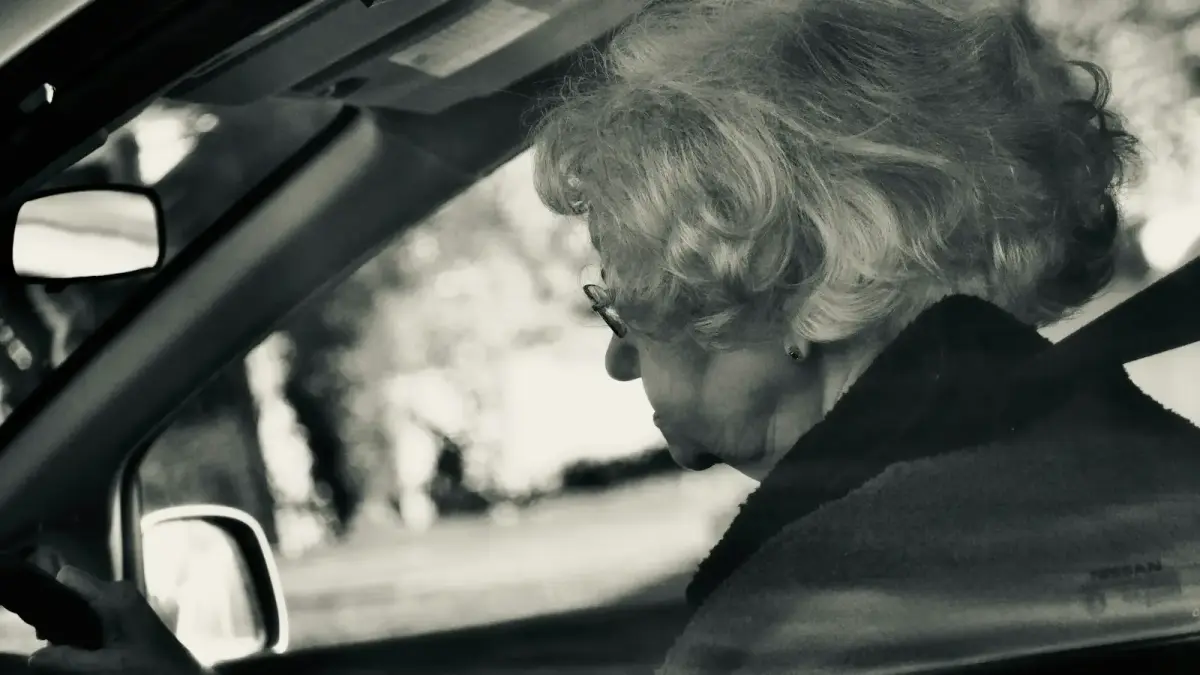
The party was fine. Everyone said so. The food was good, the conversation was warm, someone laughed at her story about the dog and the screen door. Her friend hugged her on the way out and said, “I’m so glad you came.”
And then she got into the car.
And it started.
Not a full panic. Not anything that dramatic. Just the quiet replay. The mental tape rewinding to every sentence she’d spoken over the past three hours, searching for the one that might have been too much.
The joke about her neighbor - was that mean? The story about her daughter - did that go on too long? The moment she said something about the election and the room went quiet for half a second before someone changed the subject. Was that because of her? Did she ruin the mood? Did she talk about herself too much?
She is sixty years old. She has been doing this her entire adult life. And she only just realized it isn’t normal. Or rather, she realized it might be normal for women like her - women who were trained to audit their own words before anyone else could.
The car ride she never forgot
She was nine. Maybe ten. Her family had just left her aunt’s house after a holiday dinner, and she was still buzzing with the energy of having been listened to. She’d told a story at the table. The adults had laughed. She’d felt, for a bright, brief moment, like she mattered in that room.
Her mother turned around in the passenger seat before they’d even left the neighborhood.
“You talked too much tonight. People don’t want to hear a child go on and on like that.”
That was it. One sentence. No yelling, no punishment. Just a correction. A quiet recalibration of who she was allowed to be in public.
She doesn’t remember what she said at that dinner. She remembers exactly what her mother said in the car.
And she remembers the silence after - the long drive home where she sat in the back seat going over everything she’d said at the table, trying to figure out which part was the part that was too much.
She has been in that back seat ever since.
What post-event processing really is
Psychologists have a term for what she does after every gathering. They call it post-event processing - a cognitive pattern where a person mentally reviews social interactions afterward, scanning for mistakes, missteps, and moments of perceived failure.
A 2005 study published in Behaviour Research and Therapy found that people with high social anxiety engage in prolonged and distorted post-event processing, and that the memories they focus on are overwhelmingly negative - even when the actual interaction was neutral or positive.
But here is what matters: for many people, this pattern didn’t begin with a diagnosis. It began with a correction. A single moment in childhood where they learned that what they said in public would be evaluated in private. That there would be a review. That the ride home was where the verdict came.
The gathering was not the event. The car ride was.
And if you are someone who learned this early enough, post-event processing doesn’t feel like anxiety. It feels like responsibility. Like something a careful person does. Like the bare minimum of social awareness.
You don’t even notice you’re doing it until someone says, “Why are you so quiet on the way home?” and you realize you’ve been running a full internal investigation for the past fifteen minutes.
The invisible transcript
What nobody tells you about this kind of self-monitoring is that it edits the memory in real time.
She could have a wonderful evening. She could be funny, engaged, warm. People could tell her she lights up the room. And on the drive home, the only thing she’d remember clearly is the one moment she isn’t sure about.
Not the compliment. Not the laughter. Not the connection. Just the pause. The half-second of silence after she offered an opinion. The look on someone’s face that might have been disagreement or might have been indigestion. The moment she started a story and wondered, halfway through, if she was boring everyone.
A 2019 study in the Journal of Experimental Psychopathology found that post-event processing creates a negativity bias in memory - people reconstruct the event as worse than it actually was, and those reconstructed memories become the “real” version of what happened.
She doesn’t remember the party. She remembers the version of the party her anxiety wrote on the way home.
And the version her anxiety writes is always the same: you were too much. You took up too much space. You should have been quieter.
It is her mother’s voice. It has always been her mother’s voice.
The girl who learned that words are evidence
There is something particular about being a girl who is corrected for speaking.
Not for being rude. Not for interrupting. Not for saying something cruel. Just for talking. Just for being present and vocal and taking up conversational space in a room full of adults.
The lesson isn’t “be polite.” The lesson is “your words are on trial.”
And once you learn that lesson, you never unlearn it. You just get better at preparing your defense.
She became an excellent social performer. Warm but measured. Funny but not too loud. Opinionated but always ready to soften it with a laugh or a “but what do I know.” She learned to monitor herself in real time - to watch people’s faces while she was speaking, to read micro-expressions for signs that she had crossed some invisible line.
She thought this was emotional intelligence.
It wasn’t. It was surveillance.
Research by psychologist Thomas Gilovich at Cornell has shown that people consistently overestimate how much others notice and judge their behavior - a phenomenon called the spotlight effect. We believe we are being watched far more closely than we actually are.
But for the girl who was watched - who was evaluated and corrected in private for what she did in public - the spotlight effect isn’t a cognitive distortion. It’s a memory. She doesn’t imagine that people are reviewing her words after the party. She knows they might be, because someone once did.
The defense that never rests
She is sixty now. Her mother passed years ago. The family dinners that created this pattern don’t even happen anymore. The jury is gone. The courtroom is empty.
But she still prepares her defense.
Every drive home. Every quiet moment after hanging up the phone. Every night lying in bed after a dinner with friends, going over the conversation one more time.
Did I say too much about my health problems? Was I complaining? Did I dominate the conversation? Should I have asked more questions? Was I boring? Was I too much?
The questions don’t change. They haven’t changed in fifty years. Because they were never really about the party. They were about the car ride. They were about the moment a little girl learned that the price of being heard was being evaluated afterward.
And the sixty-year-old woman who does this - she’s not anxious. She’s not weak. She’s not even overthinking, not really.
She’s completing a ritual that was installed before she had any say in the matter. She’s doing what she was trained to do. She’s performing the only version of “after the party” she has ever known: the review. The audit. The quiet, private reckoning with whether or not she deserved to take up space.
The trial that ended decades ago
Here is what I want to say, gently, to the woman who is reading this and recognizing herself.
The trial is over.
It ended years ago, maybe decades ago. The person who appointed themselves judge of your words at family dinners - they are no longer in the courtroom. Maybe they’ve passed. Maybe they’ve changed. Maybe they never even realized they were conducting a trial in the first place.
But you are still showing up every night with your evidence organized, ready to argue your case.
You are still going over the transcript of a dinner party at 11 p.m., highlighting the parts where you think you said too much, preparing a defense for a charge that no one is filing.
You don’t have to do this anymore.
Not because the habit will vanish overnight. Not because reading one article will undo fifty years of conditioning. But because knowing what it is - naming it, recognizing the car ride it came from - is the first step in realizing that the voice reviewing your words is not your own. It never was.
You were a child who was excited to be heard. Someone taught you that excitement was dangerous. And you have been editing yourself ever since - not because you talk too much, but because you were told once, at exactly the wrong age, that you did.
A 2021 study published in Cognitive Therapy and Research found that people who traced their social anxiety patterns back to specific early experiences showed significant improvement when they were able to separate the original event from their current behavior. In other words: knowing where the pattern started is part of how it loosens.
You don’t have to stop the replay overnight. But on the next drive home, when the tape starts running - when you start scanning for the sentence that might have been too much - try asking yourself one question.
Whose voice is that?
Because I suspect it’s not yours. I suspect it belongs to a car ride from a very long time ago. And the girl in the back seat deserves to finally stop rehearsing her defense for a crime she never committed.
You were never too much. You were a child who wanted to be part of the conversation.
And you still are. And that is still not a crime.