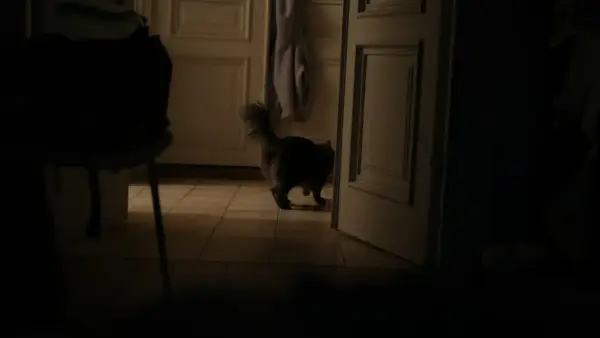
She is 62 and just realized she has never once left the house without telling someone where she was going - not the grocery store, not the walk around the block, not the drive to see a friend twenty minutes away - and even now that she lives alone she catches herself saying it out loud to an empty hallway, because a girl who left without announcing it once and came home to a mother waiting at the door with a face that made clear her absence had been noticed and cataloged learned that a woman's movement through the world requires a flight plan, and the sixty-two-year-old who still narrates her departures to no one is not forgetful but still filing the report her childhood made mandatory
I said it again this morning.
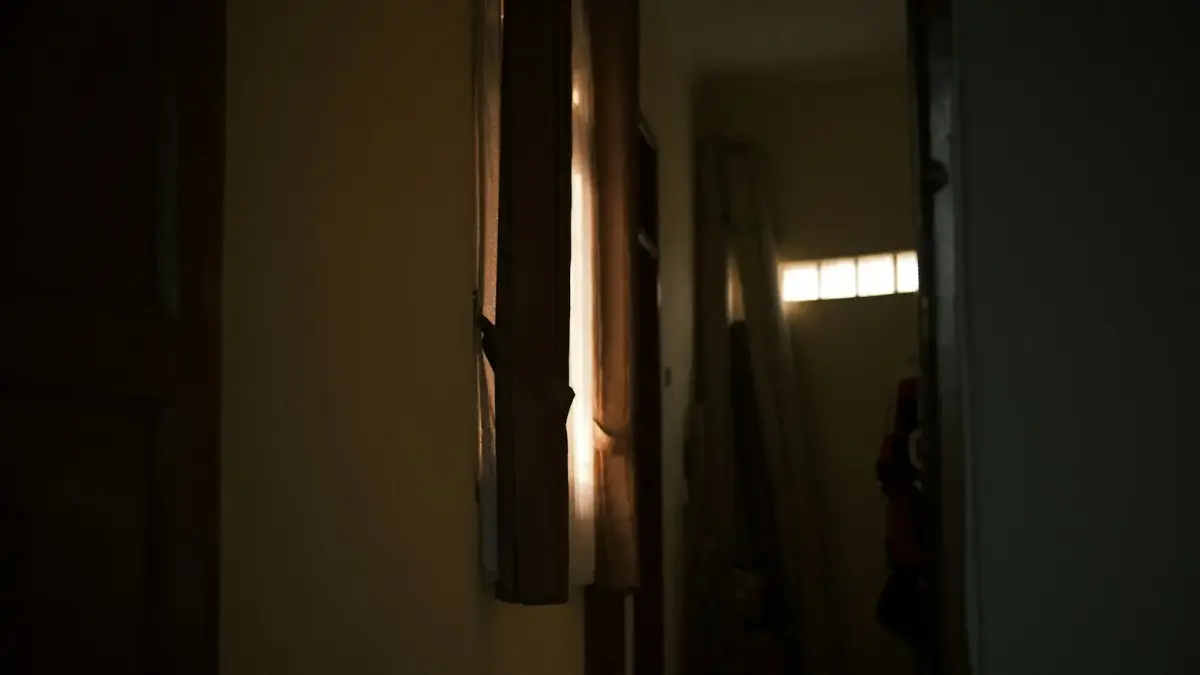
“Just running to the post office.” I said it to the coat rack and the row of shoes by the front door and the thin November light coming through the sidelights. Nobody lives here but me. Nobody has lived here but me for three years. And still, every single time I pick up my keys, something in my chest tightens until I say the words out loud.
Where I am going. How long I’ll be. The general radius of my absence.
I am sixty-two years old and I have never once walked out my own front door without filing a departure report to someone - or, when no one is available, to the empty air itself. It took me this long to hear it. To stand in my hallway with my hand on the doorknob and realize I was narrating my movements to a house that cannot listen, and that I have been doing some version of this since I was nine.
This is the story of that habit. And maybe it’s yours, too.
The girl at the door
I was a quiet kid. Good grades. Made my bed without being asked. The kind of daughter people called “easy,” which I now understand meant I had already learned to take up as little space as possible while still technically being present.
But one Saturday afternoon when I was about nine, I walked to my friend Amy’s house three streets over without telling my mother first. I didn’t think about it. I just went. The way kids go - sneakers on, screen door banging, summer pulling me forward by the collar.
I was gone maybe forty-five minutes.
When I came home, my mother was standing at the front door. Not on the porch - at the door. Like she’d been pressed against it, watching through the glass.
She didn’t yell. That would have been easier, actually. She just looked at me with a face that said: I noticed you were gone. I have been counting every minute. And now you need to understand what your absence did to this house.
“Where were you?” she asked. But it wasn’t really a question. It was an indictment.
I remember the guilt arriving in my body like something physical - a flush that started in my stomach and climbed to my face. I had done something wrong. Not by going to Amy’s house. By leaving without narrating it first.
By moving through the world without permission.
The habit that grew roots
That was the day the rule installed itself. And the thing about rules that get installed in childhood is that they don’t stay small. They spread.
By high school, I announced every departure. “Going to the library.” “Running to Sarah’s, back by dinner.” “Just getting gas.” My mother would nod - not with gratitude, exactly, but with the quiet satisfaction of someone whose system was functioning correctly.
A 2019 study published in the Journal of Personality and Social Psychology found that children who grow up with parents who respond to normal autonomy with distress often develop what researchers call “compulsive caretaking behaviors” - habits designed to manage the parent’s emotional state rather than the child’s actual needs. The child learns that their movement through the world is not neutral. It carries emotional weight. It requires justification.
I didn’t know any of that then. I just knew that leaving without a verbal itinerary felt dangerous.
By my twenties, it had become automatic. I told my college roommate when I was going to the vending machine down the hall. I told my husband on our honeymoon that I was stepping out to the hotel lobby. “Just going to look at the gift shop,” I said, and he looked at me with genuine confusion because we had been married for approximately thirty-six hours and I was already filing reports.
The habit didn’t just cover departures. It covered arrivals, too.
”I’m back” - to no one
When my marriage ended and I moved into this house alone, I thought the announcements would stop. Who would I be performing for? The walls? The spider plant on the kitchen windowsill?
But the first time I came home from the grocery store, I walked through the door and said “I’m back” to an empty kitchen. The words were out of my mouth before I could catch them - a reflex so deep it had bypassed every conscious decision I’d ever made about who I wanted to be.
I texted my adult daughter: “Heading to the pharmacy, back in 20.” She hadn’t asked. She lives in Portland. She was probably in a meeting. But my thumbs typed it out and hit send before my brain could intervene.
When I walk the dog, I leave a note on the counter. “Out with Rosie, back soon.” There is nobody in this house to read the note. Rosie is with me, so she already knows.
I once caught myself telling a friend on the phone that I was “about to step outside for a minute to check the mail” - as if checking my own mailbox on my own property required verbal clearance from a woman who lives eight hundred miles away.
Gabor Mate has written extensively about how the body stores the adaptations of childhood long after the environment that required them has changed. We develop strategies to stay safe in homes that felt unpredictable, and then we carry those strategies into houses where they no longer serve any function - except to remind us that we once lived somewhere that demanded them.
That is what the announcements are. They are the residue of a house where my absence was a problem that required solving.
The body remembers the contract
Here is what I have come to understand about this habit, and I say it gently because I know how many women are reading this and recognizing something they do every day without knowing why.
My nervous system learned, at nine years old, that unannounced movement is a form of abandonment.
Not logically. Logically, I know that walking to the store is just walking to the store. But the part of me that is still standing in that doorway looking at my mother’s face believes something different. It believes that if I leave without filing a report, I have done something to someone. I have injured them with my absence. I have committed the crime of existing somewhere they didn’t authorize.
A 2021 study in Frontiers in Psychology examined what researchers called “departure anxiety” - the specific discomfort some adults feel when leaving a space without explicitly communicating their intention to return. The study found that this pattern was strongly correlated with childhood environments where a parent’s emotional state was contingent on the child’s physical proximity. In other words, kids who learned that their presence was their parent’s regulation tool grew into adults who could not leave a room without first reassuring everyone in it that they would come back.
That hit me in the chest when I read it. Because that’s exactly what the announcements are. They aren’t logistical updates. They are reassurances.
“I’m going to the store” doesn’t mean “I need milk.” It means “I am coming back. Please don’t be upset. I am not leaving you. I am just temporarily relocating my body and I will return it to this approved location shortly.”
Every departure I have ever narrated has been a tiny act of emotional management directed at someone who may or may not have needed it - and now, at sixty-two, directed at no one at all.
What it really means
I want to be careful here, because I think it would be easy to read this and feel embarrassed. To think: I do that too, and something must be wrong with me.
But I don’t think something is wrong with you. I think something happened to you.
Brene Brown has talked about how the behaviors we carry from childhood are not malfunctions. They are evidence of how hard we worked to stay connected to the people we loved. They are proof that we cared enough to build an entire operating system around someone else’s feelings.
The woman who narrates her departures to an empty hallway is not neurotic. She is not broken. She is a woman who loved hard enough - at nine, at twenty-five, at forty-eight - to believe that her absence mattered to someone. That her coming and going was worth tracking. That she was important enough to be missed.
And even now, when the house is quiet and there is no one waiting at the door with a face full of carefully measured disappointment, her body still honors the contract. Still files the report. Still says the words.
Because somewhere deep in the architecture of who she is, there lives a girl who learned that love and location are the same thing. That being loved means being accounted for. And that the price of freedom is always a brief, spoken itinerary delivered to whoever might be listening.
The hallway doesn’t answer
I said it again this morning. “Just running to the post office.” The hallway did what hallways do. It held the sound for a second and let it go.
But I’m starting to think the habit isn’t something I need to fix. Not yet, anyway. Maybe not ever.
Because the announcements - the “just going to the store” and the “be back in twenty” and the “I’m home” spoken to a kitchen that already knows - they aren’t proof that I’m still afraid. They’re proof that I still believe my comings and goings are worth noting.
That I matter enough to be missed.
That somewhere in this body is a woman who never stopped believing she was worth waiting for, even when nobody was standing at the door anymore.
So if you do this too - if you announce your departures to people who didn’t ask, text your arrival times to friends who weren’t tracking, say “I’m back” to an empty room - I want you to know something.
You are not confused. You are not stuck. You are still honoring something that started a long time ago in a house where your presence was the only thing holding the peace together. And the fact that you still report your movements to the air itself means you haven’t forgotten the girl who first learned that being loved required being findable.
She’s still in there. She’s still filing the report.
And the sixty-two-year-old who says “just going to the store” to an empty hallway is not talking to no one. She is talking to her.