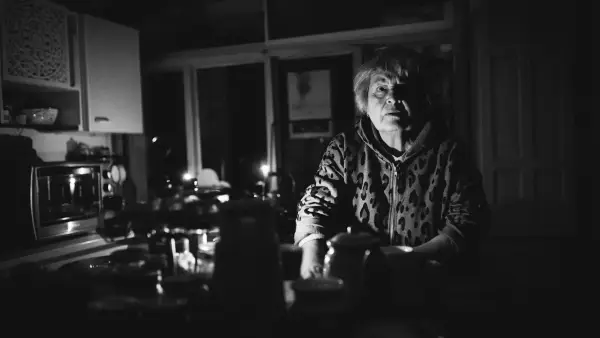
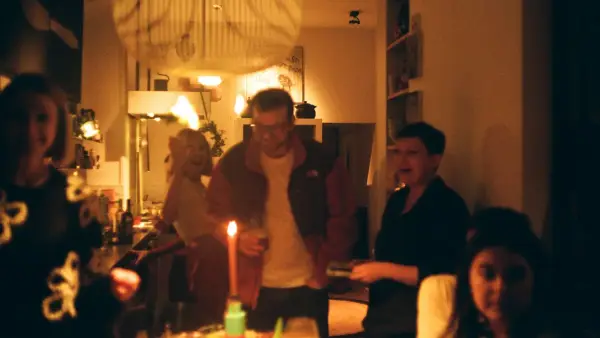
There are women who have never once sat down to eat a meal at their own table while the food was still hot - who served the children first, then the husband, checked if anyone needed seconds, wiped the counter, refilled the water pitcher, and by the time they finally pulled out their own chair the plate had gone cold and nobody at the table noticed because a woman eating last was never something anyone in that family thought to question
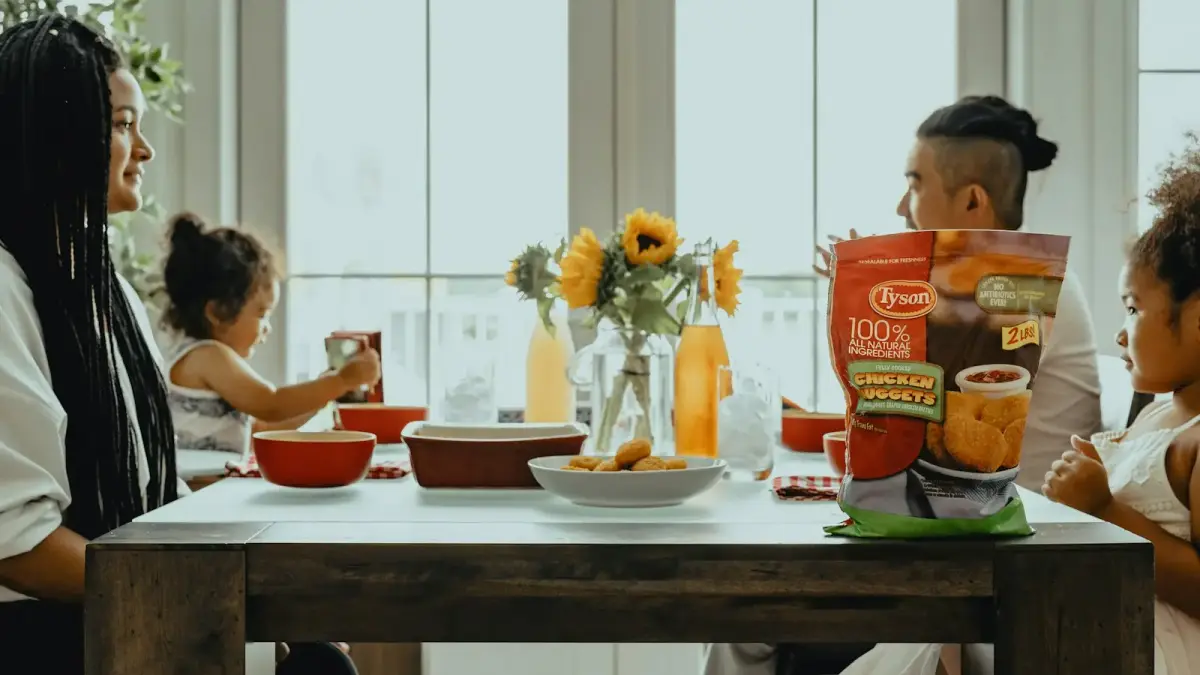
She stood at the microwave watching the plate turn in slow circles, the hum filling a kitchen that had gone quiet. Everyone else had finished. The dishes were mostly in the sink already. Her portion - the one she’d set aside on the back of the stove while she carved the chicken and spooned the potatoes and made sure the green beans made it onto at least two of the three children’s plates - had gone cold twenty minutes ago.
This was not unusual. This was a Tuesday.
She pressed the button, listened for the beep, pulled the plate out with a folded towel, and sat down in the chair she rarely used during the actual meal. The kitchen smelled like dinner, but dinner was over. She ate standing up more often than she’d ever admit, leaning against the counter with a fork in one hand and a sponge in the other, taking bites between tasks that never quite ended.
If you’d asked her whether this bothered her, she would have looked at you like you’d asked whether gravity bothered her. It was just how things worked. It was just what she did.
It was just what her mother did, too.
The inheritance nobody talked about
She learned it the way most women learn it - not through instruction, but through observation so constant it became invisible.
Her mother stood while the family sat. Her grandmother stood while the family sat. Nobody announced this arrangement. Nobody negotiated it. It simply was, the way the kitchen was always at the back of the house and the dining room was always someone else’s destination.
The serving came first. Always. The children needed their food cut. The husband needed his plate filled. Someone’s glass was empty. Someone wanted bread. Someone didn’t like the way the sauce touched the rice, so a new plate had to be made.
By the time the woman sat down - if she sat down - conversation had already moved on without her. The family was mid-story, mid-laugh, mid-argument about something that happened at school. She slid into her chair the way you slide into a movie twenty minutes late. You catch up. You don’t ask anyone to rewind.
A 2020 study published in the journal Sociology found that women in heterosexual households perform an average of 65% more unpaid domestic labor than their partners, even when both adults work full-time. But the study measured hours. It didn’t measure the thing that’s harder to count - the way a woman’s relationship to food in her own home becomes an afterthought, a thing she fits around everyone else’s hunger.
Her mother never complained about it. That’s the part that sticks. Not because her mother was a martyr, but because her mother genuinely did not appear to register it as something worth mentioning. A woman eating last was like a woman being shorter than her husband. It was just a fact of the household. Unremarkable. Built in.
The body learns to wait
There’s a physical dimension to this that nobody talks about.
Eating cold food changes the way you experience a meal. The textures are different. The flavors flatten. A dish that was meant to be savored becomes something you get through. You eat faster because the food isn’t inviting you to slow down. You eat less because lukewarm pasta doesn’t ask for seconds the way hot pasta does.
Your body learns to delay its own signals. Hunger stops being urgent because urgent hunger is inconvenient when there are plates to fill and mouths to feed. You learn to push through the hollow feeling in your stomach the way you push through a headache - with quiet tolerance and the assumption that it will pass.
Dr. Gabor Mate has written extensively about how chronic self-suppression - putting others’ needs ahead of your own so consistently that you lose track of your own - doesn’t just affect mood. It affects the body. The nervous system adapts. It stops sending the signals it knows will be ignored.
She stopped feeling hungry at dinnertime years ago. She felt hungry later, at nine or ten at night, standing in front of the open refrigerator eating slices of cheese off the block. That was her real dinner. The plate at the table was a performance of participation. The cheese at 10 PM was honest.
And the thing is, she knew this. Somewhere beneath the routine, she knew that her relationship to food in her own kitchen had become strange. She cooked beautiful meals. She put thought into them. She timed them so everything would be ready at once, the rolls warm, the butter soft, the salad dressed at the last minute so it wouldn’t wilt.
Then she gave all of it away. Every plate, every careful arrangement - it left her hands and landed in front of someone who didn’t see the choreography. She ate what was left, at whatever temperature it happened to be, and she cleaned up.
The invisible ledger
If you added up all the meals, the math would be staggering.
Three meals a day, seven days a week, for the eighteen years each child lived at home. That’s roughly 19,700 meals per child. For three children, that’s close to 60,000 meals she either cooked, served, or managed. And at the vast majority of them, she ate last.
Nobody was counting. That’s the point. There was no ledger, no acknowledgment, no annual review of household contributions. The work was invisible not because it was hidden but because it was expected - the way oxygen is expected. You don’t thank the air.
Research by sociologists Allison Daminger and others at Harvard has documented what they call “cognitive labor” - the mental work of anticipating needs, planning meals, remembering who doesn’t eat what, tracking what’s running low. A 2019 study in the American Sociological Review found that women carry the majority of this cognitive load even in couples who believe they share domestic work equally.
But the cold plate isn’t really about labor distribution. It’s about something quieter than that.
It’s about a woman who learned - through years of watching her own mother do the same thing - that her comfort was the flexible variable in the household equation. Everyone else’s needs were fixed. Hers could bend. Hers could wait. Hers could be microwaved.
She wasn’t angry about it. That’s what makes it land so hard. Anger would have been easier. Anger would have meant she saw it clearly and chose to tolerate it. But she didn’t see it clearly. She saw it the way a fish sees water - as the medium she lived in, not as a condition that could be otherwise.
The temperature of recognition
Then the children left.
Not all at once. The oldest went first, then the middle one, and finally the youngest, who lingered a few extra years before pulling the door closed behind her. The house got quieter in stages. Fewer plates. Fewer mouths. Fewer reasons to stand while the table filled with other people’s needs.
And one evening - ordinary, forgettable - she made dinner for two instead of five. She set the table. She sat down at the same time as her husband. She picked up her fork.
The food was hot.
Not reheated. Not lukewarm. Not rescued from the back of the stove after twenty minutes of serving other people. Hot the way she had cooked it. The temperature it was meant to be.
She didn’t cry. She didn’t have a revelation she could put into words. But she paused. The fork hovered. Something shifted in her chest - a recognition that lived below language, below thought. Something like grief, but softer.
She was sixty-two years old, and this was the first time she could remember eating her own cooking at its intended temperature. Not because anyone had prevented her from doing so, but because she had been serving everyone else first for so long that her own hunger had become the last item on a list that never ended.
Later, after her husband had gone to the living room and she was washing the two plates and two forks, she stood at the sink and felt the full weight of all those years. Not as resentment. As something closer to tenderness - a sadness for the woman she had been at thirty-five, at forty, at fifty. The woman who stood in this same kitchen and never once thought to make herself a plate first.
What was never questioned
The cruelest part isn’t the cold food. The cruelest part is that nobody thought to question it.
Not the husband, who loved her genuinely and would have been horrified to learn she experienced dinner as a series of tasks that ended with a lukewarm plate. Not the children, who grew up watching their mother stand and assumed that mothers stand. Not the woman herself, who had so deeply internalized the pattern that questioning it would have felt like questioning her own usefulness.
Brene Brown has talked about how the most painful experiences are often the ones we refuse to name - not because they’re dramatic, but because they’re so ordinary that naming them feels like making a fuss over nothing. The cold plate feels like nothing. It’s just dinner. It’s just one meal that got cold because she was taking care of people.
But multiply nothing by thirty years, and it becomes a life.
A life in which a woman’s hunger was always the thing that could wait. A life in which care flowed outward so consistently that the idea of it flowing inward felt foreign, indulgent, almost selfish.
She wasn’t a victim. She would reject that word immediately and she would be right to. She built a home. She raised humans. She fed people she loved, and she did it with thought and skill and consistency that bordered on art.
But she deserved to eat her own food while it was still warm. She deserved to sit down when everyone else sat down. She deserved to be part of the meal, not just the person who made it possible.
And if you recognized her in this story - if you are her, or if you watched her do this your entire childhood and never thought to pull out her chair - then maybe the only thing worth saying is this:
She wasn’t wrong to take care of everyone. She was wrong to leave herself off the list.
And it’s not too late to save her a plate.