You started checking the weather for a city you have never visited because your daughter moved there in August, and now a cold front 900 miles away can ruin your Wednesday - because a parent's body never stops orienting toward the climate their child walks through, and geography rearranges the logistics of love but never the instinct
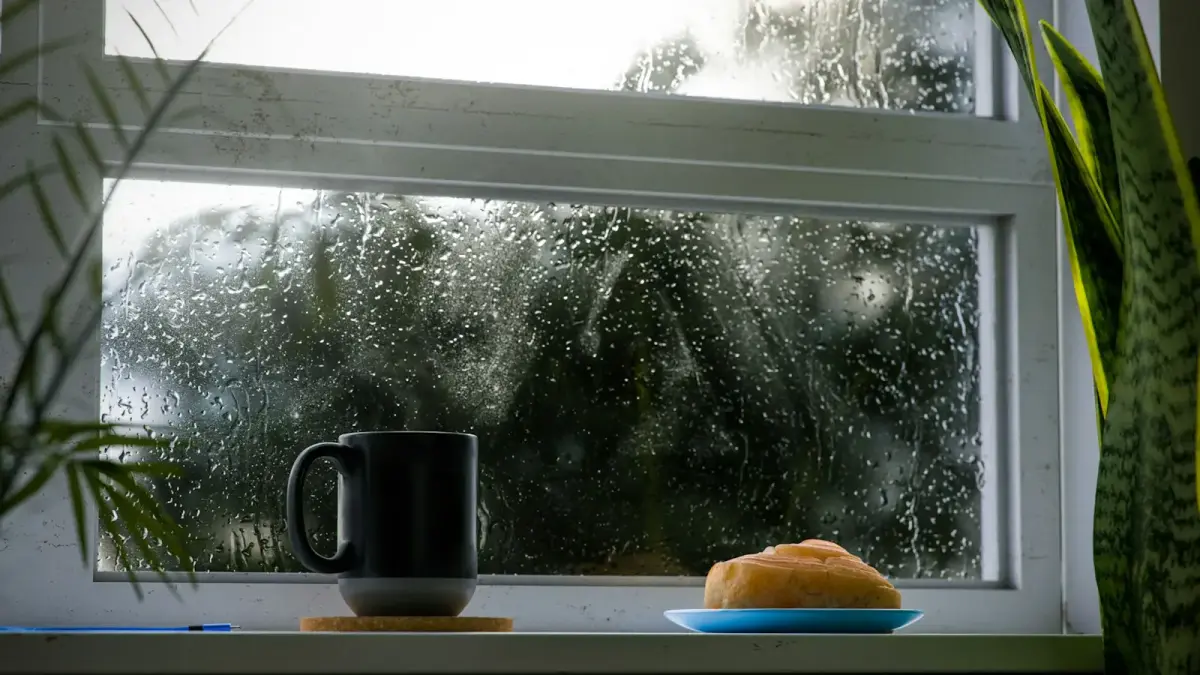
I check the weather in Denver every morning before I check it here.
This started in August, when my daughter loaded a rented SUV with too many boxes and not enough warm coats and drove fourteen hours to a city I had only seen on a map. I stood in my kitchen doorway and watched the taillights disappear and then I opened my phone and added Denver to my weather app. Right below my own zip code.
Like it was the most natural thing in the world.
It has been fourteen months. I still check Denver first.
I know when it snows there before she texts me about it. I know when the wind chill drops below what her thinnest jacket can handle. I know the sunrise time in a city I have visited exactly twice, and I know that on Thursday a cold front is expected to sweep through the Front Range, which means I will spend Thursday slightly anxious for reasons I could never explain to someone who has not done this.
This is not a disorder. This is not codependency. This is the quiet, persistent, geographically displaced love of a parent whose child lives in a different weather system.
The city you have never lived in but somehow know
I can tell you that Denver gets 300 days of sunshine a year but that the UV index at altitude is deceptive. I know that the I-25 corridor floods during summer monsoon season. I know which neighborhoods have the best walkability scores because I spent an evening researching them the week after she signed her lease.
None of this information was requested. She did not ask me to learn her city. But my brain - or maybe something deeper and older than my brain - started collecting data about the place where my daughter sleeps, as though knowing the terrain could somehow keep her safe from 900 miles away.
A friend of mine does the same thing with Austin. Her son moved there for a tech job three years ago, and she now knows more about the Texas power grid than most Texans. She tracks heat advisories. She understands ERCOT.
She once called her son during a winter storm warning to remind him to fill his bathtub with water, and he laughed and said, “Mom, how do you even know about this?”
She knows about it because her body never stopped keeping watch.
The love language nobody named
We have words for so many kinds of love. Eros, philia, agape, storge. We have attachment styles and love languages and entire therapeutic frameworks for understanding how human beings hold onto each other.
But nobody ever named this one. The quiet, daily, meteorological devotion of a parent tracking the conditions surrounding a child who no longer lives under their roof. The way you read local news from a city you have never belonged to, scanning for anything - storms, traffic accidents, air quality alerts - that might be touching the person you raised.
A 2015 study published in the Journal of Family Psychology found that parental concern for adult children’s wellbeing does not diminish with distance or time - it simply redirects. The researchers described what they called “ambient vigilance,” a low-grade, persistent state of monitoring that parents maintain regardless of how old their children get or how far away they move. It is not worry in the clinical sense.
It is closer to a compass setting. Something in you keeps pointing toward them.
I think about that phrase often. Ambient vigilance. It sounds clinical, but it describes something that feels almost sacred. The way a part of your nervous system never fully accepts that your child is somewhere you cannot reach.
Geography moved the body, not the bond
When she lived twenty minutes away, I could drive past her apartment and feel something settle. Not because I was checking on her - she is a grown woman, capable and strong. But because proximity has a chemical reality.
Dr. Ruth Feldman’s research on the neuroscience of attachment, published in Neuroscience and Biobehavioral Reviews in 2017, showed that the parent-child bond creates synchronized neural and hormonal patterns that persist across the lifespan. Oxytocin, the bonding hormone, responds to proximity. When you are near your child, your body knows.
When you are not, something remains slightly unsettled.
Distance does not sever this. It just changes the form it takes.
Instead of driving past her apartment, I check the weather. Instead of glancing at her window for a light on, I look at the sunrise time in Denver and wonder if she is awake yet. Instead of knowing what her sky looks like, I pull up a forecast and imagine it.
These are not substitutes. They are translations. The same love, expressed in the only language geography allows.
The grief that does not get a name either
There is a particular kind of loss that happens when your child moves far away, and it does not qualify for sympathy cards or casseroles. Nobody dies. Nothing ends.
In fact, everyone will remind you that this is a good thing - she got a great job, she is thriving, you should be proud.
And you are proud. You are so proud it makes your chest ache.
But pride and grief have always been able to share a room. You can be thrilled that she is building a life she loves and simultaneously gutted that her life is 900 miles from yours. You can celebrate her independence while mourning the version of your days that used to include her.
Pauline Boss, the family therapist who coined the term “ambiguous loss,” described situations where someone is physically absent but psychologically present - or the other way around. Your daughter is not gone. She is alive and well and probably eating something you would disapprove of for dinner.
But her daily physical absence is a loss your body registers even when your mind insists everything is fine.
And so you grieve in the only way that is available to you. Quietly. Productively. By checking the weather in a city where you do not live but where a part of you will always be.
What you are really doing when you check the forecast
You are not being anxious. You are not being controlling. You are not failing to let go.
You are doing the only thing a loving parent can do across distance - you are paying attention.
Every weather check is a small act of devotion. It says what you will never text: I am still here, still watching the sky for you, still wanting to tell you to bring a jacket even though you are thirty-one and have not listened to that advice since you were twelve.
There is something deeply human about this. The way we extend our care beyond our physical reach. The way we use technology - weather apps, satellite maps, local news sites - not for information but for connection.
For the illusion of proximity. For the comfort of knowing what kind of day she is having, even if she never tells us.
My mother did a version of this before smartphones existed. She used to clip newspaper articles about the city where my older brother lived and mail them to him in an envelope with no note. Weather reports, restaurant reviews, local event schedules.
He found it bewildering. I find it, now, unbearably beautiful.
She was checking the weather. She just did not have an app for it.
She does not need to know about the jacket
I have not told my daughter that I check Denver’s weather every morning. She would probably find it sweet and slightly excessive, the way adult children find most evidence of parental love - touching but unnecessary.
But that is the thing about this kind of love. It was never meant to be efficient. It was never meant to be necessary.
It exists because your body made a promise to hers the moment she was born, and geography does not have the authority to revoke it.
A cold front is coming to Denver on Thursday. I know this. She probably does not yet.
I will not call her about it. She has her own weather app, her own coat closet, her own life.
But I will know about it. I will think about it. And somewhere in the back of my mind, I will do what I have always done - I will want to tell her to bring a jacket.
Not because she needs me to. But because wanting to is the whole point.
That is the kind of love nobody names. The kind that tracks the weather in a city you have never lived in, that grieves without permission, that refuses to stop keeping watch.
It does not have a word. But it has a forecast. And I check it every morning.