Children who always took the longest route home from school - who walked three extra blocks through the neighborhood rather than take the direct path, who stopped to pet every cat on every fence and examine every garden and arrive home twenty minutes after every other child on the street - often become adults who cannot walk through the front door without sitting in the car for ten minutes first, because a child who discovered that the walk home was the only unmonitored space in her entire day never stopped needing a buffer between the world's version of her and her own
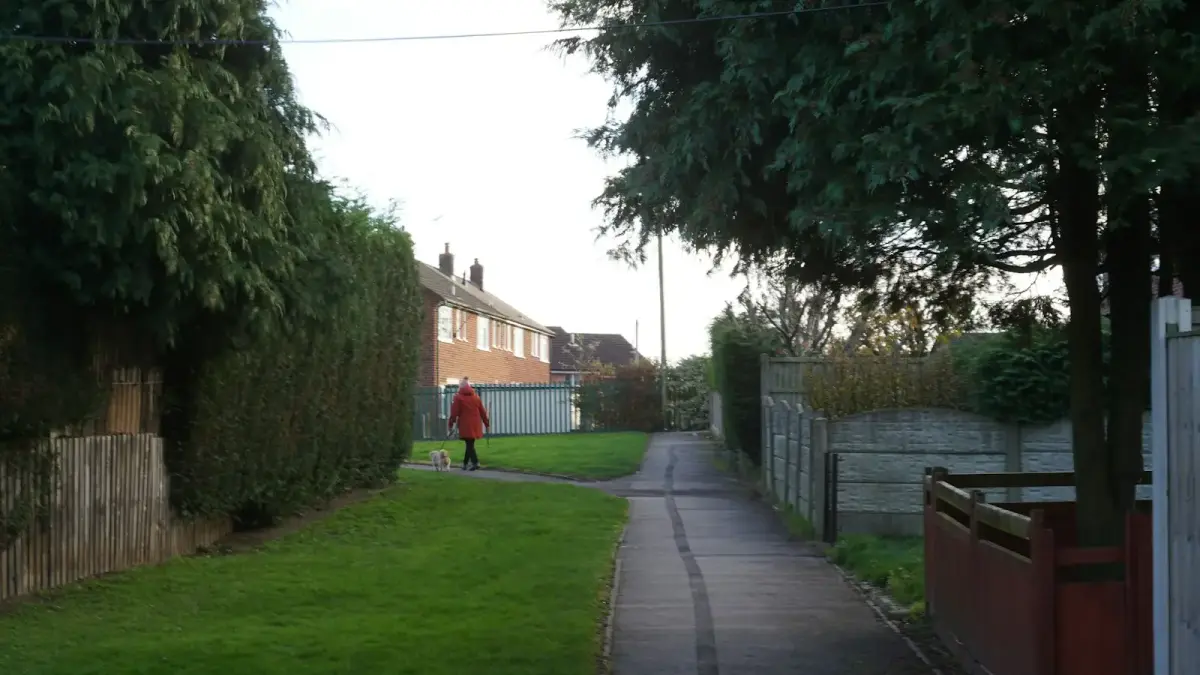
I was ten years old the first time my mother asked me why it took me thirty-five minutes to walk six blocks.
I didn’t have a good answer for her. Not one she would have understood, anyway. The truth was that I had stopped to watch a sprinkler make tiny rainbows over someone’s lawn. I had crouched down to let a tabby cat rub its face against my knuckles. I had stood at the corner of Maple and Fourth and just breathed - really breathed - for the first time since seven-thirty that morning.
I wasn’t dawdling. I was decompressing. I just didn’t have that word yet.
If you were one of those children - the ones who turned a ten-minute walk into a half-hour exploration, who knew every garden and every dog and every interesting crack in every sidewalk within a mile radius of your school - then you already know what I’m about to say. You didn’t take the long way home because you were irresponsible or easily distracted. You took the long way home because it was the only part of your day that nobody owned but you.
And if you’re now an adult who sits in the driveway for ten minutes before going inside, who needs a full hour between leaving work and being ready for a real conversation, who takes the scenic route even when you’re running late - this is where that started.
Here are the ways that child who needed the long walk home is still shaping the adult you’ve become.
1. You sit in the car after you arrive somewhere, and you cannot explain why
You pull into the driveway. You turn off the engine. And then you just - sit there. The podcast keeps playing through your phone speaker. You scroll through nothing. You stare at the garage door.
Your partner has probably asked you about this. Your kids might knock on the window. You’re not avoiding your family. You’re not unhappy to be home.
You’re doing the same thing you did when you were nine years old and took the long way past the library and the empty lot with the dandelions. You are giving yourself a bridge between the version of you the world just spent eight hours demanding and the version of you that exists when nobody is watching.
A 2014 study published in the Journal of Personality and Social Psychology found that people who score high in introversion don’t just need rest after social interaction - they need what researchers called “identity transition space,” a period where they are neither performing one role nor yet inhabiting another. For you, the car is that space. It always has been.
2. You cannot shift from “work mode” to “home mode” without a ritual
Maybe it’s changing clothes the second you walk in. Maybe it’s twenty minutes in the bathroom with the door locked. Maybe it’s a walk around the block, a specific playlist, or sitting on the porch with a glass of water before you engage with anyone.
Whatever it is, you need it the way other people need breakfast. It is not optional.
This is the adult architecture of what you built instinctively as a child. That long walk home was your first transition ritual. You taught yourself, without any guidance, that you could not go from being a student to being a daughter, from being monitored to being free, without a decompression chamber in between.
The ritual has changed. The need has not.
3. You get overwhelmed not by big events, but by the rapid switching between contexts
A party doesn’t drain you. A long workday doesn’t drain you. What drains you is a workday followed immediately by a dinner followed immediately by a phone call from your sister followed immediately by bedtime with the kids.
It’s not the quantity of interaction. It’s the absence of gaps between them.
Adam Grant has written about how the most cognitively demanding task for many people isn’t performing in a single role - it’s switching between roles without warning. For you, this isn’t just cognitive. It’s emotional. Every context shift without a buffer feels like being asked to change costumes on a stage with no curtain.
The child who took the long way home understood this before anyone taught her the word “overstimulation.” She just knew she needed a curtain.
4. You are drawn to liminal spaces - airports, hotel rooms, long drives - and you feel guilty for how much you enjoy them
There’s something about being between places that makes you feel more like yourself than actually being anywhere.
A hotel room where nobody knows you’re there. An airport gate at six in the morning. A long highway drive with no destination pressure. These in-between spaces feel like that walk home felt - unmonitored, unclaimed, belonging to no one’s schedule but your own.
A 2019 study in Frontiers in Psychology found that individuals with high sensitivity to environmental stimuli reported significantly greater psychological restoration in transitional or “boundary” spaces than in either their home or work environments. The researchers theorized that these spaces provide a rare freedom from role expectations - you are not yet the person the next place needs you to be.
You have always known this. You just thought it was strange that airports made you feel peaceful.
5. You were called “slow” as a child, and it shaped how you think about your own pace
Your parents said you were poky. Teachers said you were a daydreamer. Other kids walked home in packs, talking and running, and you drifted three blocks behind them, examining a beetle on a fence post.
The message was clear - your pace was wrong. The world moves at a certain speed, and you were not keeping up.
But here’s what nobody told you then, and what I want to tell you now. You weren’t slow. You were processing. You were doing something essential and intelligent - giving your nervous system time to transition between the heightened activation of school and the different demands of home.
You were self-regulating before anyone taught you what that meant. The fact that it looked like slowness to everyone else says more about their pace than yours.
6. You have a complicated relationship with your front door
This might sound strange, but stay with me. The threshold of your home - the actual doorway - is one of the most psychologically loaded spaces in your life.
Because walking through it means becoming someone. It means being Mom or Dad or partner or the person who handles things. And you love those roles. You chose them.
But the child in you remembers that the front door was where the walk ended. It was where the unclaimed space stopped and the next set of expectations began. So even now, decades later, you hesitate there. You take a breath. You sometimes stand on the porch and look at the street for a moment before you turn the handle.
You’re not dreading what’s inside. You’re mourning the end of the buffer.
7. You need more alone time than you think you “should,” and you carry quiet shame about it
You love your people. You genuinely enjoy connection. But you need pockets of solitude threaded through your day like oxygen, and you’ve spent years feeling like that need makes you deficient somehow.
Here’s what I’ve learned from developmental psychology research, and from my own long walks home. The need for solitude is not a deficit. It is a processing style.
A 2021 study in the Journal of Research in Personality found that individuals who sought voluntary solitude - not out of social anxiety but out of genuine preference - showed higher levels of emotional clarity, creative thinking, and psychological well-being than those who filled every available hour with social contact. The researchers called this “constructive solitude.”
The child who took the long walk home was practicing constructive solitude at age eight. She didn’t need fixing then, and you don’t need fixing now.
8. You have a rich inner world that activates the moment you’re alone, and it has always been this way
The walk home wasn’t empty. It was full. Full of stories you were telling yourself, observations you were cataloging, feelings you were finally allowed to feel without an audience.
You probably still do this. The minute you’re alone in the car or walking through a parking lot or standing in the shower, something opens up. A thought you’ve been holding arrives fully formed. A feeling you couldn’t access in company finally surfaces.
This is not escapism. This is your natural cognitive mode. Some people think out loud, in real time, through conversation. You think inward, in solitude, through uninterrupted space. Neither is better. But yours requires something the world doesn’t automatically provide - time without demands.
That’s why the long walk mattered. That’s why it still does.
9. You instinctively create buffers in your adult life, even when you can’t name what you’re doing
You leave for appointments twenty minutes early and sit in the parking lot. You schedule gaps between meetings that you defend fiercely. You take the longer route to the grocery store. You wash dishes by hand even though you have a dishwasher, because the warm water and the repetition give you seven minutes of unstructured processing time.
You might not call these buffers. You might call them habits, preferences, or quirks.
But they are the adult descendants of that long walk home. They are the architecture of self-regulation that you built as a child and never dismantled, because you never stopped needing it.
Susan Cain wrote about this kind of quiet self-engineering in her work on introversion - the way introverted people unconsciously design their environments to include the restorative pauses that their nervous systems require. You’ve been doing this your whole life. The only thing that’s changed is the geography.
10. You understand, now, that the walk was never about the walk
It was about ownership. It was about having fifteen minutes a day that didn’t belong to a teacher, a parent, a schedule, a grade, a performance, or someone else’s expectations of who you should be.
It was the one part of the day where you could be the unedited version of yourself. The version that notices beetles. The version that wants to stand still and look at the sky. The version that needs to feel things slowly and completely before moving on to the next thing.
And the reason you still need that - the reason you sit in cars and take long showers and drive the scenic route and stand on the porch for one extra breath before you go inside - is because that need was never childish. It was fundamental.
You were not a slow child. You were a child who understood, before anyone gave her the language for it, that she could not pour from one vessel into another without a moment to set the first one down.
That walk home was the wisest thing you ever did. And every buffer you build now - every parked car, every locked bathroom door, every deliberate extra mile - is proof that the child who needed that walk grew into an adult who still honors what she knew all along.
You are not broken for needing the long way around.
You never were.