Children who were given a house key before they were given permission to have friends over often become adults who never ask for directions, never call ahead, never wait for someone to let them in - because a child who learned to enter an empty house learned that arrival is something you do alone
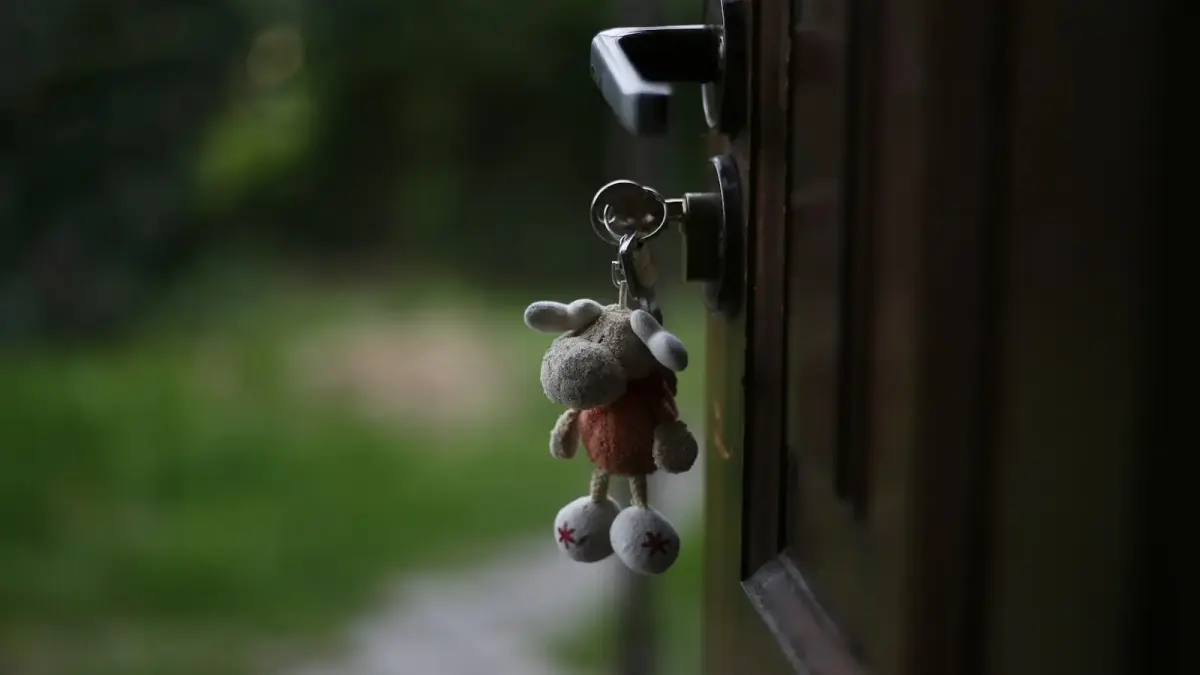
I still remember the weight of it. Not heavy, exactly, but present. A single brass key on a shoelace around my neck, tucked under my shirt at school so it wouldn’t swing during recess. I was eight years old and I had my own key to the front door, which at the time felt enormous - like being handed something adult and serious and slightly frightening.
Nobody was home when I got there. That was the whole point of the key.
My mother worked until five-thirty. My father picked up overtime when he could get it. And so every afternoon, I walked home from the bus stop, fished the key out from under my collar, and let myself into a quiet house. I turned on the television for noise. I made myself a peanut butter sandwich. I did my homework at the kitchen table and waited for the sound of a car in the driveway that meant the silence was finally over.
I didn’t think of myself as neglected. I thought of myself as trusted. But what I was really learning, in that empty hallway every afternoon, was something I would carry for the next thirty years: nobody is coming to the door for you. You let yourself in.
The key was never just a key
Millions of children in the 1970s, 80s, and 90s wore that key. They were called latchkey kids - a term that sounds almost quaint now, like something from a sociology textbook. But it described something very specific and very real. These were children whose parents worked, often both parents, often long hours, often jobs that didn’t come with the luxury of flexible schedules or remote options.
The key wasn’t a parenting failure. It was an economic reality.
A 2004 study published in the Journal of Family Issues found that latchkey arrangements were overwhelmingly concentrated in working-class and lower-middle-class families where dual income was not a lifestyle choice but a financial necessity. The researchers noted that parents in these arrangements reported significant guilt - but also had few viable alternatives.
What interests me is not the guilt. It’s what the key taught.
Because a child who lets themselves into an empty house every day doesn’t just learn to be alone. They learn a particular orientation toward the world - one where self-sufficiency isn’t a value they chose but a condition they adapted to. They learn that the space between the bus stop and the front door is theirs to navigate. They learn that a locked door is a problem they solve themselves.
And that lesson doesn’t expire when they grow up.
You can always spot them in adulthood
The adult version of the latchkey kid is the person who always has their own ride. Always. They will drive forty-five minutes to a dinner party rather than accept a carpool, not because they’re antisocial but because the idea of depending on someone else’s schedule triggers something deep and unnamed.
They meal-prep alone on Sundays. They carry all the grocery bags in one trip, fingers turning white, rather than make a second trip or - God forbid - ask someone to help carry them in.
They arrive at your house and immediately start doing something. Washing a dish. Folding a blanket on the couch. Asking if you need help in the kitchen. They cannot sit in someone else’s space without offering labor, because somewhere in their body they still believe that presence has to be earned.
They never call ahead. They figure it out when they get there. They don’t ask for directions - they’d rather drive in circles for twenty minutes than roll down a window and admit they’re lost. This isn’t stubbornness. This is the muscle memory of a child who learned that the answer to “what do I do now?” was always, always: figure it out yourself.
Independence was a child’s solution, not a personality trait
Here’s what most people miss about latchkey kids: their independence was not a character strength that emerged naturally. It was a coping strategy that a seven or nine or eleven-year-old developed in response to a very specific environmental pressure - being alone in a house when they were still young enough to be scared of it.
Research by psychologist Robert S. Weiss, published in the American Journal of Orthopsychiatry, found that children in self-care arrangements developed what he called “premature autonomy” - a form of self-reliance that looked like maturity from the outside but was actually a stress response. These children learned to suppress their need for support because support wasn’t available during the hours they needed it most.
That suppression doesn’t just disappear. It calcifies.
The adult who never asks for help isn’t strong. They’re practiced. They have been rehearsing self-sufficiency since elementary school, and by now the performance is so seamless that even they believe it’s who they are. They’ll tell you they prefer doing things alone. They’ll say they’re independent by nature. And they’ll mean it - because they’ve never known anything else.
But if you watch closely, you’ll notice something. When someone does help them - unexpectedly, without being asked - there’s a flicker. A pause. Sometimes their eyes get bright and they look away quickly. Because the child inside them, the one with the key around their neck, never stopped wanting someone to be at the door when they arrived.
The class dimension nobody talks about
We have a cultural habit of romanticizing self-reliance. We call it grit. We call it resilience. We give TED talks about it and write it into college application essays. But we rarely name where it comes from - which is, overwhelmingly, economic pressure on families who couldn’t afford to have a parent home at three o’clock.
Latchkey childhood was a class experience. It was not evenly distributed across income brackets.
The children who had nannies or after-school programs or a parent who worked from home didn’t develop this particular brand of hyper-independence. They learned that arrival meant being received. Someone opened the door. Someone asked how their day was. Someone was already there.
The latchkey kid learned that arrival meant fishing for a key, pushing open a heavy door, and stepping into silence. They learned that the house would be exactly as they left it that morning. No one had come. No one was coming. And the strange, quiet weight of that realization - that the world continued while you were at school and nobody was holding your place in it - settled into their bones in a way they wouldn’t have words for until they were much, much older.
A 2014 analysis in the journal Developmental Psychology found that children from lower-income families who spent significant time in self-care reported higher levels of emotional self-regulation as adults - but also higher levels of difficulty asking for and receiving help. The researchers called it “compulsive self-reliance,” a term that has stayed with me because of how precisely it captures the bind. You’re good at being alone. You’re bad at letting anyone in.
The empty hallway stays with you
I know a woman who is fifty-three years old and still cannot sit in a waiting room without pulling out her phone and pretending to be busy. She’s not anxious, exactly. She just can’t tolerate the vulnerability of visibly waiting for someone. Because waiting means depending on someone to show up, and depending on someone to show up was the one thing her childhood taught her not to do.
I know a man who is sixty and has never once asked a neighbor for a cup of sugar, a jump for his car, or help moving a piece of furniture. He would rather throw out his back than knock on someone’s door and say, “I need a hand.” His wife thinks he’s proud. He’s not proud. He’s protecting himself from the particular humiliation of needing something and finding no one there.
These are not dramatic stories. There’s no abuse here, no cruelty, no villain. That’s exactly the point. The latchkey experience was mundane. It was an afternoon routine. It was a key and a quiet house and a peanut butter sandwich and homework alone and the slow, patient education of a child learning that they are, fundamentally, on their own.
And the adults those children become are everywhere. They’re the ones who bring their own snacks to a group trip. Who have a phone charger, a first aid kit, and a change of clothes in their car at all times. Who packed their own lunches every day for decades and couldn’t tell you why they never considered buying lunch from the cafeteria like everyone else.
They are perpetually, quietly prepared for the possibility that no one else will be.
Letting someone answer the door
If this is you - if you read this and felt the strange recognition of being described - I want to say something that might be difficult to hear.
Your independence is real. It’s not fake, and it’s not something to be ashamed of. You learned it honestly, under real conditions, at an age when most kids were learning how to make friendship bracelets. You earned every bit of your ability to handle things alone.
But you don’t have to keep letting yourself in.
The key around your neck was a child’s solution to a child’s problem. You’re not that child anymore. The house isn’t empty. The people in your life - the ones who keep offering to help carry the groceries, who keep asking if you need a ride, who keep holding the door open and waiting for you to walk through - they’re not going to disappear if you let them do it.
You were taught that arrival is something you do alone. That nobody meets you at the door. That the hallway will be empty and the house will be quiet and the only person you can count on is yourself.
But that was a lesson about your parents’ work schedule, not about your worth.
You were never too much to meet at the door. You were just a kid whose parents couldn’t be there at three o’clock. And the fact that you turned that into a lifetime of quiet, extraordinary self-sufficiency doesn’t mean you have to keep doing it forever.
You can put the key down now. Someone is already here.