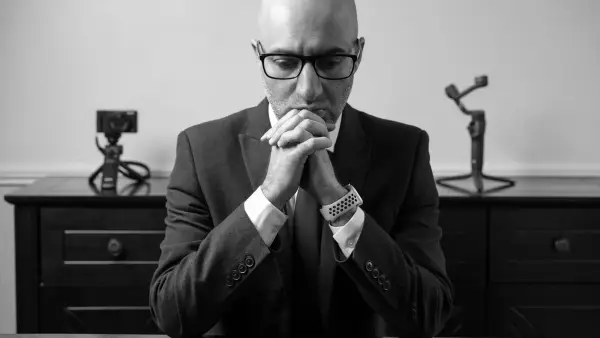
He is 61 and just realized he has never once let his wife see him cry - not at his mother's funeral, not when his daughter was born, not during the year his business failed and he sat in the truck in the driveway for twenty minutes every evening before walking through the door with dry eyes and a voice that said everything is fine - because a boy who watched his father's jaw tighten at the cemetery and never break learned that a man's grief is a private room that love is not permitted to enter

I want to tell you about a man I know. He is not famous. He has never written a book or given a speech or done anything that the world would call remarkable. But he did something last Tuesday that shook the ground beneath his own feet.
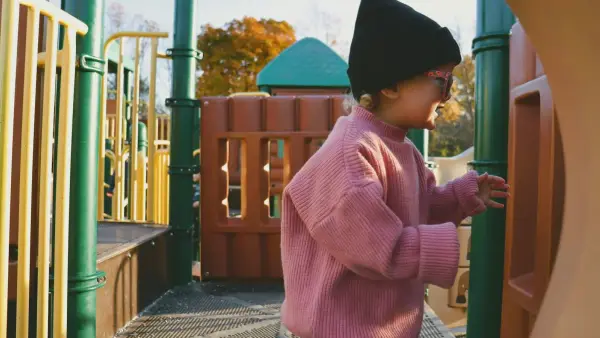
He was sitting in a lawn chair watching his four-year-old grandson play in the sprinkler. The boy slipped on wet grass, hit his knee on a garden stone, and started to cry - not a performance cry, not a tantrum, but the real kind, where the mouth opens and nothing comes out for a full second before the sound arrives. His daughter walked over, scooped the boy up, and held him against her chest. And the boy just let it happen. He sobbed into her shoulder with his whole body, and she rocked him, and within three minutes he was back in the sprinkler laughing.
The man watched this and felt something fracture inside his ribs.
Not because anything was wrong. Because something was right. Because a boy had been hurt and had not, for even one second, considered hiding it. And the man realized - with the kind of clarity that arrives decades too late - that he had never done that. Not once. Not with anyone. Not with the woman who has slept beside him for thirty-five years.
The Funeral Where He Did Not Break
His mother died on a Wednesday in March. He was fifty-three. She had been sick for a long time, and in a way that should have made the death easier to absorb, but that is not how grief works. Knowing someone is leaving does not prepare you for the silence after they are gone.
He gave the eulogy. His wife told him he didn’t have to - that his brother could do it, that nobody would think less of him - but he wanted to. He wrote it the night before, sitting at the kitchen table after everyone was asleep, and the writing was the closest thing to crying he would allow himself. The words blurred on the page a few times. He blinked it back.
At the service, he stood at the podium with his hands folded and his jaw set and delivered every word without a single crack in his voice. People told him afterward how strong he was. His uncle shook his hand and said, “Your mother would be proud of how you held it together.”
He nodded. He thanked them. He drove home with his wife beside him in the passenger seat, and when they pulled into the driveway he said he needed to check something in the garage. He sat on an overturned bucket behind the lawn mower for eleven minutes. His chest heaved twice, but nothing came out. He had forgotten how.
A 2014 study published in the journal Psychology of Men and Masculinities found that men who adhere to traditional masculine norms report significantly higher rates of alexithymia - a clinical term for the inability to identify and describe one’s own emotions. It is not that these men do not feel. It is that the feeling has no approved exit.
He felt everything at that funeral. He just could not let it leave his body.
The Delivery Room
His daughter was born when he was twenty-eight. He remembers the fluorescent lights and the sound of the monitor beeping and his wife gripping his hand so hard he lost feeling in two fingers. He remembers the moment the doctor placed the baby on his wife’s chest and the room changed - the air changed, the light changed, something molecular shifted and the world was different than it had been ten seconds before.
His eyes filled. He felt it rise from somewhere deep beneath his sternum - this tidal pull that wanted to come out as a sound, as a gasp, as something uncontrolled and animal and true.
He swallowed it.
The nurse glanced at him and smiled. She probably thought he was one of those calm, steady fathers. The rock. The anchor. She could not have known that behind his eyes a dam was holding back a flood, and he was using every muscle in his body to keep it there.
His wife looked up at him from the hospital bed with their daughter in her arms and said, “Are you okay?” And he said, “I’m perfect.” And he meant it. And he also meant something else entirely that he did not have the language or the permission to say.
He wanted to fall apart. He wanted to sit on the edge of that hospital bed and let his face crumble and hold his daughter and his wife and just let whatever was inside him come out. But a voice in his head - not loud, not cruel, just steady and certain - said: Not here. Not now. They need you to be solid.
So he was solid.
The Year in the Driveway
When he was forty-four, his business failed. Not dramatically - no single catastrophe, no betrayal, no fire. Just a slow bleed over eighteen months that ended with him closing the doors of a shop he had built with his own hands and signing papers that made the debt official.
He did not tell his wife for three weeks. When he finally told her, he presented it like a weather report. Factual. Measured. Here is what happened. Here is the plan. We will be fine.
She asked him how he was feeling. He said he was focused on next steps.
What he did not tell her was this: every evening for almost a year, he pulled into the driveway after work and sat in the truck with the engine off. Sometimes for ten minutes. Sometimes for twenty. He would grip the steering wheel with both hands and stare at the garage door and breathe.
This was his confessional. The cab of a Chevy Silverado with 140,000 miles on it, smelling like coffee and work gloves. This was the only space in the world where he allowed himself to feel the full weight of what was happening. Not crying - he was past the point where crying was available to him - but something close. A heaviness in the throat. A pressure behind the eyes. A conversation with himself that had no words.
Then he would check his face in the rearview mirror. He would clear his throat. He would open the door, walk up the path, and say, “Hey, babe. Something smells good.”
Research from the University of Texas published in Psychosomatic Medicine in 2013 found that emotional suppression - particularly the habitual kind - is associated with elevated cortisol levels, increased cardiovascular strain, and a weakened immune response. The body does not forget what the face refuses to show. It stores it. It converts emotional pain into physical pressure. The grief has to go somewhere.
For that man, it went into his shoulders, his lower back, his blood pressure, and the twenty minutes of silence in the driveway that his wife knew about but never mentioned.
The Cemetery Lesson
He was nine years old. His grandfather - his father’s father - had died, and they were standing at the graveside on a cold November morning. He remembers the brown grass and the minister’s voice and the way the wind kept trying to flip the pages of the Bible.
But mostly he remembers his father’s face.
His father stood perfectly still. Hands clasped in front of him. Jaw tight. Eyes fixed on the casket. Not a single tear. Not a tremor. Not a crack in the surface. He looked like he had been carved from the same stone as the headstones behind him.
The boy watched his father’s jaw tighten and hold. He watched the muscles flex and release, flex and release, like his father was chewing on something he could not swallow and could not spit out. And the boy understood something in that moment that nobody had to explain, because the lesson was not spoken. It was demonstrated.
A man’s grief is a private room. You carry it inside you like furniture in a locked house. People might know the house exists, but no one gets a key. Not your wife. Not your children. Not the people who love you most.
Psychologist William Pollack, in his landmark work on boyhood and masculinity, describes what he calls the “Boy Code” - an unwritten set of rules that boys absorb before they have language for it. Be tough. Don’t cry. Don’t show weakness. Don’t need anyone. These rules are not taught in lectures. They are taught in cemeteries, in living rooms, in the silence between a father and son after something painful happens and neither of them speaks.
That nine-year-old boy did not decide to hide his grief. He inherited the hiding the way he inherited his father’s eye color. It was already inside him before he knew it was there.
She Has Always Known
Here is the part that broke him open, sitting in that lawn chair, watching his grandson cry freely in the sprinkler.
His wife knows.
She has always known. She knew at his mother’s funeral when he disappeared into the garage. She knew in the delivery room when his eyes went glassy and then clear again in the space of a single breath. She knew about the driveway. She has known for thirty-five years that the man she married carries a locked room inside him, and she has spent those thirty-five years pressing her hand against the door.
She has never forced it. She has never issued an ultimatum or made a dramatic speech. She has simply remained. She has said, “You can tell me anything,” in a hundred different ways, at a hundred different moments, and each time he has said, “I know,” and meant it, and still could not turn the key.
He thought his control was a gift he was giving her. Stability. Dependability. The assurance that he would never fall apart. He thought she needed him to be the man his father was - the one who stands at the grave with dry eyes so that everyone else has permission to break.
But sitting in that lawn chair, watching his daughter hold his grandson while the boy cried, he understood something. His wife was never asking him to be solid. She was asking him to be real. And those are not the same thing.
His composure was not strength to her. It was a wall. It was the distance between them that she could feel but could not name. It was the reason she sometimes looked at him across the dinner table with an expression he could never quite read - something between tenderness and grief, as though she were mourning someone who was still sitting right in front of her.
What Shifts at Sixty-One
A 2021 study in Frontiers in Psychology found that men over sixty often experience a significant softening of rigid emotional norms - a phenomenon researchers link to the natural hormonal shifts of aging, the accumulation of loss, and the growing awareness that time is not unlimited. The walls that took decades to build begin to develop cracks. Not because the man is weaker. Because he is finally tired enough to stop holding them up.
He has not cried in front of his wife yet. I want to be honest about that. This is not a story with a cinematic ending where the dam breaks and forty years of grief pour out in a single beautiful scene.
But something has shifted. Something small and tectonic at the same time.
Last week, she asked him about his mother. Not about the funeral or the illness, but about the small things - what she smelled like, what she cooked on Sundays, whether she sang in the car. And instead of giving her the short, controlled answers he has practiced for a lifetime, he paused. He let the silence sit. And he said, “She used to hum when she didn’t know anyone was listening. I miss that sound more than I can tell you.”
His voice didn’t crack. His eyes didn’t fill. But the sentence itself was an unlocked door. It was the first time he had told his wife what he actually missed instead of what he had survived.
That is how it starts. Not with a flood. With a sentence. With one true thing offered to the person who has been waiting to receive it.
The Room That Love Built
If you are the man in the truck, I am not going to tell you to cry. I am not going to tell you that your father was wrong or that your grief is a disease that needs treatment. Your father did the best he could with what he was given, and so did you.
But I want you to consider something.
The room where you keep your grief - the one you built as a boy, standing at that graveside, watching your father’s jaw hold steady - that room was built to protect you. And it did. For decades, it did exactly what it was supposed to do. It kept you upright. It kept you functional. It kept you employed and married and present in ways that mattered.
But the people who love you are not the ones you need protection from. Your wife is not the storm. She is the person who has been standing outside that room for thirty-five years, her hand flat against the door, saying, “I’m still here. Whenever you’re ready.”
You do not have to open the door all at once. You can start with a sentence. One honest sentence about what you actually feel. And you might find that the room does not collapse when you let someone in. It just gets a little less heavy. A little less dark. A little more like a place where two people can sit together and be quiet and let the grief be what it has always been - not weakness, not failure, but proof that you loved someone enough for their absence to hurt.
That four-year-old boy in the sprinkler is going to grow up knowing that it is safe to cry. Not because someone taught him a lesson about vulnerability, but because every time he fell, someone held him. And that is the thing your father could not give you. Not because he didn’t love you. Because no one held him, either.
You are sixty-one. The boy in you is still standing at that cemetery, watching his father’s jaw. But you are allowed - right now, today, this minute - to walk over to that boy and put your hand on his shoulder and say, “You don’t have to do that anymore.”
And if your voice shakes when you say it, that is not a crack in the foundation.
That is the sound of a door opening.