There is a moment after fifty when you hear your mother's exact phrase come out of your mouth - not the sentiment but the precise words in the precise tone with the same pause before the last syllable - and you realize the woman you spent two decades trying not to become was not invading your voice but furnishing it, leaving behind the exact sentences you would need when it was your turn to stand in the kitchen and hold everything together
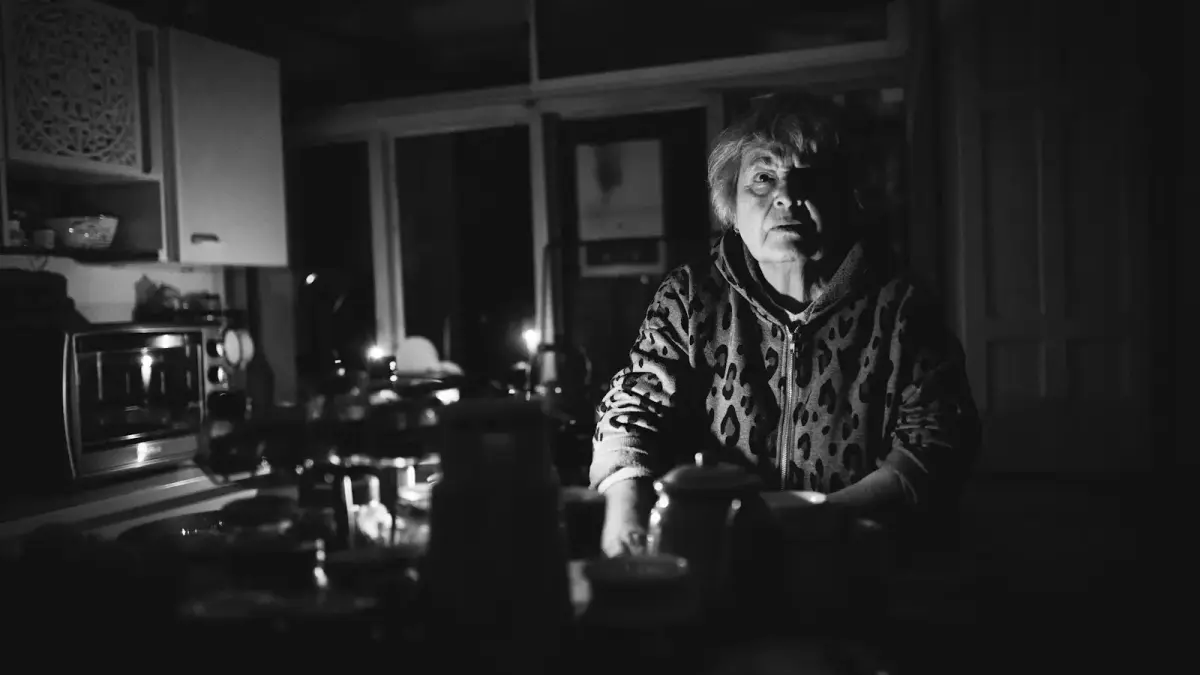
I was standing at the stove last Tuesday, stirring something I wasn’t paying attention to, when my daughter asked if she could drive to her friend’s lake house for the weekend. She’s twenty-three. She has her own car, her own insurance, her own life that I am technically no longer in charge of.
And I heard myself say, “We’ll see.”
Not “let me think about it.” Not “that sounds fun.” The exact two words my mother used to say, in the exact same tone - warm enough to sound like consideration, flat enough to signal that the answer was already no. I even did the thing with my mouth afterward, the slight press of the lips, the half-turn back to the stove. The choreography was perfect.
My daughter recognized it too. She laughed a little and said, “You sound exactly like Grandma.” And I wanted to argue, but I couldn’t, because she was right. Not approximately right. Precisely right.
I am fifty-four years old, and my mother’s phrases have moved into my mouth like tenants who were always on the lease.
”We’ll see” - which always meant no
My mother said “we’ll see” the way other people said “absolutely not.” It carried the same weight, the same finality, but it came wrapped in something softer. A pause. A seeming openness. The genius of “we’ll see” was that it closed the door without slamming it, which meant nobody got to be angry about the door being closed.
I heard it hundreds of times growing up. Can we get a dog? We’ll see. Can I sleep over at Jennifer’s? We’ll see. Can we go to Disney World this summer like the Hendersons? We’ll see.
By the time I was ten, I had cracked the code. “We’ll see” was not a maybe. It was a no that had been given a coat of paint and a gentle shove into the future, where it would die quietly of neglect.
I swore I would never use it. I told myself I would be the kind of mother who gave real answers - yes or no, with explanations, with honesty, with the respect of directness.
And then I had children. And I discovered what my mother already knew: that sometimes you don’t have the energy for the argument that follows “no,” and sometimes you genuinely don’t know, and sometimes the most loving thing you can do for a child is buy yourself twelve hours before the world requires another decision from you.
“We’ll see” was never dishonesty. It was a woman rationing her capacity.
A 2019 study published in the Journal of Family Psychology found that mothers make an average of roughly 1,500 decisions per day related to household and child management - a cognitive load that researchers compared to the decision fatigue experienced by air traffic controllers. My mother did not have a term for decision fatigue in 1987. She had “we’ll see.” It did the same job.
”Because I said so” - which meant she was too tired to explain why the world was the way it was
This was the phrase I resented most as a child. It felt like a wall. It felt like the opposite of everything I wanted from a parent - understanding, engagement, the willingness to treat me as someone worth reasoning with.
I remember being fourteen and asking why I couldn’t go to a party at Kevin Mueller’s house. My mother was at the kitchen table, paying bills. She had her reading glasses on and a calculator beside her checkbook and the particular posture of a woman doing math she didn’t want to be doing.
“Because I said so,” she said, without looking up.
I told her that wasn’t a reason. I told her I deserved an explanation. I told her she was being unfair. I used the word “authoritarian,” which I had just learned in social studies, and I could see her jaw tighten at the edges.
What I did not see, because I was fourteen and the world was still about me, was that she was calculating whether the mortgage payment and the electric bill and my brother’s orthodontist could all coexist in the same month. What I did not understand was that “because I said so” was not a refusal to explain. It was the sound a woman makes when she is carrying four things she cannot put down and someone asks her to also carry a fifth.
I said it to my own son for the first time when he was eleven. He wanted to know why he couldn’t have the new gaming system that all of his friends supposedly had. I was sitting at my own kitchen table, looking at my own bills, wearing my own reading glasses.
“Because I said so,” I said.
And then I stopped. Not because I was ashamed, but because I suddenly understood the sentence from the inside. It wasn’t a wall. It was a load-bearing beam. It held the ceiling up when there was nothing else to hold it.
”I don’t care who started it” - which meant she cared deeply but couldn’t take one more side
My brother and I fought the way all siblings fight - viciously, constantly, over nothing. Who sat in the front seat. Who got more ice cream. Who looked at whom wrong during dinner. The fights were absurd and they were also, in some strange way, our most honest form of communication.
My mother’s response was always the same. She would appear in the doorway of whatever room we were destroying, and she would say, “I don’t care who started it,” with a weariness that went all the way to the floor.
I thought it meant she didn’t care. I thought she was lazy or indifferent or unwilling to do the work of justice.
What I understand now - now that I have two children of my own who have spent the last decade fighting over things I cannot believe are real - is that “I don’t care who started it” was the most sophisticated conflict resolution strategy available to a woman who was also cooking dinner, also returning a phone call, also worrying about her own mother’s health, also trying to keep the house from descending into the particular chaos that would make her feel like she was failing.
She cared. She cared enormously. That was the problem. If she investigated, if she assigned blame, if she took one side, she would have to feel the full weight of the injustice on both sides. She would have to hold her children’s pain separately and equally, and she was already holding too much.
“I don’t care who started it” was not apathy. It was a woman choosing survival over thoroughness, and I respect that choice in a way I could not have understood at eight years old.
The compression of enormous truths
Here is what I have come to believe about these phrases: they are not language failures. They are language victories.
My mother did not have the vocabulary of therapy. She did not talk about boundaries or emotional labor or the mental load. She did not have a podcast explaining her experience back to her in a soothing voice. She had the English language and a kitchen and a finite number of hours, and she compressed enormous emotional truths into the smallest possible sentences because she did not have the luxury of long explanations.
Dr. Deborah Tannen’s research on family communication, published across several works including her studies in discourse analysis, has shown that family phrases function as what linguists call “pragmatic compression” - utterances whose meaning far exceeds their literal content because they carry decades of shared context. A mother saying “we’ll see” to a child is performing a linguistic act that contains, in two syllables, an entire philosophy of parenting, resource management, and love.
My mother was not being evasive. She was being efficient. She was a woman who had to make the language do more because she could not do more herself.
The moment of recognition
The strange thing about hearing your mother’s phrases in your own mouth is that it does not feel like failure. It feels like arrival.
I spent my twenties and thirties trying to be a different kind of mother. More open. More communicative. More willing to sit on the floor and explain every decision like a patient teacher. And I was that mother, sometimes, on good days, when the bills were paid and the house was clean and no one needed anything urgent from me.
But on the hard days - the days when the car broke down and the school called and dinner was not going to make itself - I reached for the same phrases she reached for. Not because I had run out of better words, but because there were no better words. She had already found the best ones. She had tested them across decades and they held.
A 2021 study in Developmental Psychology found that adult children who initially reported conflict with their parents’ communication styles showed a significant shift in perception after age forty-five, reinterpreting what they once experienced as dismissiveness as a form of pragmatic care. The researchers called it “retrospective reattribution” - the process by which we revise the emotional meaning of childhood experiences once we have enough life behind us to understand the context.
I am not becoming my mother. That framing has always been wrong, tinged with a fear that assumes becoming her is a loss.
What is actually happening is simpler and more beautiful: I am old enough now to need the tools she built. And I am finding them exactly where she left them - in my mouth, ready, worn smooth from her use, still perfectly functional.
The inheritance nobody warns you about
Nobody prepares you for this particular homecoming. The books about aging talk about your body, your career, your shifting sense of purpose. They do not mention the afternoon when you will be folding laundry and your ten-year-old will ask a question you cannot answer and you will hear yourself say, in your mother’s exact cadence, “You’ll understand when you’re older.”
And you will not cringe. You will not apologize.
You will just stand there, holding a warm towel, understanding for the first time that this sentence was never a dismissal. It was a promise. It was your mother saying, I know something I cannot give you yet, but I am putting it somewhere safe, and one day you will find it, and when you do, you will know it was always yours.
These phrases are not quirks of personality or failures of imagination. They are compressed wisdom, passed mouth to mouth across generations like a song nobody wrote down but everybody knows. Your mother did not teach them to you. She planted them. And they bloomed exactly when you needed them, in the exact season she knew they would.
If you are hearing her words in your voice, you are not losing yourself. You are finding the part of her that was always meant to become yours - the part that knew how to hold everything together with nothing but a sentence and a pause and a quiet, unbending love that did not need to explain itself to be real.