There is a particular kind of man who has never once entered his own house without announcing himself - who calls out 'it's me' the moment the key turns in the lock, who has said 'just me' into the hallway of every home he has ever lived in for forty years, who cannot walk through his own front door in silence even when he knows nobody else is home - because a boy who opened a door quietly once and startled a mother who was already afraid of what might come through it learned that a man who loves someone never arrives without warning
The Two Words That Carry Everything
I have never walked into my own home without saying something first.
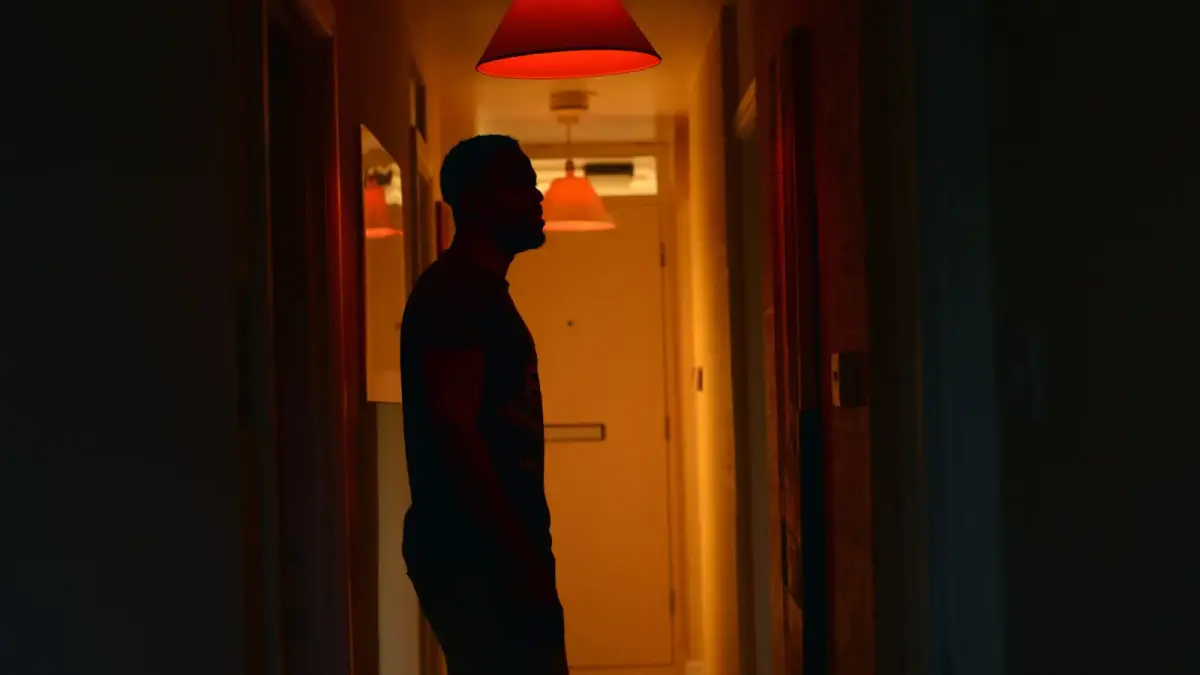
Not once. Not in thirty years of living in houses with my name on the lease, the mortgage, the welcome mat. I turn the key and before the door is even fully open my voice is already there ahead of me - “it’s me” - as if the house needs to be told, as if the walls themselves require a warning.
My wife laughed about it once, early in our marriage. She was in the kitchen and I called out from the entryway like I always do, and she turned around and said, “Who else would it be?”
I didn’t have an answer for her. Not one I could say out loud. Not one I fully understood myself until decades later, when I watched my own son walk into the house after football practice and let the door slam behind him without a word, and I flinched - not at the noise, but at the silence that came before it.
That was when I realized I had been performing a small, invisible ceremony every single day of my adult life. And that it had nothing to do with who I was announcing myself to be.
It had everything to do with who I was promising not to be.
A Door That Opened Too Quietly
I was eleven the first time I understood that a door could be a frightening thing.
I came home from school on a Tuesday - I remember it was a Tuesday because my mother always did laundry on Tuesdays and the house smelled like detergent and warmth. I turned the handle slowly because I was proud of how quietly I could move. I thought I was being good. Considerate. The kind of boy who didn’t bang things.
I found her in the hallway. She was sitting on the floor with her back against the wall, and when the door opened without warning she made a sound I had never heard before. Not a scream. Something smaller than a scream but worse - a sound that came from a place in her body that had been waiting for the wrong person to come through that door.
She saw it was me and she smiled. She pulled me into her arms and said something ordinary, something about dinner, something designed to fill the space where that sound had just been.
But I had already learned the lesson. I didn’t have the words for it yet - I wouldn’t for another twenty years - but the lesson was already living inside my body. A door that opens without warning is not a door. It is a threat. And a boy who loves his mother never becomes the thing she is afraid of.
So I started announcing myself. Every time. Without exception. “It’s me, Mom” became the first thing I said every day after school. And the relief on her face - the way her shoulders dropped half an inch - told me everything I needed to know about why this mattered.
The Architecture of Safety
A 2019 study published in the Journal of Family Psychology found that hypervigilance in the home - the constant monitoring of doors, footsteps, and unexpected sounds - is one of the most persistent markers of a household where someone has experienced threat. The researchers noted that children who grow up in these environments develop what they called “ambient awareness,” an unconscious tracking of every entry point in the house.
I didn’t know the term for it then. I just knew that my mother always sat facing the door.
What the study also found, and what stays with me, is that children in these households often develop compensatory behaviors - small rituals designed to reduce the ambient threat for the person they are trying to protect. They cough before entering a room. They knock on open doors. They make themselves audible before they are visible.
They announce themselves.
Not because anyone asked them to. Not because there was a rule. But because they understood, in the wordless way that children understand everything important, that love sometimes means making yourself predictable so the people around you can finally exhale.
Just Me
The thing about “it’s me” is that it’s not really identification.
Everyone knows it’s you. Your wife knows your footsteps on the porch. Your kids recognize the sound of your car in the driveway. The dog knew you were coming home four minutes before you arrived.
“It’s me” is not information. It is reassurance.
It is a man saying: nothing bad is about to happen. Whatever you were doing before I came through this door - reading, resting, being somewhere soft inside yourself - you don’t have to leave that place. You don’t have to brace. You don’t have to scan my face for weather.
It’s only me.
Dr. Gabor Mate has written about how the children of anxious households become experts at emotional climate control. They learn to read the room before they enter it. They learn to manage the emotional temperature of every space they walk into. Not because they were taught, but because the alternative - arriving unannounced into a room that was already afraid - was something they could not bear to repeat.
I think about that every time I turn my key in the lock. I think about the boy who learned that silence was not a gift but a weapon, and who decided, without anyone asking him to, that he would never use it.
The Men Who Do This
You know who I am talking about because you might be him.
The man who coughs in the hallway. Who lets his keys jingle louder than they need to. Who says “just me” to an empty house because the habit is so deep it does not require an audience.
The man who has never once surprised someone with his arrival, not because he lacks spontaneity but because he learned very young that surprise and fear live in the same room, and he chose a long time ago which room he wanted to build his life in.
A 2021 study in Psychological Science found that men who grew up in volatile households were significantly more likely to develop what the researchers described as “preemptive emotional signaling” - verbal and behavioral cues designed to telegraph their emotional state before entering a shared space. These men were not performing a social nicety. They were performing an act of protection so automatic they didn’t recognize it as one.
The study also found something that made me put the paper down and sit with it for a while. These same men were rated by their partners as among the most emotionally safe people in their lives. Not the most expressive. Not the most communicative. But the safest.
Because there is a kind of man who has been managing the emotional climate of every room he enters since he was a child, and he is so good at it that no one ever sees the work. They only feel the result - the strange, inexplicable feeling that his presence makes a room calmer rather than more charged.
What We Carry Forward
I asked my mother about it once, years later, when I was old enough to ask and she was old enough to answer honestly.
She didn’t remember the specific Tuesday. She didn’t remember sitting in the hallway. She didn’t remember the sound she made. What she remembered was that at some point, her son started announcing himself every time he came home, and that it was one of the kindest things anyone had ever done for her.
“You always let me know it was you,” she said. “You always gave me that.”
She didn’t know she had needed it until I started giving it. And I didn’t know I was giving it until she told me what it meant.
That is how these things work. The deepest forms of love are often invisible to the person performing them. They just look like habits. Quirks. The man who always calls out when he opens the door, the man who clears his throat before rounding a corner, the man who never enters a dark room without flipping the switch from the hallway first.
These are not personality traits. They are love letters written in behavior, composed so long ago that the author has forgotten he wrote them.
The Gift of Being Expected
There is a word in psychology for what happens when a person no longer has to be vigilant. When the nervous system finally registers that no threat is coming. When the body stops scanning and starts resting.
The word is safety.
And the thing about safety is that you cannot give it to someone with words. You cannot promise it. You cannot explain it into existence. You can only build it, slowly, through thousands of small repetitions. Through a key in a lock followed by a voice in a hallway, every single day, for years.
“It’s me.”
Two words. Said into the entryway of a house where someone is reading on the couch, or cooking, or half-asleep, or just sitting with the quiet that comes at the end of a day.
Two words that do not mean “I am here.”
They mean “you are safe.”
And if you are the man who says them - who has always said them, who says them even when no one is listening - I want you to know that this thing you do, this thing you have never named and probably never thought about, is one of the most tender acts of love I have ever witnessed.
You learned it young. You learned it from a moment you may not even remember clearly. You learned it because you are the kind of person who would rather change himself entirely than risk being the thing that frightens someone he loves.
You are not broken because of where this came from. You are beautiful because of what you chose to do with it.
And somewhere, in a house that you have made safer simply by being the kind of man who announces himself, someone is hearing your key in the lock right now and their whole body is softening - not because they were afraid, but because the sound of you arriving has become the sound of nothing bad happening.
That is your legacy. Not the wound. The tenderness that grew around it.