There is a particular kind of man who has never once fallen asleep before his wife - who lies in the dark listening to her breathing change from the shallow rhythm of thinking to the deeper cadence that means she has finally let go of the day - because a boy who found his mother sitting alone in the kitchen at two in the morning waiting for headlights in the driveway learned that love is the person who stays awake so the other one does not have to be alone in the dark
The Kitchen Light at Two in the Morning
I was nine years old, and I needed a glass of water.
That is the story I told myself as I padded down the hallway in bare feet. The truth is I heard something - not a sound exactly, but the absence of the sounds a house makes when everyone in it is sleeping. A quality of wakefulness leaking under the door.
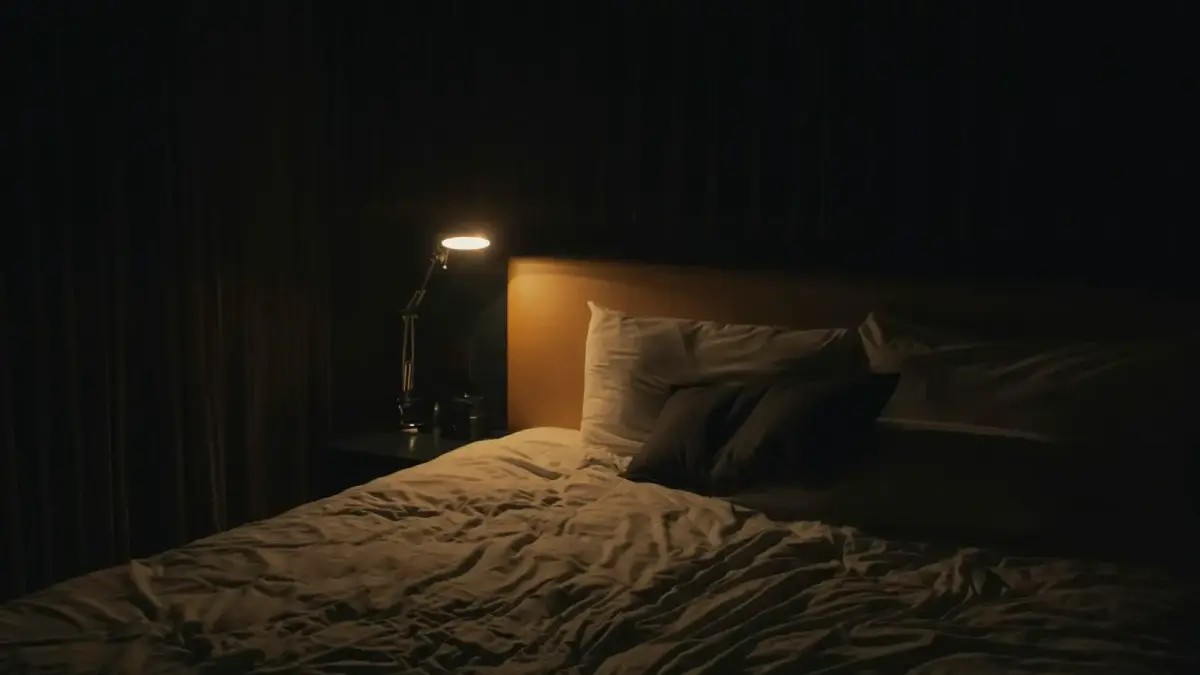
My mother was sitting at the kitchen table with both hands wrapped around a mug that had gone cold. She was not crying. She was not doing anything. She was just sitting there in the half-dark with the light above the stove casting that yellow glow that kitchens have at two in the morning, and she was looking at the driveway through the window above the sink.
My father was not home yet. He was working late, which he did often, and she was waiting. Not anxious, not angry. Just awake. Just present in the dark house so that when he finally came through the door, someone would be there.
She smiled when she saw me. She said, “Hey, buddy. Can’t sleep?” And she pulled out the chair beside her and poured me a glass of milk I had not asked for.
I sat with her for twenty minutes. Neither of us said much. We just waited together.
I did not understand what I was learning. But my body understood. Something in me recorded a definition of love that I have never been able to uninstall.
The Breathing Catalog
My wife falls asleep in stages.
First there is the talking stage - the part where she is reviewing the day out loud, not really needing answers, just narrating herself toward stillness. Then the sentences get shorter. Then she stops mid-thought and does not finish. Then there is a long exhale, and her breathing shifts from the shallow, slightly irregular rhythm of a mind still turning things over to a slower, rounder pattern that means her thoughts have loosened their grip.
I know every phase of this. I have memorized it the way you memorize a route you drive every day - not deliberately, but so completely that you could do it with your eyes closed.
I cannot fall asleep before she does.
This is not insomnia. It is not anxiety, at least not in any clinical sense. I am not lying there worrying. I am lying there listening. Keeping some kind of watch that I never signed up for and cannot resign from.
If she shifts and her breathing goes shallow again, I am instantly alert. If she gets up to use the bathroom, I am awake when she comes back, tracking the moment she settles again. If she has had a hard day and it takes her longer than usual to let go, I am there for every minute of it, my own eyes open in the dark, doing absolutely nothing except being conscious in the same room.
I have never told her this. Not in any complete way. If you asked her, she would say I am a light sleeper.
The Vigil You Did Not Choose
A 2017 study published in the Journal of Personality and Social Psychology found that adults who experienced unpredictable family environments in childhood develop what researchers call “shift-and-persist” strategies - behavioral patterns where the individual constantly monitors their environment for signs of threat or instability, while simultaneously adapting to maintain emotional equilibrium. The pattern becomes so embedded that it operates below conscious awareness, running in the background like software you forgot you installed.
I think about this when I think about the men I know who do what I do.
We are not a small group. When I have mentioned this in passing - carefully, the way you mention something you are not sure is normal - I have watched other men’s faces change. The recognition is immediate. They do it too. They have always done it.
One friend told me he has not fallen asleep before his wife in seventeen years of marriage. Another said he did not realize he was doing it until she went on a trip and he lay awake until three in the morning with no one to wait for.
We did not learn this from a book. We did not decide to do it. Something happened to us when we were young - a parent who was anxious, a household where nighttime felt unguarded, a specific moment like mine in the kitchen - and we absorbed a belief so deep it does not feel like a belief at all. It feels like a physical law.
Love is the person who stays awake.
What We Are Actually Doing
There is a word for this in psychology, though I resist using it because it makes something tender sound like a diagnosis. Hypervigilance. The chronic activation of the nervous system’s monitoring function, originally designed to detect predators and now repurposed for the subtler threats of emotional life.
A 2021 study in Frontiers in Psychology examined how childhood experiences of parental emotional unavailability shape adult attachment behaviors, and found that individuals who grew up feeling responsible for a parent’s emotional state often develop what the researchers called “sentinel behavior” in their adult relationships - a compulsive need to monitor the well-being of their partner, particularly during vulnerable moments like sleep.
But here is what the research does not capture, what it cannot capture, because it lives in the space between data and experience.
It does not feel like hypervigilance. It does not feel like compulsion. It feels like the most natural thing in the world. It feels like the only correct response to loving someone.
You are lying next to a person who has trusted you with the most vulnerable thing a human being does - closing their eyes, letting consciousness dissolve, becoming defenseless in your presence. And you are going to fall asleep first? You are going to leave them alone in the transition between waking and not-waking, that strange corridor where the mind is still half-here and the dark feels biggest?
No. You stay. You keep the watch. You hold the perimeter of the night until they are safely on the other side.
The Weight of the Invisible Gift
The thing about this kind of love is that it is almost completely invisible.
Your wife does not know you have been awake for the last forty-five minutes listening to her breathe. Your partner does not know that you registered the exact moment they fell asleep and only then allowed yourself to follow. Nobody gives you credit for the vigil because nobody knows the vigil is happening.
And you do not want credit. That is the part that gets complicated. You are not doing this for recognition. You are doing it because a nine-year-old boy sat in a kitchen with his mother and learned that love is presence - physical, conscious, unannounced presence - and that the person who falls asleep first is the person who has been released from worry, and the person who stays awake is the person doing the releasing.
It is a beautiful instinct. I want to be clear about that. There is something genuinely sacred about choosing to be the last one conscious, about holding space in the dark for someone else’s surrender into rest.
But it is also a weight.
Because you cannot turn it off. You cannot decide, just tonight, to let go first. Your body will not allow it. The sentinel does not get a night off. And over the years, the sleep you lose accumulates into a quiet exhaustion that you carry so naturally you forget it is there - until someone asks you why you look tired and you do not have an answer that makes sense.
The Mother, the Kitchen, the Headlights
I am forty-six years old, and I still think about that kitchen.
Not every night. But often enough. The yellow light. The cold mug. The way my mother’s face looked - not sad, not worried, just awake. Present in a house full of sleeping people because she had decided that someone should be.
She was not doing it for me. She did not know I was watching. She was doing it because she had her own kitchen, her own two in the morning, her own version of the lesson that gets passed down not through words but through witness.
A 2019 study in the Journal of Research in Personality found that attachment patterns can be transmitted across generations through what the researchers termed “implicit relational knowing” - the unspoken rules about love and safety that children absorb not from what they are told but from what they observe. The study found that these patterns are remarkably stable across decades, often surviving intact even when the individual has done significant therapeutic work to understand them.
My mother taught me that love is the person who stays awake. She did not mean to. She was just being herself at two in the morning, doing what her own body told her love required.
And now I do the same thing. Different kitchen. Different dark. Same vigil.
Letting the Boy Rest
I am not writing this to suggest that what we do is wrong. I am not going to tell you to see a therapist or practice sleep hygiene or learn to let go. I do not think this is a problem to be solved.
But I do think it is worth seeing.
Worth recognizing that the man lying awake beside you is not restless. He is not on his phone. He is not thinking about work. He is doing something he learned before he had language for it - keeping watch over the person he loves because a long time ago, in a kitchen that smelled like cold coffee and quiet worry, he learned that this is what love looks like after midnight.
If you are that man, I want you to know something. The boy in the kitchen did a brave thing. He sat with his mother. He kept her company in the dark. And he has been keeping company ever since - in every relationship, in every shared bed, in every night where he lies still and listens for the breathing to change.
That boy deserves to know that he has done enough. That the people he loves are safe. That it is okay, sometimes, to close his eyes first.
He probably will not believe it. He will probably keep the watch anyway. Some lessons live too deep in the body to be reached by understanding.
But maybe tonight, when the breathing beside you changes and you feel that familiar release - she is asleep, she is safe, the vigil is complete - maybe you can let yourself notice how tired you are. Not to fix it. Just to see it. Just to be as gentle with yourself as you have always been with the people you stay awake for.
The kitchen light has been off for a long time now. The headlights came home. Everyone is here.
You can rest.