There is a particular kind of man who has never told anyone the things that move him most - not that he tears up at his daughter's voicemails, not that he keeps a photograph in his wallet that has nothing to do with his family, not that he sometimes sits in the car after arriving home because the silence is the only place that asks nothing of him - because a boy who was caught once in a private moment of tenderness learned that a man's inner life is a room no one else is meant to enter
The Man in the Driveway
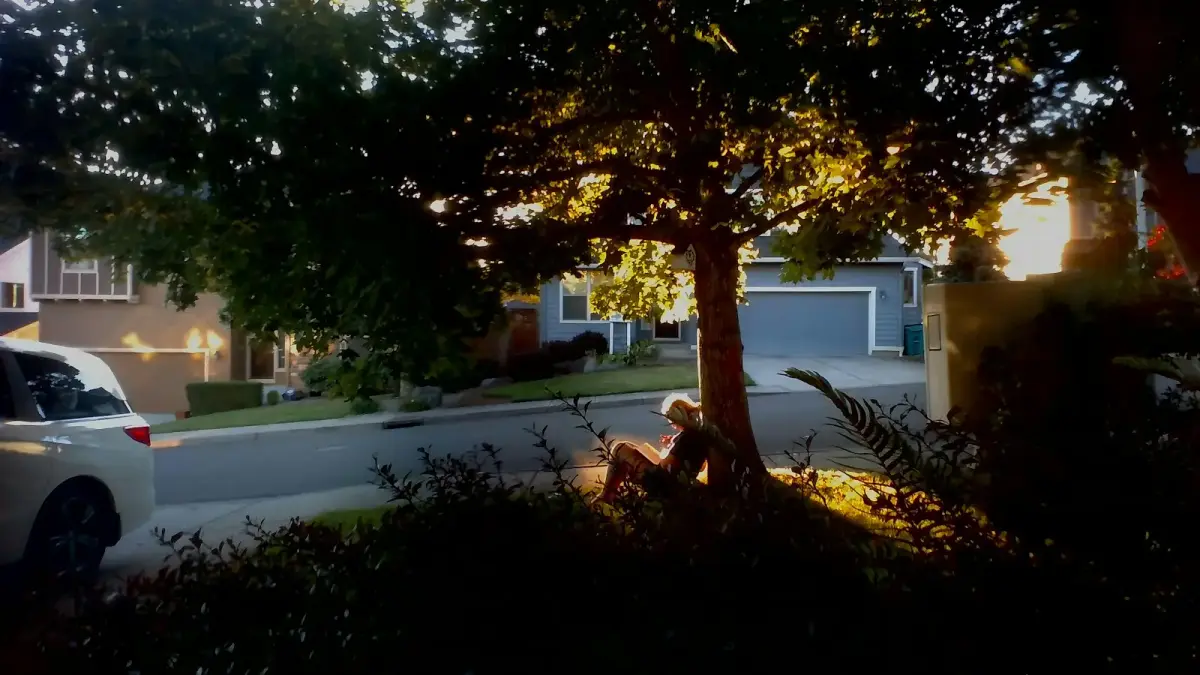
He pulls into the driveway and turns off the engine, but he doesn’t get out.
Not right away. He sits there for a minute, maybe two, sometimes longer. The house glows through the curtains. He can see the blue flicker of the television. He can hear, faintly, the sound of his family moving through their evening - dishes, footsteps, the dog’s nails clicking across the kitchen floor.
He’s not angry. He’s not avoiding anything. He’s not sitting there dreading what’s inside.
He’s sitting there because the car, in that moment, is the last space on earth that belongs only to him. The dashboard hum settling into silence. The cooling engine ticking down. No one asking what he wants for dinner, no one needing him to be present in a particular way.
I know this man because I have been this man. And if you’re reading this, there’s a decent chance you know him too - or you married him, or you were raised by him, or you are him right now, parked in your own driveway, reading this on your phone before you go inside.
He is not empty. He is not distant. He is full of things he has never learned how to say out loud, because somewhere along the way, a boy figured out that the safest place for the things that move him is somewhere no one else can see.
The Boy Who Was Caught
There’s a moment in most of these men’s histories. It’s not dramatic. It wouldn’t make a good movie scene. But it sits at the center of everything, like a stone dropped into water decades ago whose ripples are still shaping the shoreline.
He was eight, maybe ten. He was crying at a movie - the scene where the dog doesn’t make it, or the father walks away, or someone says goodbye in a way that felt so real it cracked something open in his small chest. And his father, or his older brother, or his uncle, looked at him with a face that wasn’t cruel but wasn’t comfortable either.
“Come on, buddy.”
That was all. Two words and a tone.
Or maybe it was different. Maybe he kept a journal, and someone found it. Not a bully at school, but his own brother, who read a page aloud at the dinner table while the family laughed. Not meanly. They thought it was sweet. They thought it was funny. They didn’t know they were teaching him the most important lesson he’d ever learn about being male in this world.
Or maybe he held something gently - a baby bird, a stuffed animal he was too old for, his mother’s hand in public - and caught a look. Not from a stranger. From someone who loved him. A look that said, without words, that whatever he was doing was slightly too much.
A 2015 study published in the journal Psychology of Men and Masculinities found that boys begin actively suppressing emotional displays between the ages of five and seven - not because of a single traumatic event, but through an accumulation of micro-moments that signal which feelings are acceptable to show. The researchers called these “gender policing interactions,” and found that the most impactful ones came not from peers but from family members who themselves had no idea they were doing it.
One moment of witnessed tenderness. One reaction that registered as discomfort. That’s all it took.
The boy didn’t make a conscious decision. He didn’t sit down and think, “I will never let anyone see me feel things again.” He just started building a room. Slowly. Brick by brick. A place where the tender things could live without being seen, without producing that look, without making anyone uncomfortable.
By the time he was a man, the room was finished. Furnished. Full.
And the door was locked.
The Inventory of Hidden Tenderness
If you could walk through that room, here is what you’d find.
His daughter left him a voicemail last Tuesday. She was just calling to say hi, to tell him about something funny that happened at work. Nothing important. But her voice - the way she still sounds, somewhere underneath the adult, like the girl who used to fall asleep in his arms - made his throat tighten in a way he couldn’t explain if you asked him to.
He listened to it twice. Then he deleted it. Not because he didn’t care. Because if someone saw him listening to it a third time, he’d have to explain something he doesn’t have words for.
There’s a photograph in his wallet. It might be his mother as a young woman, before she was anyone’s mother. It might be a friend who died twenty years ago. It might be himself at seventeen, standing somewhere that doesn’t exist anymore. It has nothing to do with his current life, and it has everything to do with who he is.
He has a song he only plays when he’s alone in the car. Not on road trips. Not when his wife is in the passenger seat. Just on the drives home from work, or the early morning runs to the hardware store. A song that does something to him he can’t describe, that opens a door he keeps closed in company. He turns it up. He lets it do what it does. Then he turns it off before he pulls into the driveway.
He notices things nobody knows he notices. The way the light comes through the kitchen window at a certain hour in October. The sound his wife makes when she laughs at something genuinely surprising - different from her polite laugh, different from her social laugh. The particular weight of his grandson falling asleep against his chest. He catalogs these things. He keeps them. He never mentions them.
He reads the sympathy cards at the grocery store sometimes. Not because he needs one. Just because the words move through him in a way that feels like being understood.
These are not the habits of a cold man. These are the habits of a man whose emotional life is so intense, so full, so easily stirred that he learned forty years ago to keep it behind a locked door - because the one time he left the door open, somebody walked through it and didn’t know what to do with what they found.
The Cost Nobody Counts
His wife of thirty years thinks he’s simple.
She doesn’t mean it unkindly. She loves him. But when her friends talk about their husbands - about emotional availability, about vulnerability, about “doing the work” - she thinks of him as the uncomplicated one. The steady one. The man who doesn’t need much.
She doesn’t know about the room.
His children think he’s stoic. They grew up watching a man who went to work, came home, fixed things, showed up at every game and recital, and never once broke down. They admire him for it. They also, in some quiet corner of themselves, wonder if he feels things the way they do. They wonder if he’s deep or just dependable.
They don’t know about the voicemails. The photograph. The song.
A 2019 study from the University of Toronto, published in the Journal of Personality and Social Psychology, found that men who score high on measures of emotional suppression don’t actually experience less emotion than their more expressive peers. They experience the same intensity - sometimes more. They’ve simply developed what the researchers called “containment strategies” - internal systems for processing feeling without displaying it.
The cost isn’t that these men don’t feel. The cost is that no one around them knows they do.
His daughter tells her therapist that she wishes her dad were more emotionally available. She doesn’t know that he replays her voicemails and can’t explain why his eyes sting. His wife reads articles about emotionally distant husbands and wonders if she settled. She doesn’t know that he sat in the car for ten minutes last Thursday because a song reminded him of the night they first danced, and the feeling it produced was so large he needed to sit with it alone before he could walk through the door and be normal.
Researcher Niobe Way spent years interviewing adolescent boys for her book Deep Secrets, and what she found shattered the idea that boys are naturally less emotional than girls. Young boys described their friendships in terms of love, trust, and heartbreak. They used words like “soul mate” for their best friends. Then, around age fifteen or sixteen, they stopped. Not because the feelings went away. Because they learned what the world would do with those feelings if it saw them.
The room gets built in adolescence. It gets furnished for a lifetime.
A Room That Isn’t Empty
Here is what I want you to understand, if you love one of these men.
The silence isn’t absence. The quiet isn’t emptiness. The fact that he doesn’t tell you about the things that move him doesn’t mean nothing moves him.
It means everything does.
It means he was a boy who cried at a movie and was met with discomfort. A boy who wrote something honest and had it turned into entertainment. A boy who held something gently and saw, in the eyes of someone he trusted, that his gentleness was a problem.
He didn’t stop being gentle. He just learned to be gentle in a room where no one could see.
And if you’re the man in the car right now - the one who deletes the voicemails, who plays the song only when he’s alone, who notices everything and says nothing - I want you to know something that nobody told you when you were eight years old, sitting in a dark living room with tears running down your face while someone told you to come on.
The room you built isn’t a weakness. It isn’t a dysfunction. It’s a cathedral. You built it to protect the most beautiful parts of yourself from people who didn’t know how to hold them. And that instinct - to preserve what’s tender - is not a failure of masculinity. It is the deepest expression of it.
The Door Doesn’t Have to Stay Locked
You don’t have to throw it open. You don’t have to perform some dramatic unveiling. The world is full of people telling men to “open up,” as if the problem were a stuck jar lid and not forty years of carefully learned self-protection.
But you could leave it cracked.
You could tell your daughter, next time she calls, that you saved her last voicemail. You don’t have to explain why. Just tell her you saved it. Watch what happens to her face.
You could show your wife the photograph. Not the story behind it, not yet. Just the photograph. Let her see that you carry something close to your chest that she didn’t know about. Let her sit with the surprise that you are deeper than she imagined.
You could let the song play when someone else is in the car.
These are small things. But for a man who built a room at eight years old and has been furnishing it ever since, they are enormous. They are acts of courage that nobody will recognize as courage, because the world doesn’t have a framework for the bravery it takes for a man to say, in any form, “This is what moves me.”
Your inner life is not a liability. It never was. It was just too much for the people around you when you were small, and you - being the kind of boy who notices things, who feels things, who holds things gently - did what any thoughtful child would do.
You protected them from the size of your own heart.
You don’t have to do that anymore. Not all the time. Not with everyone. But maybe with one person. Maybe today.
The room is still yours. Nobody can take it. But the things inside it - the voicemails, the photographs, the songs, the way the light hits the kitchen window in October - those things deserve to be known.
Not because sharing makes them more real. They were always real.
But because you were never meant to carry all that beauty alone.