There is a particular kind of man who still knows his childhood phone number by heart - who can recite seven digits that haven't connected to anything in thirty years, a number that used to mean the kitchen wall, his mother's voice, the sound of the receiver being lifted on the second ring - and the reason he never forgot it is not memory but loyalty, because a boy who memorized the coordinates of home never agreed to let them expire
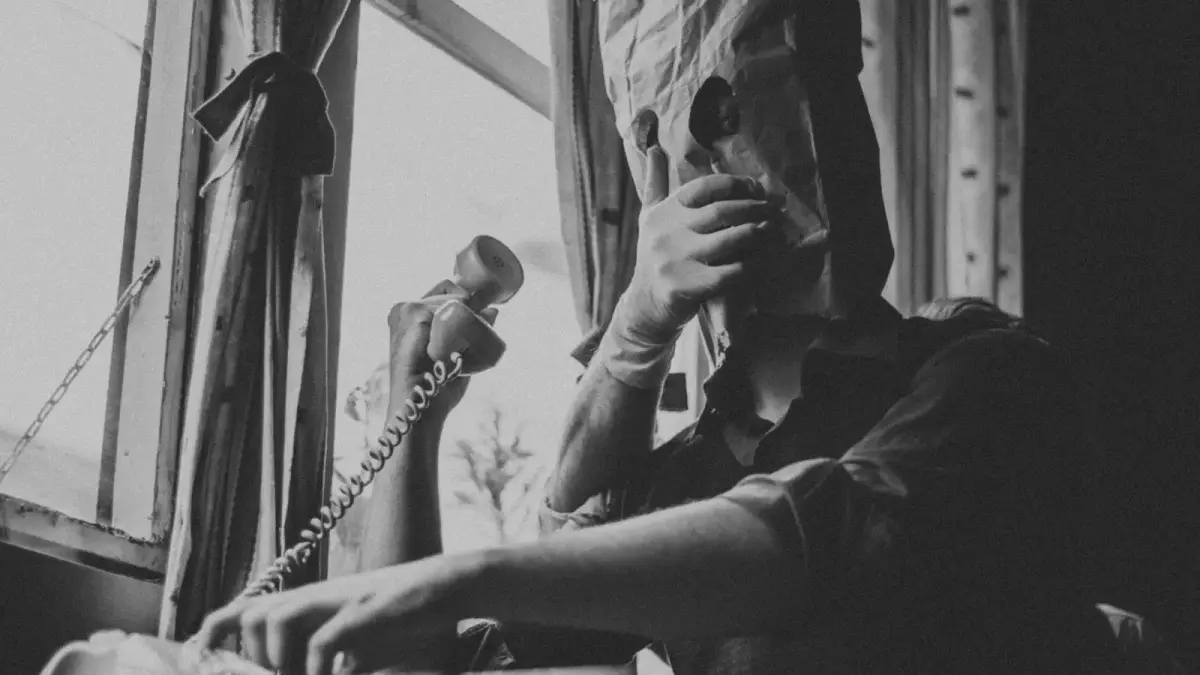
The number that goes nowhere
I can tell you my childhood phone number faster than I can tell you my current one. Seven digits. No hesitation. They come out of my mouth the way a prayer comes out of someone who stopped attending church decades ago but never stopped believing.
I haven’t dialed that number since 1994. The house it connected to was sold in 1997. The woman who answered it on the second ring - always the second ring, never the first, because she liked to dry her hands on the dish towel before picking up - died in 2011. There is nothing on the other end of that number now. It probably belongs to someone else. It probably rings in a room I’ve never seen, answered by a voice that has no idea what those seven digits used to mean.
And still, I carry them. Not in my contacts. Not written down anywhere. They live in the same place they’ve always lived - somewhere between my tongue and my chest, in the part of the body that holds the things you learned before you knew you were learning.
What a phone number used to be
You have to understand what a phone number was before everything became portable. Before the phone lived in your pocket and followed you everywhere and belonged to you alone. Before that, a phone number didn’t belong to a person. It belonged to a place.
Your phone number was your house. It was the kitchen wall where the receiver hung, the cord that stretched around the corner when your mother wanted privacy, the little table in the hallway where your father sat on Sunday evenings calling his brother two states away.
When you gave someone your phone number, you weren’t giving them access to you. You were giving them the location of your family. You were saying: this is where we live. This is the sound our house makes when you reach for it from the outside.
A 2014 study published in the Journal of Experimental Psychology found that memories encoded through repeated motor action - the physical act of dialing a number, pressing the same sequence of buttons hundreds of times - become stored not just in declarative memory but in procedural memory, the same system that holds how to ride a bicycle or tie a shoe. The number doesn’t live in your mind. It lives in your fingers.
That’s why you can still recite it. Not because you decided to remember. Because your hands never agreed to forget.
The boy at the payphone
If you are the man who still carries this number, I want you to think about the boy who first memorized it. Think about how old he was. Think about where he was standing when someone told him to learn it.
Maybe your mother crouched down in the kitchen and said it slowly. Maybe she held up her fingers and counted the digits. Maybe she made you repeat it back three times, four times, until she was sure. And the reason she was sure is because she needed to know that if you were ever lost - at a store, at a friend’s house, at a park where she couldn’t see you - you could find your way back.
That number was not information. It was a lifeline. It was the one sequence of sounds that could summon her voice out of any telephone in the world.
Think about the payphone. The heavy silver receiver that smelled like other people’s breath. The slot that swallowed the quarter. The dial tone that meant the world was listening. You pressed those seven numbers and something miraculous happened - your mother’s voice appeared. Out of nowhere. Out of a metal box on the wall of a gas station two towns from home. She was suddenly there, asking where you were, telling you to stay put, promising she was coming.
A boy who experienced that learned something about numbers that no amount of contact lists and cloud storage will ever replace. He learned that the right combination of digits could collapse distance. That seven numbers, pressed in the right order, could make you not lost anymore.
Why men carry these numbers and women carry other things
I want to be careful here, because this is not about one kind of memory being better than another. But I’ve noticed something, and researchers have noticed it too.
Dan McAdams, the Northwestern psychologist who has spent decades studying how people construct their life stories, has written extensively about how men and women tend to organize their autobiographical memories differently. Women more often anchor their memories in relationships and emotional exchanges - the conversation, the feeling, the words someone said. Men more often anchor theirs in spatial and procedural details - the route, the location, the sequence.
This isn’t a limitation. It’s a different kind of holding on.
The man who remembers his childhood phone number is holding onto something the same way he holds onto the route to his grandmother’s house, the combination to his high school locker, the jersey number of the first teammate who made him feel like he belonged. He keeps coordinates. He keeps codes. He keeps the numbers that once opened doors to places where he was safe.
A 2018 study published in Frontiers in Psychology on nostalgia and identity found that nostalgic memories - particularly those tied to childhood places and routines - serve a critical function in maintaining a sense of personal continuity. People who can connect their present self to specific, sensory-rich memories from their past report stronger feelings of meaning and belonging. The memories aren’t decoration. They’re structural. They hold the self together across time.
The phone number is not trivia. It’s architecture.
The grief inside the number
Here is the part that nobody talks about, and the part that makes your throat tighten if you let it.
The number doesn’t work anymore.
You know this. You’ve known it for years, maybe decades. You know that if you picked up a phone right now and pressed those seven digits, you would not hear your mother’s voice on the second ring. You would hear a stranger, or a recording, or nothing at all. The coordinates still exist in your body, but the place they pointed to is gone.
And yet you haven’t deleted them. You can’t. Not because you’re sentimental or stuck in the past, but because deleting them would require you to agree that the thing they connected to no longer exists. And some part of you - the boy part, the part that memorized those digits in the kitchen while his mother held up her fingers - refuses to sign that agreement.
This is not dysfunction. This is love doing what love does when it has no object left to land on. It holds the coordinates. It keeps the map. It refuses to believe that the place marked “home” has been removed from the directory, because the boy who memorized the number didn’t memorize a phone line. He memorized a promise. And promises don’t expire just because the technology that carried them does.
The numbers we carry without knowing why
Research from the University of Southampton’s nostalgia lab, led by Constantine Sedikides, has shown that nostalgic memories are not passive. They are active psychological resources that people draw on to regulate loneliness, strengthen social bonds, and maintain a sense of purpose. When someone recalls a nostalgic memory - unprompted, without effort, the way a phone number surfaces when you’re filling out a form and your fingers start pressing the old sequence before your mind catches up - the brain is not wallowing. It’s medicating. It’s reaching for proof that you were once connected, once known, once findable.
The man who still knows his childhood phone number is not living in the past. He is carrying a piece of evidence that the past was real. That there was a kitchen with a yellow phone on the wall. That there was a woman who dried her hands before answering. That there was a boy who could be lost anywhere in the world and still, with seven digits and a quarter, find his way back to the sound of her voice.
That evidence doesn’t need to be useful to be valuable. It doesn’t need to connect to anything. It just needs to be carried. And the man who carries it is not being foolish or old-fashioned. He is being faithful to a contract he made when he was six years old and someone said, remember this number, and he did, and he never stopped.
If you are this man
If you can close your eyes right now and recite a phone number that hasn’t worked in decades - if the digits come out of you like breathing, like the lyrics to a song you haven’t heard since middle school, like the name of a street you used to live on - I want you to know something.
You are not holding onto the past. You are holding onto proof that you had a home. That someone wanted you to be able to find it. That a woman or a man or a grandparent stood in a kitchen and said these numbers slowly, patiently, because they needed you to carry the coordinates of the one place in the world where you were always expected.
The number doesn’t ring anymore. The kitchen is someone else’s kitchen now. The voice that answered on the second ring is quiet in a way that no amount of dialing will undo.
But the boy who memorized those digits is still inside you. And every time the number surfaces - unbidden, automatic, like muscle memory for a place that only exists in your chest now - he is not being nostalgic. He is keeping his promise.
He said he would remember. And he did.