Psychology says people who always explain why they're buying something at the register - who tell the cashier 'it's for my daughter's birthday' or 'we're having people over' or 'I don't normally get these' as if a stranger behind a counter requires a reason for every small pleasure - are not making conversation but running a justification protocol that was installed by a child who reached for something in a store and heard 'put that back, you don't need that' in a voice that made wanting feel like something you had to defend
The Speech You Didn’t Know You Were Giving
I was behind a woman at the grocery store last Tuesday. She had a cart with the usual things - bread, eggs, milk, a bag of salad - and then, sitting right on top like it needed supervision, a small box of fancy chocolates.
When the cashier scanned them, the woman said, unprompted, “Those are for my book club tonight.”
The cashier nodded and kept scanning. She didn’t care. She was never going to care. She scans thousands of items a day and none of them require an explanation.
But the woman needed to say it. She needed the chocolates to have a reason beyond the fact that she wanted them.
I noticed because I do the same thing. I have done it my entire adult life. If I’m buying a bottle of wine on a Tuesday, I’ll say “long week” or “we’re having friends over.” If I pick up something indulgent - nice cheese, a candle, a pair of earrings that caught my eye - I hear myself constructing a little defense before I even reach the register.
It’s for a gift. It was on sale. I never do this.
For years I assumed this was just friendliness. Small talk. The harmless chatter of a person who likes connecting with strangers. But it’s not that at all. And once I understood what it actually was, I couldn’t unsee it - in myself or in anyone else.
The Justification Protocol
There’s a pattern that psychologists who study consumer behavior have started paying closer attention to in recent years: the compulsive narration of purchases. Not to friends. Not to partners. To cashiers, to baristas, to strangers in line - to anyone who might witness you wanting something and judge you for it.
Dr. Russell Belk, whose research on possessions and the extended self has shaped decades of consumer psychology, has written extensively about how the things we buy carry deep emotional weight that has nothing to do with the object itself. Our relationship to purchasing is shaped long before we have our own money.
This narration isn’t conversation. It’s a protocol - an automatic script that runs without your permission. You scan an item and your brain immediately generates a justification, a reason, a defense. Not because anyone asked. But because somewhere deep inside, you still believe that wanting something without a good enough reason makes you greedy, irresponsible, or selfish.
And that belief didn’t come from nowhere.
It was installed.
Where The Script Was Written
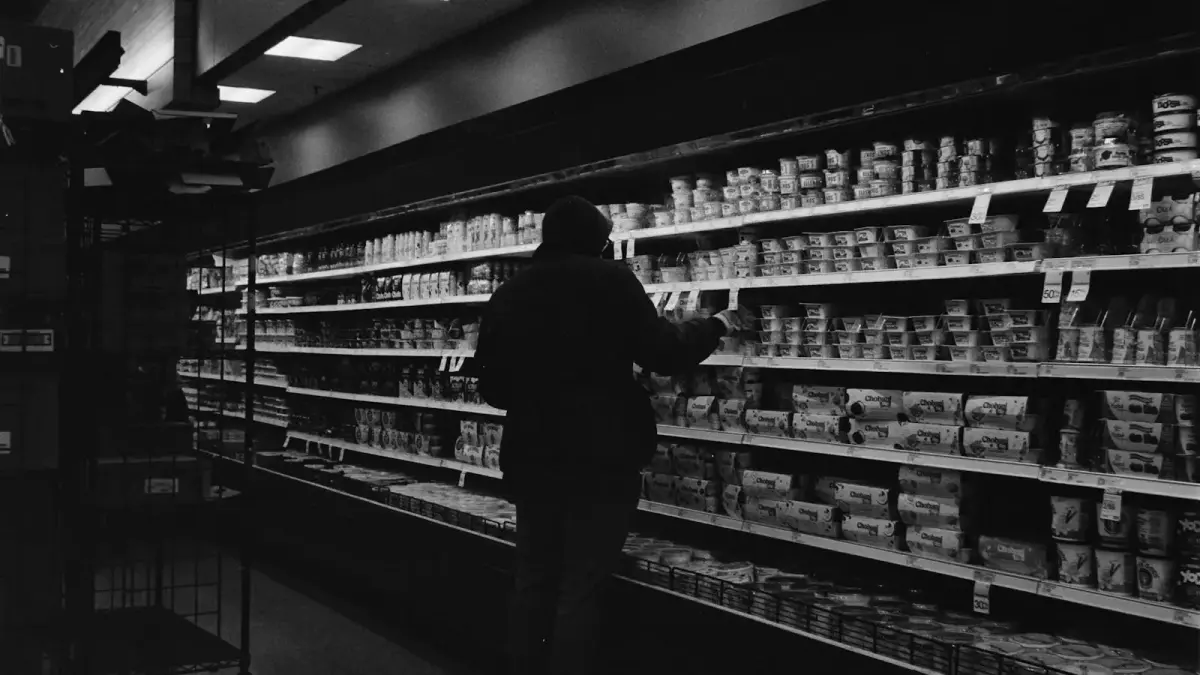
Think about a child in a grocery store. She’s maybe six or seven. She reaches for a box of cookies with a cartoon on the front - not because she’s calculated the cost or evaluated the nutritional content, but because they look fun and she wants them.
And the parent says: “Put that back. You don’t need that.”
That sentence, delivered a thousand different ways across a thousand shopping trips, teaches something very specific. It teaches that desire itself is the problem. Not the budget. Not the timing. The wanting.
A 2019 study published in the Journal of Consumer Psychology found that adults who grew up in financially restrictive households - even those who later achieved financial stability - continued to exhibit guilt and justification behaviors around spending that had no logical connection to their actual economic situation. The pattern persisted regardless of income.
Because the pattern was never about money. It was about permission. A child who is told “you don’t need that” enough times doesn’t just learn to stop asking for cookies. She learns that her desires are inconvenient. That wanting things is a form of taking. That every reach toward pleasure requires a corresponding explanation, a justification, a proof that you’ve earned the right to have something nice.
And then she grows up and tells the cashier at Target that the throw blanket is for her sister.
The Voice That Isn’t There Anymore
Here’s what makes this pattern so persistent: the parent who installed it doesn’t have to be present for it to run. You could be fifty-seven years old, financially comfortable, standing in a store with your own money, buying something that costs less than your morning coffee - and you will still feel the pull to explain yourself.
Because the audience for the justification was never the cashier. The cashier is just a stand-in. A proxy. A warm body behind a counter who happens to be witnessing the moment when you want something, and wanting something still feels dangerous.
The real audience is the voice in your head that sounds like a parent, a guardian, a older sibling, a figure from childhood who made you feel like your desires were a burden on the household. Every time you narrate a purchase to a stranger, you are defending yourself to someone who isn’t there anymore.
A 2021 study in Frontiers in Psychology explored how childhood financial socialization messages - the things parents say (and don’t say) about money, spending, and desire - become internalized scripts that operate automatically in adulthood. The researchers found that restrictive messages didn’t just affect spending habits. They affected how people felt about their own wants in every domain - food, rest, pleasure, self-care.
The child who learned that wanting a toy was greedy becomes the adult who can’t book a massage without telling three people it was a gift card. The child who was told “we can’t afford that” in a sharp, annoyed tone becomes the adult who whispers “it was on sale” to a stranger scanning barcodes.
The protocol runs everywhere. Not just at registers.
It Shows Up In Ways You Wouldn’t Expect
Once you see the justification protocol, you start noticing it in places that have nothing to do with shopping.
You take a sick day and immediately list your symptoms to your boss in more detail than anyone asked for. You leave work on time and say “I have a thing” instead of just leaving. You order dessert and tell the table “I skipped lunch.” You take a bath in the middle of the afternoon and feel the need to mention to your partner that you had a hard day.
Every pleasure requires a reason. Every act of self-care needs a defense.
This is what psychologist Brene Brown describes when she writes about the phenomenon of foreboding joy - the inability to simply sit in something good without bracing for consequences. People who grew up learning that their wants were too much develop an allergy to unearned pleasure. And “unearned” is defined impossibly broadly. A bath is unearned. A Tuesday bottle of wine is unearned. A chocolate at the checkout is unearned unless someone else will eat it.
The justification protocol isn’t about money at all. It’s about worthiness. It’s the lingering belief that you, specifically, have to earn the right to enjoy things that other people seem to enjoy freely.
What The Research Actually Reveals About You
Here’s the reframe, and I need you to hear this clearly: if you do this - if you narrate your purchases, if you justify your pleasures, if you build little defenses around every small indulgence - it doesn’t mean you’re neurotic or strange or broken.
It means you were a child who paid very close attention.
A 2020 study published in the Journal of Personality and Social Psychology found that children who developed heightened awareness of parental emotional states - who learned to read the room, to anticipate disapproval, to adjust their behavior based on subtle cues - grew into adults with above-average emotional intelligence and social sensitivity. The same mechanism that makes you explain your purchases to a cashier is the mechanism that makes you the person everyone trusts, the one who notices when someone at the table has gone quiet, the one who remembers how people take their coffee.
You learned to monitor. To anticipate. To preemptively justify. And that skill - that exhausting, beautiful skill - was forged in a household where wanting things required a case. Where reaching for something on a shelf was a negotiation, not a given.
The cashier doesn’t need your explanation. But the child in you needed to be safe. And explaining was how you stayed safe.
That’s not a flaw. That’s survival intelligence.
The Permission You Were Never Given
I want to tell you something that might feel strange to read.
You don’t owe anyone an explanation for the things that bring you pleasure.
Not the cashier. Not the stranger in line behind you. Not the voice in your head that still sounds like someone from a long time ago.
You are allowed to buy the chocolates because you want chocolates. You are allowed to buy the nice candle because you like how it smells. You are allowed to pick up the earrings, the book, the slightly expensive cheese, the throw blanket - and put them on the counter without a single word of justification.
You don’t have to say “it’s a gift.” You don’t have to say “it was on sale.” You don’t have to construct a reason that makes your pleasure acceptable to a stranger who wasn’t going to judge you in the first place.
The next time you’re at a register and you feel the speech rising - the explanation, the justification, the little defense you’ve been building since you were seven years old - I want you to try something.
Just let the silence be there.
Let the cashier scan the item. Let it go into the bag. Let yourself want something without defending the want.
It will feel uncomfortable. It might even feel wrong, like you’re getting away with something. That discomfort is the sound of an old protocol running into a wall. It’s the moment where the child’s survival strategy meets the adult’s reality - which is that you are a grown person, with your own money, buying something small that makes your life a little brighter.
You never needed permission to want things.
You just grew up in a place where no one thought to give it to you.