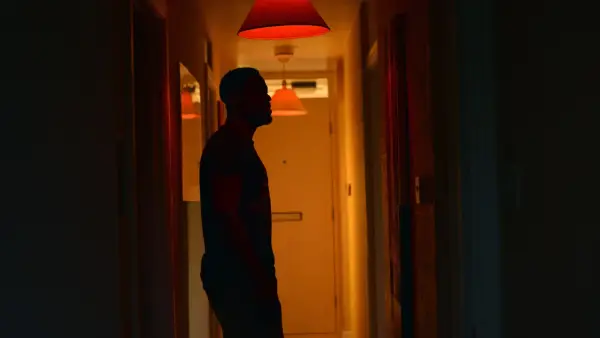
She is 59 and has just realized that every house she ever decorated was for the version of herself she thought other people wanted to see - the tasteful throw pillows, the books arranged by color on shelves she never read from, the guest bathroom no guest had used in years - because a girl who grew up in a house where nothing matched and nothing was chosen learned that the way a home looks from the outside is a woman's autobiography, and she has spent thirty years writing someone else's story in furniture
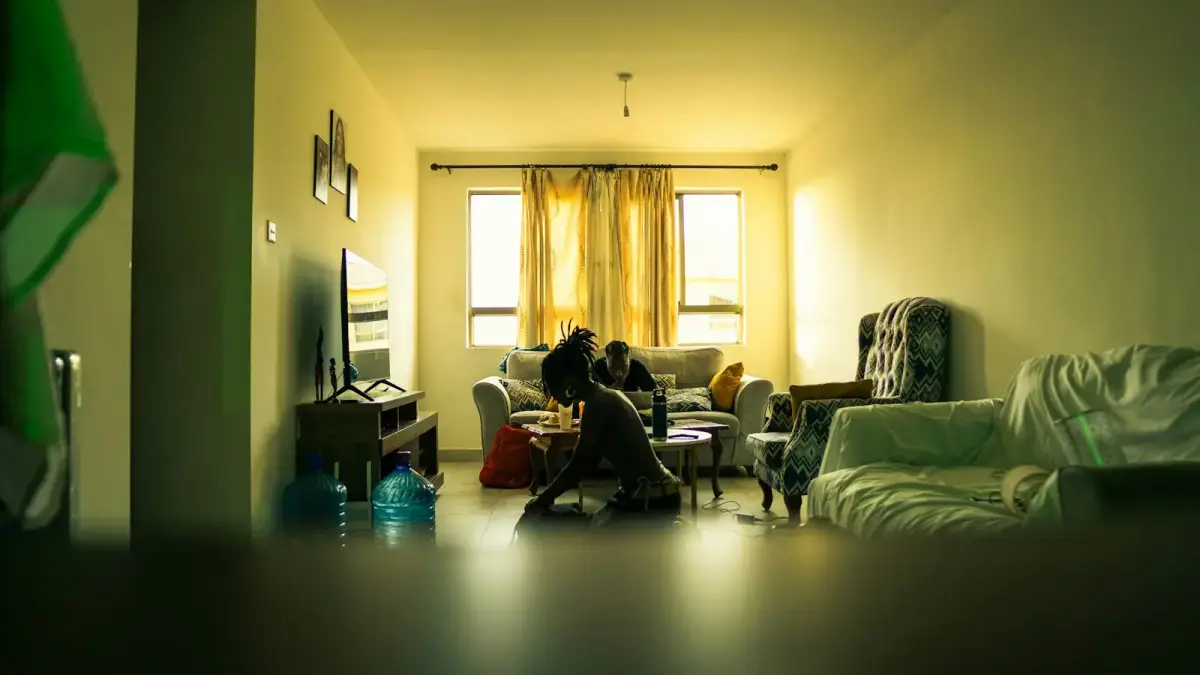
The house that looked like it belonged to someone else
I was standing in my living room last Tuesday - the one with the linen curtains I spent four months choosing - when something shifted inside me that I still can’t quite name.
The afternoon light was coming in the way it always does, hitting the carefully styled bookshelf, illuminating the spines I’d arranged by color two years ago during a weekend I told myself was “self-care.” And I thought, with a clarity that made my chest tight: I have never once pulled a book from that shelf because I wanted to read it. I arranged them so they’d photograph well if anyone ever looked.
Nobody has looked. Not really. Not the way I imagined they would when I spent an entire Saturday turning my personal library into wallpaper.
I am 59 years old, and I have just realized that every room I’ve ever assembled - the coordinated throw pillows, the guest bathroom with the eucalyptus hand soap, the kitchen island that seats four but has only ever seated me - was built for an audience that never showed up. Or more accurately, for a version of myself I thought that audience required.
The house I actually grew up in
My mother’s house had brown carpet that had been there since before I was born. The couch was a hand-me-down from my aunt, reupholstered once in a fabric that didn’t match anything else in the room, which itself didn’t match anything in the house.
The kitchen table was metal-legged, the kind you’d see in a school cafeteria. We ate dinner on it every night. Nobody called it “vintage” or “industrial.” It was just what we had.
There were no throw pillows. There were no accent walls. The towels in the bathroom were whatever color happened to be on sale, and they lived folded unevenly on a wire shelf my father installed crooked and never fixed.
I want to be careful here, because I’m not describing poverty. We weren’t poor in the way that word gets used on the news. We had enough. But we had enough of the wrong things, which is its own particular kind of visible. Our house looked like nobody had chosen it. Like it had just accumulated, the way lint gathers on a sweater.
And I learned, the way girls learn everything important - not through lectures but through the slow accumulation of what gets praised and what gets pitied - that the way a home looks is a woman’s report card. A woman who cannot coordinate her living room cannot coordinate her life. That was the unspoken math of every home magazine my mother never bought and every sitcom living room that looked nothing like ours.
What I was actually decorating against
A 2019 study published in the Journal of Consumer Research found that people from lower socioeconomic backgrounds are significantly more likely to engage in what researchers call “compensatory consumption” - purchasing and displaying items not for personal enjoyment but to signal membership in a social class they feel excluded from. The study noted this pattern is strongest in visible, home-based purchases. The things other people can see.
When I read that, something in me went very still.
Because I can trace it now. My first apartment at twenty-two - I bought curtains before I bought groceries. Real curtains, not the bedsheet my college roommate had pinned up. I remember standing in a store I couldn’t afford, choosing fabric that felt like it came from a life I was trying to enter.
Every home after that was the same performance, just with a bigger budget and better taste. Or what I called taste. What was actually a finely tuned radar for what looked expensive without being expensive, what whispered “she has always lived like this” to anyone who walked through the door.
The Restoration Hardware catalog. The West Elm clearance section. The Pottery Barn Kids room for my daughter that looked like a magazine spread - a room she immediately covered in stickers and marker drawings because she was four and she lived there, actually lived there, which was the one thing I had never figured out how to do in any room I’d ever assembled.
The guest bathroom that proved everything
We have a guest bathroom on the first floor. It has a small succulent on the counter, a hand soap that costs fourteen dollars, and towels that have never been used.
I replaced those towels once a year, not because they were dirty but because the color stopped being current. I have thrown away perfectly clean, perfectly folded towels because they were the wrong shade of gray for the year we were living in.
I want to say that out loud because I need to hear how it sounds: I discarded functioning towels in a room no one uses to maintain an aesthetic standard for visitors who do not come.
And here is the part that aches - I did this with the same seriousness, the same sense of urgency, that my mother could never afford to give her own home. She didn’t have the luxury of caring what the bathroom looked like. She was trying to make sure the bathroom worked. And I have spent three decades making sure mine performed.
Brene Brown has written extensively about how shame drives us toward perfectionism as a shield - not toward excellence, but toward the appearance of excellence, which is a fundamentally different thing. A home that is excellent is one you live in fully. A home that appears excellent is a museum you walk through carefully so you don’t disturb the exhibit.
I have been a museum curator of my own life. And I am so tired.
What “taste” actually costs a woman from nowhere
Here is something nobody tells you about class mobility: the moving up is visible, but the hiding where you came from is invisible. And the hiding is where all the energy goes.
I have friends who grew up with money. Real money, the kind that doesn’t announce itself. Their homes are beautiful in a way that looks effortless because it is. They buy things they love. They mix patterns. They keep their grandmother’s ugly lamp because it reminds them of her, and it sits next to a piece of art that cost more than my first car, and none of it clashes because confidence doesn’t clash.
A 2021 study in Psychological Science found that individuals who experienced socioeconomic mobility - moving from one class to another - reported significantly higher levels of identity conflict than those who remained in their class of origin. The researchers described it as “cultural homelessness,” belonging fully to neither the world you came from nor the one you entered.
That phrase hit me like a door swinging open.
Cultural homelessness. I have been culturally homeless in every living room I’ve ever decorated. Building a shelter that looks right from the outside while having no idea what would make it feel right on the inside. Because “the inside” would require knowing what I actually want, and wanting was a skill I never developed. I developed choosing. Choosing is different. Choosing is scanning the options and picking the one that will cause the least amount of visible wrongness.
I chose my couch the way I used to choose answers on a test I hadn’t studied for. Not the one I believed in - the one least likely to be embarrassingly wrong.
The moment I stopped performing for the bookshelf
Last Thursday I did something that felt almost dangerous. I took every book off that color-coded shelf. All of them. I piled them on the floor in the living room - the living room with the linen curtains and the carefully chosen rug - and I sat on the floor with them.
I sorted them differently this time. Not by color. By whether I’d actually read them. By whether I wanted to.
The “read and loved” pile was small. Embarrassingly small. Mostly paperbacks with cracked spines and water stains. Books I’d read in bed, in the bath, on the porch. Books that looked like they’d been lived with because they had.
The “display” pile was enormous. Beautiful hardcovers I’d bought because they made the shelf look like it belonged to a woman who reads Dostoevsky with her morning coffee. I have never once read Dostoevsky with my morning coffee. I drink my coffee standing up at the counter, reading the news on my phone, which is a perfectly fine way to drink coffee and has no aesthetic value whatsoever.
I put the paperbacks back on the shelf. Just the ones I loved. They don’t match. They don’t coordinate. The shelf looks half empty and a little bit chaotic and exactly like a person lives here who reads actual books because she finds them interesting.
It is the most honest that shelf has ever been, and it made me cry in a way I wasn’t prepared for.
The autobiography I’m finally writing in my own handwriting
I’m not going to tell you I’ve overhauled my entire house. I haven’t. The linen curtains are still there - it turns out I actually do like them, which was a relief to discover.
But I took down the framed botanical prints in the hallway. I never liked them. I bought them because a design blog said botanical prints were “timeless and sophisticated,” and timeless and sophisticated is the exact opposite of a metal-legged kitchen table in a house where nothing matched.
The hallway is blank now. I haven’t decided what goes there yet, and that not-knowing feels like the most honest decorating choice I’ve ever made.
Adam Grant has talked about the power of what he calls “identity foreclosure” - committing to who you are before you’ve explored who you might be. I foreclosed on my identity as a homemaker at twenty-two, deciding I would be the woman with the tasteful house, and I never revisited the question. I just kept answering it louder, with better furniture and more expensive paint.
A 2023 study in the Journal of Personality and Social Psychology found that people who grew up with fewer material resources often develop what researchers call “hypervigilance to environmental signals” - an acute awareness of how physical spaces communicate social status. The study noted that this awareness doesn’t diminish with increased income. You can leave the house where nothing matched, but the awareness that things are supposed to match stays with you like a second language you never stop hearing.
I hear it still. I walked into a friend’s house last week and my first thought - my very first thought, before hello, before warmth, before anything human - was that her kitchen hardware was brushed nickel and her light fixtures were matte black and they didn’t go together.
That is not taste. That is surveillance. And I’ve been running it for forty years.
What I want the house to say now
My mother is eighty-three. The brown carpet is gone. She has laminate floors now, the kind that click together, installed by my nephew one weekend. Her couch is still a hand-me-down but from a different sister this time. The kitchen table is new - a real wooden one, small, with two chairs because it’s just her now.
I visited her last month and I noticed something I’d never let myself see before. Her home is comfortable. Not curated. Not coordinated. Not performing anything for anyone. She has a blanket draped over the arm of the couch because that’s where she sits in the evening, and a stack of puzzle books on the side table, and a plant by the window she talks to sometimes when she forgets anyone is listening.
Her home looks like her. It has always looked like her. The metal-legged table, the mismatched towels, the wire shelf - those weren’t failures of taste. They were the honest architecture of a woman who used her resources for living rather than for display.
I am 59. I have spent more money on throw pillows than my mother spent on furniture in a decade. And her home has always been more real than mine.
I don’t know yet what my house looks like when it looks like me. I’m finding out slowly, one honest choice at a time. The half-empty bookshelf. The blank hallway. The guest towels I’m finally going to use myself, because they are soft and they are here and I am done saving the good things for people who might someday come to judge whether I’ve earned them.
The girl from the house where nothing matched is still in here. She is not a thing to decorate over. She is the only person who was ever going to feel at home.