She's 62 and still walks every single guest to their car and stands in the driveway watching until the taillights disappear around the corner - not because she's being polite but because her mother did the exact same thing in their working-class neighborhood where walking someone to their car was never ceremony, it was making sure they were safely inside metal and moving before you turned your back
My mother never said goodbye from the doorway.
She said it from the end of the driveway, one hand raised, the other tucked into the pocket of whatever housecoat she was wearing. She stood there in January cold and August humidity, in slippers that weren’t made for pavement, watching every cousin, every neighbor, every friend from church walk to their car. She didn’t go back inside until the engine turned over. She didn’t drop her hand until the taillights cleared the stop sign at the end of our block.
I thought it was just something she did. The way she also triple-checked the front door lock and kept the porch light on until the last person she loved was accounted for.
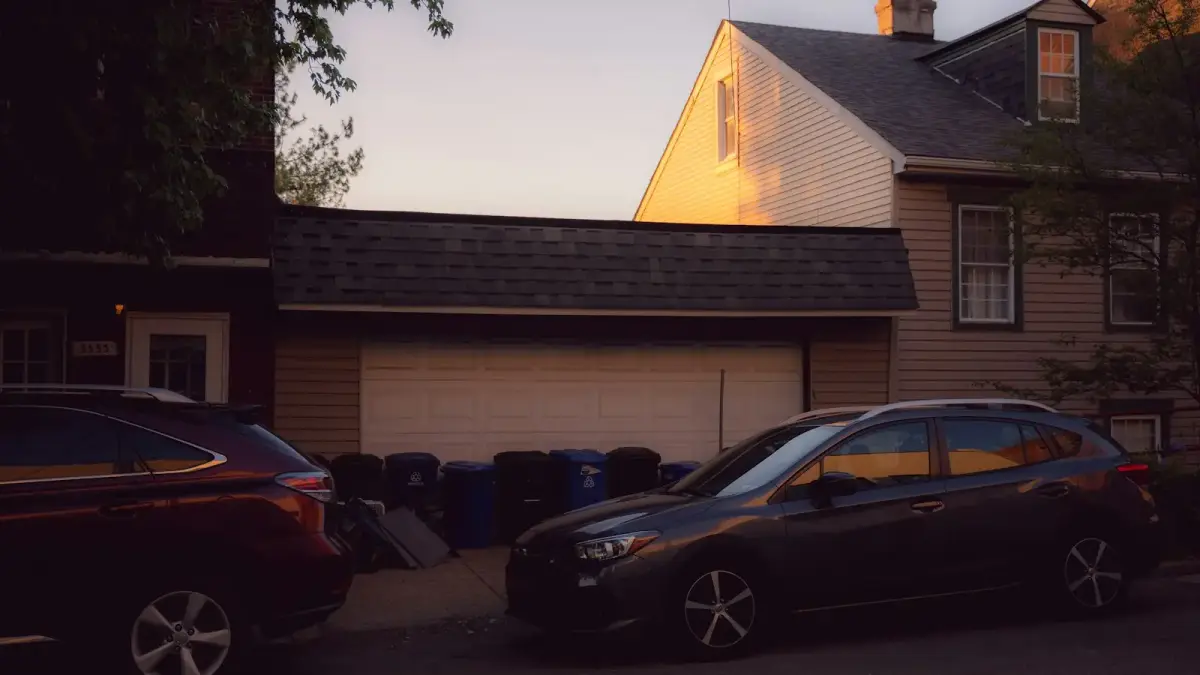
I’m 62 now. And last Tuesday, I stood in my own driveway - a nicer driveway, in a quieter neighborhood, on a street where nobody has ever had a reason to run - watching my daughter-in-law pull away after dinner. I didn’t move until her car turned left at the intersection. I didn’t even realize I was doing it until the motion-sensor light clicked off and I was standing in the dark, alone, still watching the empty road.
That’s when I understood. This isn’t politeness. It never was.
The ritual nobody taught me with words
I grew up on the kind of street where you knew whose car belonged and whose didn’t. Where a strange vehicle parked too long got noticed, discussed, and watched from kitchen windows until it left or was explained.
My parents didn’t own the house. We rented the upstairs of a duplex from a man named Gerald who lived below us and coughed through the floorboards every morning at five. The neighborhood wasn’t dangerous in the way people imagine when they hear “working class.” It wasn’t a war zone. It was a place where things happened sometimes, and because they happened sometimes, you paid attention all the time.
My mother walked people to their cars because the walk from our front door to the curb wasn’t guaranteed safe after dark. Not guaranteed dangerous, either. Just not guaranteed. And in a neighborhood without guarantees, you provided your own.
She never explained this. She never sat me down and said, “We walk people to their cars because something could happen.” She just did it. And I absorbed it the way children absorb everything - not as a lesson, but as the shape of the world.
A 2014 study published in the Journal of Personality and Social Psychology found that behavioral rituals passed between parents and children are most durable when they’re never explicitly taught. The researchers called them “ambient transmissions” - habits so embedded in the family’s daily rhythm that the child encodes them as instinct rather than instruction. You don’t remember learning them. You just find yourself doing them at 40, at 50, at 62, and one night you stand in a dark driveway and wonder where it came from.
The class line nobody draws
Here is something people who grew up with lawns and alarm systems don’t always understand: goodbye has a different weight depending on your zip code.
In some neighborhoods, goodbye is a wave from the porch. A casual “drive safe!” tossed over your shoulder as you’re already walking back to the couch. The assumption is baked in - of course they’ll be fine. The car will start. The streets will be lit. The drive home is just a drive home.
In the neighborhood where I grew up, goodbye was unfinished business until the person was enclosed in their vehicle with the engine running and the doors locked. My mother didn’t just watch out of sentiment. She watched because she’d heard stories. She knew a woman from church whose brother-in-law was mugged at his own car door on a Tuesday. She knew a teenager from two blocks over who had his bike taken from underneath him in the time it took to cross a parking lot.
These weren’t traumas. They were context. The background radiation of a place where you didn’t assume safety - you confirmed it, one departure at a time.
And the thing about growing up in that context is that you take it with you. You move to a safer street, a bigger house, a neighborhood with sidewalks that go somewhere, and your body keeps running the old program. You can’t stop scanning. You can’t stop escorting. You can’t let someone walk to their car alone because some part of you still lives on that block where the streetlight on the corner was out for three months and nobody from the city came to fix it.
What it looks like when you carry it forward
I didn’t realize how many of my daily habits are versions of my mother standing in the driveway.
I text “did you get home safe?” to everyone. My friends, my children, my coworkers after a late meeting. Not once. Every time. I don’t fall asleep comfortably until the reply comes through. My husband used to tease me about it - “They’re adults, Elena, they have phones and GPS” - and I’d laugh, but I never stopped.
I escort colleagues to the parking garage after evening events. I stand by the elevator and wait until I hear their car start on the level below. I’ve done this at conferences, at dinners, at every professional function where someone has to walk to their car in the dark. People think I’m being gracious. I’m being my mother.
I stand in the doorway when delivery drivers walk back to their trucks, not because I’m watching them but because something in me refuses to close a door on a person who hasn’t yet reached safety. I know it’s irrational. The FedEx driver is fine. But my body doesn’t know that. My body is still on my mother’s porch, waiting for the engine sound.
Gabor Mate has written extensively about how the nervous system stores the emotional atmosphere of childhood, not as memory but as pattern. You don’t remember deciding to be vigilant. Your body simply never stopped being vigilant because it never received the signal that vigilance was no longer required. For people who grew up in working-class environments where safety was managed rather than assumed, that signal never comes. You just move to a safer place and keep doing the same things, and eventually someone asks why, and you realize you don’t have a clean answer.
The goodbye that was never about goodbye
What my mother was really doing in that driveway wasn’t saying goodbye. She was completing a transaction.
In our world, hospitality didn’t end when the guest left the table. It ended when the guest was home. The meal, the conversation, the laughter - all of that was the first half. The second half was making sure the person you’d just fed and loved was physically safe in their departure. If you went inside too early, you’d left something undone. The circle wasn’t closed.
I’ve watched my friends from more comfortable backgrounds say goodbye at the front door and turn away before the car has even started. It’s not that they don’t care. It’s that they’ve never had to fold protection into their affection. For them, love and safety are separate categories. For people like my mother - and for me - they’re the same gesture.
A 2018 study published in Psychological Science examined what researchers termed “protective hospitality” - the cultural practice of extending care beyond the domestic threshold into the departure itself. The study found that this practice was significantly more prevalent in lower-income communities and was strongly correlated with neighborhood-level perceptions of environmental unpredictability. In other words, the less your neighborhood guaranteed safety, the more your goodbye ritual expanded to include it.
My mother would have had no idea what “protective hospitality” meant. She would have said she was just being decent. But decency, in our neighborhood, had a wider jurisdiction than it did in others. It covered the driveway, the sidewalk, the curb, the car door, and the first quarter-mile of the drive home.
The inheritance I didn’t ask for but wouldn’t return
My daughter thinks it’s sweet. She posts about it sometimes - “My mom is the woman who stands in the driveway until you’re literally out of sight, every single time.” Her friends comment heart emojis and say things like “protect her at all costs.” They think it’s a personality trait. A charming quirk of a caring mother.
It isn’t a quirk. It’s a scar that happens to look like warmth.
But here’s the thing I’ve come to understand, standing in that driveway at 62, watching taillights I can no longer quite see without my glasses: I don’t want to stop. Even knowing where it comes from. Even knowing it’s coded into me from a neighborhood I left forty years ago. Even knowing that my street now is safe, that my daughter-in-law’s drive home is fifteen minutes through well-lit suburbs with a working phone in her cup holder.
I don’t want to stop because it connects me to my mother. Every time I stand there, I’m standing next to her. I’m wearing her housecoat. I’m squinting at the same taillights. I’m completing the same circle she completed a thousand times - the one that says, I don’t stop loving you when you leave my sight. I just need a few extra seconds to prove it.
A 2021 study published in the Journal of Research in Personality found that inherited behavioral rituals - even those rooted in anxiety or adversity - often become the primary channel through which adults feel emotionally connected to deceased parents. The ritual isn’t just a habit. It’s a visitation.
My mother has been gone eleven years. But every time I stand in that driveway, she’s there. She’s always there. Watching with me. Waiting with me. Refusing to go inside until the people we love are safely moving through the dark.
Some people inherit jewelry. Some inherit recipes or expressions or the way they laugh.
I inherited the driveway. And I’m keeping it.