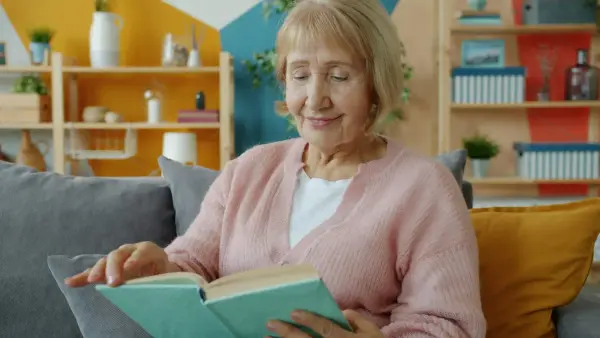
She's 63 and just realized she still puts her napkin in her lap the moment she sits down anywhere to eat - not at a restaurant with linen tablecloths, not at a dinner party where someone might notice, but at a diner counter, at her kitchen table alone on a Wednesday, on a park bench with a sandwich wrapped in wax paper - because a girl who watched her mother unfold her napkin and smooth it across her lap before the first plate was ever served learned that a woman who eats without a napkin in her lap is not eating but merely feeding herself
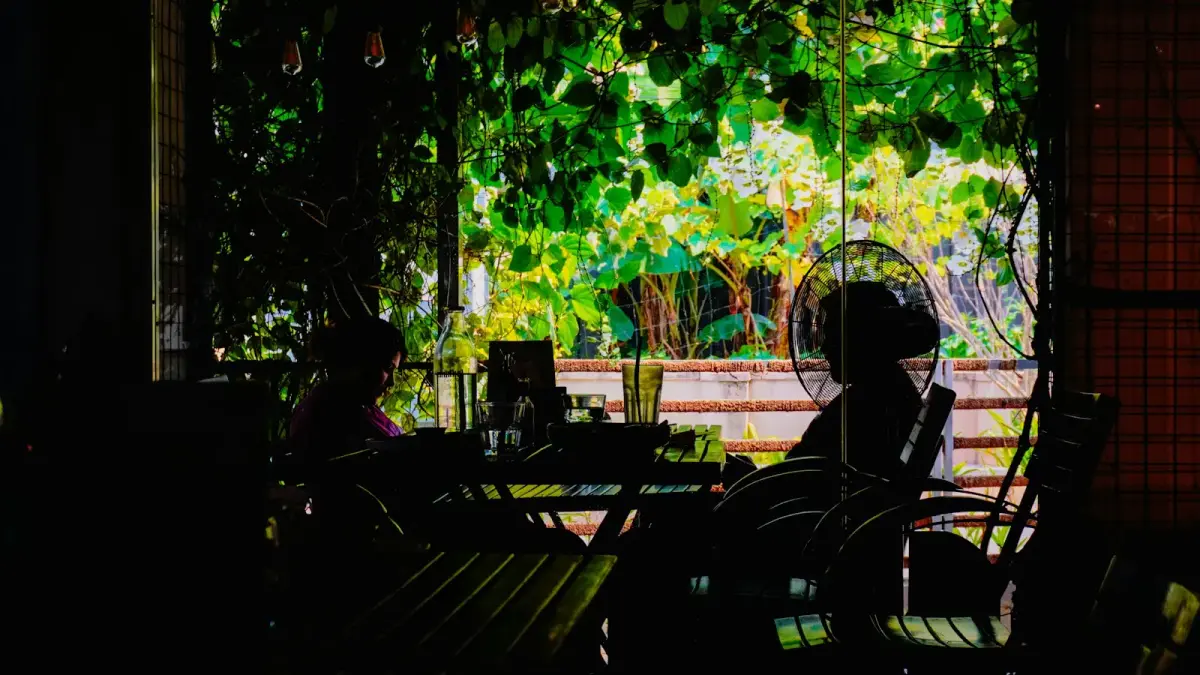
I caught myself doing it at a rest stop off the turnpike last August.
I had a gas station sandwich - the kind wrapped in cellophane that you don’t examine too closely - and a small coffee in one of those cups so thin you can feel the heat through the cardboard. I sat down at one of those concrete picnic tables with the peeling green paint. And before I even unwrapped the sandwich, before I popped the lid on the coffee, my hand went to the paper napkin I had taken from the dispenser inside, and I unfolded it, and I laid it across my lap.
Nobody was there. Not a single person in that rest stop parking lot could see me. And it wasn’t a decision. It was something older than a decision. Something so embedded in my body that my hands did it the way lungs breathe - without permission, without thought, without any consultation from the brain at all.
I was 63 years old, eating a bad sandwich in a parking lot, and I had a napkin in my lap as though I were dining at the Ritz.
And that’s when I understood where it came from.
The thing my mother never said out loud
My mother was not a wealthy woman. She didn’t grow up with silver or crystal. She worked at a dry cleaner’s for thirty years and came home with her hands smelling like chemical solvents and her back aching in places she never complained about.
But she set the table every night like something good was about to happen.
Not fancy. Not with centerpieces or cloth napkins on weeknights. But with intention. Plates centered on the placemat. Fork on the left. Knife on the right. And a paper napkin, folded once, placed beside the fork. And when she sat down, before any food was passed, before she said grace or asked about anyone’s day, she picked up that napkin and unfolded it and laid it across her lap with a gesture so smooth it looked like a curtain being drawn.
She never told me to do the same. She never said “put your napkin in your lap.” She just did it, every time, in every setting, with the same quiet ceremony. And I watched. And my hands learned.
That is how the deepest lessons travel between mothers and daughters. Not through instruction. Through witness.
The difference between eating and feeding yourself
There is a distinction my mother understood without ever articulating it, and it has taken me sixty-three years to translate it into words.
Feeding yourself is fuel. It is standing over the kitchen sink eating leftover pasta out of the container because why dirty a plate. It is eating in the car, eating while scrolling, eating with one hand while the other hand does something more important.
Eating - the way my mother meant it - is different. It is saying to yourself, with your body, before you take the first bite: this moment matters. I am here. This food is not interrupting my life. This food is part of my life. And I am worth the small ceremony of a napkin in my lap even though nobody will ever know whether I used one.
A 2019 study published in the journal Appetite found that people who engaged in ritualized eating behaviors - even simple ones like arranging food on a plate or pausing before the first bite - reported significantly higher satisfaction with their meals and a greater sense of emotional well-being during eating. The ritual didn’t change the food. It changed the relationship to the self that was eating it.
My mother knew that. She just didn’t have the language of research. She had the language of a folded napkin.
What your hands remember when your mind forgets
I have been putting a napkin in my lap for over fifty years now. I do it at restaurants, of course. I do it at holiday dinners. But I also do it at the diner counter on Route 9 where I sometimes eat breakfast alone on Saturday mornings. I do it on the couch when I’m eating soup and watching a documentary. I do it on a park bench with a sandwich wrapped in wax paper, the pigeons watching me like I’m performing for an audience.
And I have never once thought about whether anyone noticed.
That is the part that stopped me at the rest stop. Because I realized this habit was never about manners. It was never about being seen. It was never about impressing anyone or performing propriety for an audience that might be judging.
It was about what I believed I deserved when nobody was watching.
Psychologist Brene Brown has written extensively about the concept of worthiness - the deep, pre-verbal belief that you deserve care, attention, and tenderness simply because you exist. She describes it as the foundation underneath everything else. Not confidence. Not self-esteem. Something quieter. A kind of internal posture that says: I will treat myself well even in the small moments, even when no one is counting.
My mother couldn’t have told you what worthiness research says. But she put a napkin in her lap every single time she sat down, including the nights when dinner was just toast and tea because the paycheck hadn’t come yet. And that napkin said everything Brene Brown would later say with a hundred pages.
The rituals we inherit without being taught
I’ve started paying attention to the other things my hands do without my permission.
I smooth the bedsheet flat before I get in, even though it will be rumpled in ten minutes. I hang my coat on a hanger when I come inside, even when I’m going back out in an hour. I rinse my coffee cup right after I finish, even when the sink already has other dishes in it. I put lotion on my hands before bed, every night, the way my mother did, rubbing it between her palms first to warm it.
None of these things are necessary. None of them make my life materially better. No one is watching. No one is grading me.
But each one is a tiny ceremony. A small moment where I pause and say, with my body instead of my words: you are worth this extra ten seconds of care.
A 2021 study in Frontiers in Psychology found that habitual rituals - even unconscious ones - serve as emotional anchors that reduce anxiety and increase a person’s sense of control and self-coherence. The researchers noted that people who maintained small personal rituals showed lower cortisol levels during stressful periods than those who had abandoned their rituals under pressure.
In other words, the napkin is not nothing. The napkin is a tiny anchor to the self.
What she was really teaching me
My mother died eleven years ago. Pancreatic cancer, fast and merciless, the way that particular cruelty always is. She was seventy-eight.
In the last weeks, when she could barely eat, when food was measured in spoonfuls and nothing tasted right, I watched her. I sat beside her hospital bed in the house - she wanted to be home, and we made that happen - and I fed her applesauce and broth and sometimes just ice chips.
And one afternoon, when I helped her sit up and put a small bowl of soup on the tray table, she looked at me and made a gesture with her hand. A reaching gesture. She didn’t say anything. Her voice was mostly gone by then. But I knew what she wanted.
I handed her a napkin. And she unfolded it. And she smoothed it across her lap with a motion that was slower now, shaking, but exactly the same. The same gesture. The same quiet theater.
She ate three spoonfuls. Then she closed her eyes.
And I sat there watching her sleep with that napkin still across her lap and I understood, for the first time, what she had really been teaching me all those years. It was never about etiquette. It was never about propriety or manners or what people think.
It was this: You are not an animal standing at a trough. You are a person. And even when the meal is small and the audience is empty and the sandwich is cheap and you are tired and alone and nobody in the world cares whether you use a napkin or not - you care. Because how you treat yourself when no one is watching is not a performance. It is a confession of what you believe you are worth.
The women who taught themselves they mattered in small ways
I think about this when I see other women my age. Women who still set the table even though the kids are gone. Women who put on lipstick before they go to the grocery store, not for anyone else, but because it makes them feel like themselves. Women who make the bed every morning even though they’ll unmake it in sixteen hours.
A 2023 study published in the Journal of Personality and Social Psychology examined the role of self-directed rituals in identity maintenance among older adults. The researchers found that participants who maintained personal grooming and domestic rituals - regardless of whether anyone else witnessed them - scored significantly higher on measures of self-continuity and psychological well-being. They reported feeling more like “themselves” across time, as though the rituals were a thread stitching their present self to their past.
These women are not old-fashioned. They are not rigid or fussy or stuck in their ways.
They are performing daily, invisible acts of self-respect that someone - a mother, a grandmother, an aunt - installed in them so long ago that the origin story is almost forgotten. Almost. But not quite. Because the hands remember.
My hands remember my mother’s hands. The way they moved across her lap. The patience in them. The smoothing motion, like she was pressing something sacred into place.
And every time I sit down - at a restaurant, at a kitchen table, at a concrete picnic bench in a rest stop parking lot off the turnpike - my hands do the same thing. They reach for the napkin. They unfold it. They smooth it across my lap.
Not because anyone is watching.
Because she taught me that the person watching is me. And that was always the one who mattered most.