She is 66 and just realized she has never once poured herself a full glass of anything - not water, not juice, not wine, always three-quarters, always leaving room, always stopping before the glass is complete - not because she is being careful but because a girl who took the last of the milk one morning and watched her mother's face rearrange itself learned that fullness is something you offer to other people and restraint is something you keep for yourself
I caught myself doing it again last Tuesday at two in the morning.
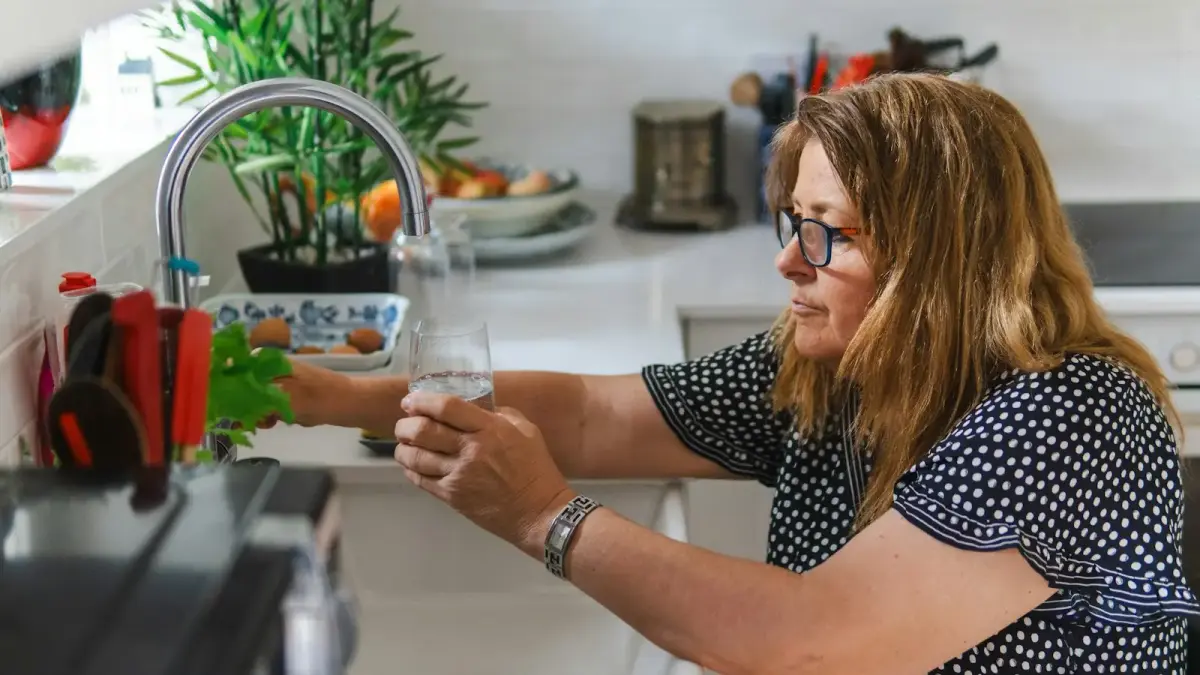
I was standing in my kitchen in the dark, filling a glass of water from the tap, and I stopped pouring before the water reached the top. Not because I wasn’t thirsty. Not because the glass was too heavy. I stopped because something in my body said that’s enough before my thirst agreed.
I stood there looking at the glass - three-quarters full, exactly the way I always pour it - and for the first time in my life, I asked myself why.
The answer arrived before I finished the question. It had been waiting sixty years.
The morning that taught her how much room to take up
When I was six, I poured myself the last of the milk at breakfast.
I remember it clearly, the way you remember certain moments not because they were dramatic but because your nervous system decided to photograph them. The carton tipped. The milk filled my glass. And then I looked up and watched my mother’s face do something I didn’t have a word for yet.
She didn’t yell. She didn’t say anything cruel. Her expression just - rearranged. A tightening around the mouth. A flicker behind the eyes that communicated, in a language children are fluent in, that I had done something wrong by being full when someone else might be empty.
My father came to the table a few minutes later and there was no milk for his coffee.
Nobody said a word about it. Nobody needed to.
That was the morning I learned the rule I have followed every day since: fullness is something you offer to other people. Restraint is something you keep for yourself.
The quiet mathematics of never enough
What I did not understand as a child - and what I am only now beginning to see at sixty-six - is that the lesson was never about milk.
It was about how much space I was allowed to occupy. How much I was allowed to want. How complete I was permitted to feel before the wanting itself became a kind of transgression.
A 2019 study published in the Journal of Personality and Social Psychology found that children who grow up in households with perceived scarcity - even emotional scarcity, not just material - develop what researchers call “chronic self-diminishing patterns.” These patterns don’t look like deprivation from the outside. They look like politeness. They look like generosity. They look like a woman who always takes the smallest piece of cake and genuinely believes she prefers it that way.
I became that woman. I became the person who orders the least expensive thing on the menu not because of money but because something in me still believes that wanting the lobster is the same as taking the last of the milk.
I leave food on my plate. I keep the thermostat two degrees below comfortable. I tell the hairdresser “just a trim” when I actually want something completely different.
Three-quarters. Always three-quarters. Always leaving room for someone else to have enough, even when there is plenty, even when I am alone, even when the only person I am leaving room for is a ghost.
The body remembers what the mind renames
Here is what nobody tells you about childhood scarcity: you do not outgrow it. You just get better at calling it something else.
At twenty, I called it being easygoing.
At thirty, I called it being low-maintenance.
At forty, I called it being selfless, and I believed that was a virtue.
At fifty, I called it being practical. Sensible. The kind of woman who doesn’t need much.
At sixty, standing in a kitchen that belongs entirely to me, in a house I pay for with money I earned, pouring myself three-quarters of a glass of water from a tap that never runs dry - I finally called it what it is.
Fear. The quiet, well-mannered kind. The kind that looks like grace.
Gabor Mate has written extensively about how the body stores unresolved childhood experiences as unconscious behavioral patterns. The hand that stops pouring is not making a rational decision about thirst. It is replaying a moment from 1966 when a little girl learned that her fullness came at someone else’s expense.
My body remembers even when my mind has moved on. My hand knows the exact level where “enough” lives in a glass, and it is always, always below the rim.
All the things she left room for
I started making a list. Not intentionally - it just started accumulating once I noticed the glass.
I leave room on my side of the bed, even though I have slept alone for nine years. I keep the right side tidy, the pillows arranged, as if someone might arrive and need the space I have been holding.
I leave room in conversation. I will have something to say - something true, something I have been thinking about for weeks - and I will swallow it because someone else is talking and their words seem more important. Not because they are. Because I still believe that my thoughts take up space that belongs to someone else.
I leave room in my closet. Half of it has been empty since Gerald moved out. I could fill it. I have things in boxes in the spare room that could use a proper home. But something about spreading into that space feels like a confession I am not ready to make.
I leave room in my schedule, keeping Tuesday afternoons open in case one of my children needs something, even though they are grown and rarely call on Tuesdays. The opening is not generosity. It is a habit of readiness - of being available to pour myself into someone else’s glass on a moment’s notice.
A 2021 study in Frontiers in Psychology examined what researchers termed “preemptive self-reduction” in women over fifty. They found that many women unconsciously minimize their own needs - physical space, emotional expression, caloric intake, rest - not because of current circumstances but because of deeply encoded beliefs about who is entitled to take up room. The researchers noted that most of the women in the study did not describe themselves as deprived. They described themselves as considerate.
That word hit me like a door I walked into in the dark. Considerate. I have built my entire identity around a word that means, when you trace it back far enough, I considered everyone else first and there wasn’t much left.
The girl who is still standing in the kitchen
The hardest part of this realization is not the sadness. The sadness is familiar - I know its shape, its temperature, the way it sits in my chest like a stone I swallowed so long ago I forgot it was there.
The hardest part is understanding that I am not fighting a habit. I am fighting a child’s logic that made perfect sense at the time.
That little girl watched her mother’s face and made a calculation in a fraction of a second: If I take everything I need, someone I love will go without. If someone I love goes without, their face will change. If their face changes, I am the reason. I will never be the reason again.
It was brilliant, really. A six-year-old solving an impossible equation with the only variable she could control - herself.
The problem is that she solved it too well. She solved it so well that the solution became invisible. It stopped being a strategy and started being a personality. The woman who doesn’t need much. The woman who is happy with whatever is left. The woman who fills her own glass three-quarters of the way and calls it preference instead of penance.
Learning to pour past the line
I am not going to tell you I woke up the next morning and filled my glass to the brim and everything felt healed. That is not how sixty years of programming works, and I do not trust anyone who suggests it does.
What I will tell you is that I noticed.
That is not a small thing. Brene Brown has written about the power of simply naming a pattern - how the act of saying this is what I do and this is where it comes from disrupts the automatic loop, even before the behavior changes. Awareness is not the same as transformation, but it is the ground transformation grows from.
So I have been practicing. Small things. Pouring a full glass of orange juice and drinking all of it without the flicker of guilt that usually accompanies the last few sips. Ordering what I actually want at the restaurant. Letting myself spread into the empty side of the bed, just to feel what it is like to take up all the space that is available to me.
It feels strange. It feels like wearing someone else’s coat.
But it also feels like something I recognize from very far away - like a memory of a morning before the milk, before the face, before the rule. A memory of reaching for something and not checking first to see if someone else might want it more.
You were never taking too much
If you read this and felt something tighten in your chest, I want you to know that the tightness is recognition, not weakness.
You learned the same math I did. Maybe it was milk. Maybe it was attention, or noise, or a second helping, or the audacity of saying I want without immediately following it with but it’s fine, I don’t need it.
Whatever it was, you built a life around the equation, and you built it beautifully. You are the person everyone describes as thoughtful, generous, easy to be around. You are the one who never makes a fuss. You are the one who always, always leaves room.
But I want you to notice your glass tonight. Just notice it. Notice where you stop pouring, and ask yourself - gently, the way you would ask a child - whether that line is about thirst or about something much older.
You were never taking too much. You were a child who loved someone and learned to make herself smaller so they could stay comfortable. That is not a flaw. That is devotion pressed into the shape of a sacrifice you were too young to understand.
You are allowed to fill your glass now. All the way to the top. No one is going without because you finally, after all this time, let yourself have enough.
The tap does not run dry. It never did.