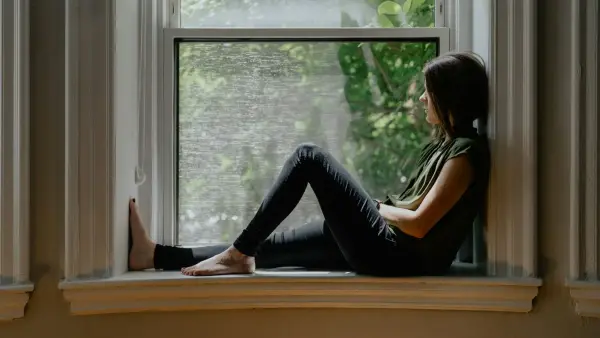
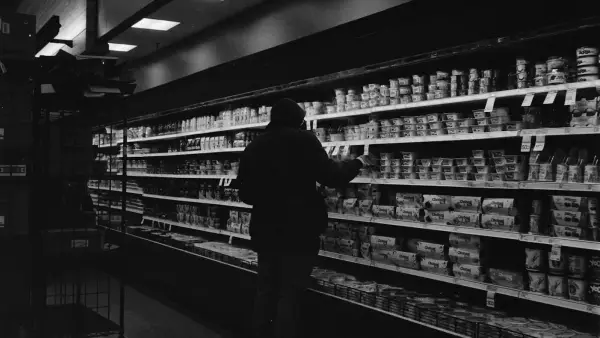
She is 63 and just realized she has never once walked through a parking lot without her keys threaded between her fingers - not because she has ever been attacked but because a girl who watched her mother do it every single night learned that a woman's body in open space is always one decision away from being someone else's problem, and the sixty-three-year-old who grips her keys like a weapon in a grocery store parking lot at four in the afternoon is not paranoid but still performing a vigilance that was never spoken aloud but demonstrated every time her mother reached into her purse before reaching for the door handle
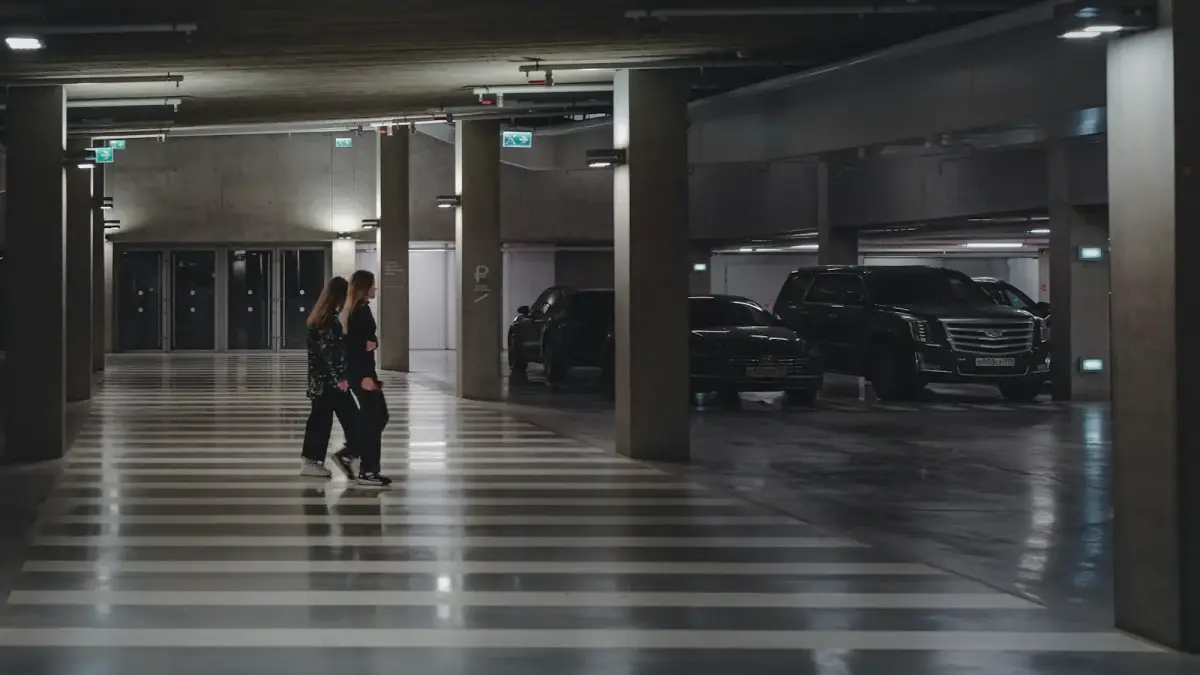
I was standing in a Costco parking lot last Tuesday at three-forty in the afternoon when I looked down at my right hand and noticed my car key wedged between my index and middle fingers, the metal edge pointing outward like a small, dull blade.
The sun was out. There were families loading groceries into minivans ten feet from me. A man was helping his elderly father into a sedan two spots over. Nothing about this moment was dangerous.
And still, my hand had already made its decision before I walked through the automatic doors.
I am sixty-three years old. I have never been attacked in a parking lot. I have never been followed to my car, never had someone grab my arm from behind, never had to use those keys as the weapon my fist had shaped them into. And yet I cannot remember a single time - not one - when I walked across open asphalt without threading metal between my knuckles first.
That realization stopped me mid-step. Not the habit itself, but the fact that I had never once questioned it.
She never said the words
My mother never sat me down and told me to hold my keys like that. There was no conversation, no lesson, no warning delivered over dinner. She never said, “The world is dangerous for women,” or, “You need to protect yourself,” or, “Be careful out there.”
She didn’t have to.
What she did was reach into her purse every single time we left a store. Every time we walked out of a restaurant. Every time we left church, left the doctor’s office, left a friend’s house after dark.
Her hand would disappear into that bag and come out with keys already arranged. Not fumbling. Not searching. The motion was automatic - the purse opened, the hand entered, and the keys emerged pre-positioned, threaded between fingers, ready.
I watched this hundreds of times before I was ten years old.
She never explained what the keys were for. She never told me what she was afraid of. But a child doesn’t need an explanation when the lesson is performed in front of her with that kind of quiet consistency. A child just absorbs.
By the time I was old enough to drive, I was already doing it. I don’t remember deciding to start. I don’t remember the first time I positioned my keys that way. It was already in my body before I had the language to describe it.
The curriculum nobody writes down
A 2019 study published in the Journal of Research in Personality found that children internalize safety behaviors from their parents far more through observation than through direct instruction. The researchers called it “behavioral inheritance” - the way patterns of caution, vigilance, and threat assessment are passed from one generation to the next without a single word being spoken.
For daughters watching mothers, this curriculum is enormous. And it is invisible.
I learned to check the backseat before getting into the car. My mother did it every time - a quick glance through the rear window, sometimes a turn of the head after opening the driver’s door. She never said why. She never mentioned a news story or a cautionary tale. She just looked.
I learned to park under lights. Not next to lights - under them. My mother would circle a lot twice to find a spot directly beneath a lamp post, even if there were open spaces closer to the entrance. I thought she was being picky. I didn’t understand until decades later that she was choosing visibility over convenience.
I learned to walk with purpose. Not strolling, not wandering, not meandering across open space. My mother moved through parking lots and sidewalks and empty hallways with a pace that said, “I know where I am going and I am going there now.” I absorbed that rhythm into my legs before I knew what it meant.
None of this was paranoia. All of it was preparation.
The second skeleton
There is a framework that women carry inside their bodies that has nothing to do with anatomy. It sits alongside the actual skeleton - the bones, the joints, the structure that holds us upright - and it functions like an invisible architecture of readiness.
I think of it as the second skeleton. The one made not of calcium but of accumulated vigilance.
It is the part of you that scans a room when you enter it. That notes the exits. That registers which strangers are paying attention to you and which are not. That calculates the distance between where you are standing and where your car is parked and whether that distance includes any blind spots, any shadows, any stretches of space where you would be out of sight.
This is not anxiety. Anxiety is irrational fear. This is rational awareness that has been built, layer by layer, through a lifetime of observation and cultural instruction so subtle it feels like instinct.
Gavin de Becker wrote about this kind of awareness in his work on threat perception - the idea that what we call “intuition” in women is often a finely tuned detection system built from thousands of small data points collected over years. It is not magic. It is not hysteria. It is a learned intelligence that happens to live in the body instead of the mind.
My mother gave me that intelligence without ever naming it.
What we teach without teaching
I have a daughter. She is thirty-seven.
Last month, we were leaving a restaurant together. It was eight-thirty at night, the parking lot was well-lit, and there were other people walking to their cars around us.
I glanced at her hand as we pushed through the door.
Keys. Between her fingers. Already positioned.
My chest did something complicated when I saw that. Pride and grief and recognition all tangled into one feeling that I still cannot untangle. Because I know - I know - that I never told her to do that. I never gave her a lesson on parking lot safety. I never said, “Hold your keys like this.”
But she watched me. The way I watched my mother. The way my mother probably watched hers.
A 2021 study published in Frontiers in Psychology examined how safety behaviors are transmitted across generations of women in families. The researchers found that daughters of highly vigilant mothers were significantly more likely to adopt the same protective rituals - not because they had been explicitly warned about danger, but because they had internalized their mother’s behavioral patterns as the baseline for how a woman moves through the world.
Three generations of women in my family, all gripping their keys in parking lots. All scanning backseats. All walking with that particular purposeful stride that says, “I am not lingering.”
Nobody taught us. Everybody taught us.
The weight of what is carried
I want to be clear about something. I am not angry about this. I am not writing this from a place of resentment or bitterness or political frustration.
I am writing this from a place of awe.
Because when I think about the sheer volume of what my body knows - the thousands of micro-calculations I perform every time I step outside alone, the constant background hum of spatial awareness that I have maintained for over fifty years without interruption - I am staggered by it.
This is not a small thing I carry. This is an entire operating system running beneath my conscious awareness, and it has been running since I was a child.
The psychologist Daniel Goleman has written about what he calls “emotional intelligence” - the ability to read environments, detect social cues, and respond to unspoken dynamics. What he describes as a skill, women have been practicing as survival.
The difference is that nobody gives us credit for it. Nobody acknowledges the cognitive labor of a woman walking through a parking lot. From the outside, it looks like nothing. Just a woman walking to her car. But inside that body, an entire system is engaged - assessing, calculating, preparing, adjusting.
And it started before she could even name what she was doing.
Not paranoia but inheritance
There is something important in the distinction between paranoia and inheritance.
Paranoia is fear without evidence. It is the mind inventing threats that do not exist. It is disconnected from reality.
What women carry is the opposite. It is fear with centuries of evidence. It is connected to every story their mothers lived, every headline their grandmothers read, every statistic their daughters will encounter. It is not irrational. It is the most rational thing in the world.
And the fact that it is transmitted without words - that it moves from mother to daughter through gesture and rhythm and the quiet choreography of reaching into a purse before reaching for a door handle - makes it more powerful, not less.
Because you cannot argue with something that lives in the body. You cannot debate a reflex. You cannot talk someone out of a behavior they never consciously chose to begin.
My keys are between my fingers right now. I am sitting in my living room, writing this, and I just noticed that my hand has been resting on my keychain the entire time. Not gripping. Just touching. Just knowing where they are.
What I want you to know
If you are a woman reading this, I suspect you did not need me to explain any of it. You already know. Your body already knows. You have been performing this vigilance for so long that it probably feels less like a behavior and more like breathing.
I want you to know that this is not a flaw. It is not evidence that you are too anxious, too careful, too much. It is evidence that you come from a long line of women who paid attention. Who watched. Who noticed what the world asked of them and responded not with words but with the quiet, daily architecture of self-preservation.
You are not paranoid. You are inherited.
And the woman who taught you - whether she was your mother, your grandmother, your aunt, your older sister - she gave you something she probably never knew she was giving. A body that knows how to read a room. A nervous system calibrated to open space. A hand that reaches for keys before it reaches for anything else.
That is not damage. That is a kind of love so deep it bypasses language entirely and writes itself directly into muscle memory.
You carry it well. You have always carried it well. And the girl who watched her mother reach into her purse every single night before walking to the car - that girl grew up to be a woman who has kept herself safe for sixty-three years using a lesson that was never spoken aloud.
That is worth something. That is worth a great deal.