She is 63 and still sets the table with a fork on the left and a knife on the right even when she is eating alone - not for company, not for holidays, not to impress anyone who might walk through the door, but every single night including the Tuesday after her husband died when she pulled out one placemat instead of two and still laid the silverware in the proper positions - because a girl who was taught that eating without a properly set table is not eating but merely consuming learned that the ritual of placement is not about manners but about proving to the empty room that the person sitting in it still matters enough to deserve a proper meal
The Placemat That Changed Everything
I watched my mother set the table last Thanksgiving - not the big table with the good china and the cloth napkins and the centerpiece she’d been arranging since dawn. That table I expected.
It was the small table in the kitchen. The one she uses every other night of the year. The one pressed against the wall by the window where the light comes in gold around five-thirty in November.
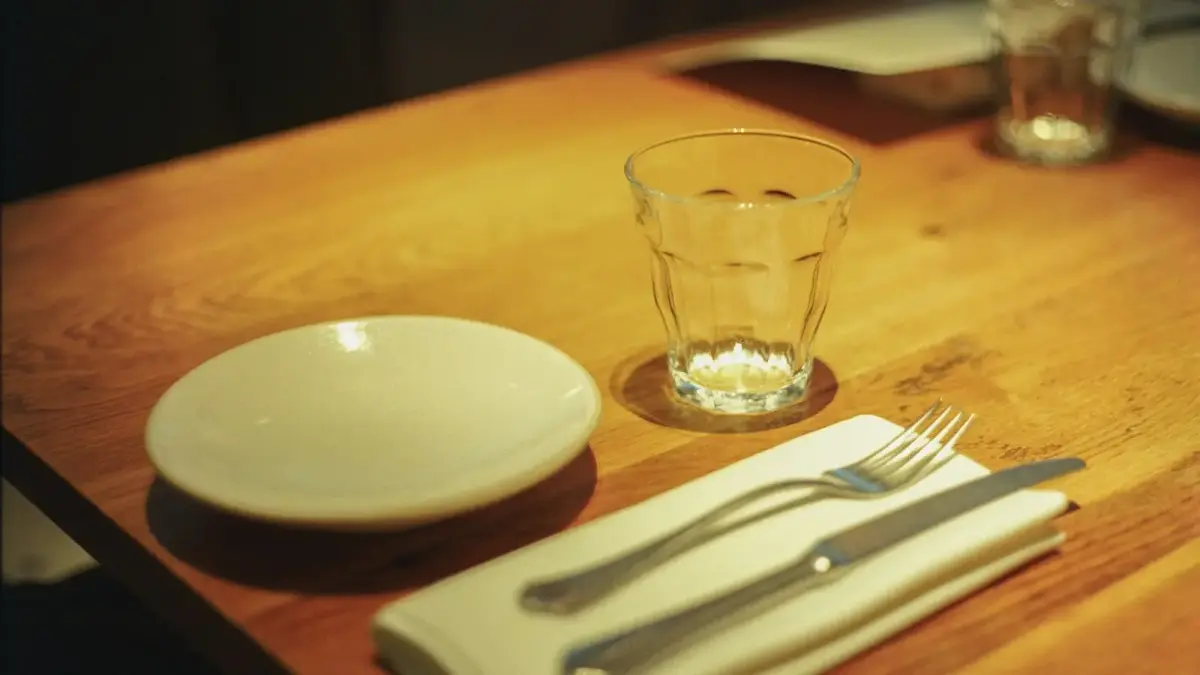
She was alone. She’d be eating leftover soup, reheated in a pot because she refuses to use the microwave for anything she plans to actually taste. And she was setting that table like somebody was coming. Fork on the left. Knife on the right. Napkin folded into a neat rectangle and placed beneath the fork. A glass of water - not a plastic cup, a proper glass - positioned just above the knife.
I stood in the doorway and something tightened in my chest that I didn’t have a name for.
“Mom,” I said. “You don’t have to do all that.”
She looked at me the way you look at someone who has just said something both true and completely beside the point.
“I know I don’t have to,” she said.
And then she sat down, unfolded her napkin, placed it in her lap, and ate her soup with the posture of someone who had been watched her entire life - even though no one had been watching for years.
The Girl Who Was Taught That Eating Has Rules
My mother grew up in a house where meals were not casual. They were structured events with expectations. Her mother - my grandmother, a woman I only knew through photographs and stories repeated so often they calcified into myth - believed that how you ate said something about who you were.
Not what you ate. How.
A plate placed on a bare table was not a meal. It was giving up. A fork picked up before the napkin was unfolded was not eating. It was grazing. A glass filled and set anywhere on the table instead of in its proper position was not a drink. It was carelessness wearing a human face.
These were not suggestions. They were the architecture of dignity as my grandmother understood it.
And my mother learned them the way children learn everything that matters - not through explanation but through repetition, correction, and the quiet withdrawal of approval when the rules were broken.
By the time she was ten, she could set a table in the dark. By the time she was twenty, she couldn’t sit down to eat without doing it first. By the time she was sixty-three, she had laid silverware in the correct positions roughly sixty-eight thousand times, and she could not tell you whether she did it because she wanted to or because she had simply never stopped.
What Ritual Becomes When Nobody Is Watching
There is a particular kind of loneliness that lives inside consistency.
Not the dramatic loneliness of an empty house or a phone that doesn’t ring. The quieter kind. The loneliness of doing something beautiful that no one sees. Of maintaining a standard that no one else requires of you, in a room where the only witness is the chair across the table that used to be occupied.
A 2019 study published in the Journal of Personality and Social Psychology found that personal rituals - repeated, structured actions performed with intention - serve a psychological function far beyond habit. They provide a sense of control, reinforce identity, and buffer against the destabilizing effects of grief, loss, and transition.
The researchers called it “ritual efficacy.” The idea that performing a structured sequence of actions makes people feel more grounded, more present, more real.
My mother would not use those words. She would say she sets the table because that is what you do before you eat. But what she means - what I think she has always meant - is that the ritual is the only part of the evening that still feels like hers.
The soup is just soup. The kitchen is just a kitchen. But the fork on the left and the knife on the right - that is someone saying, with silverware, I am still here and I still count.
The Tuesday After He Died
My father passed on a Sunday in March. It was not sudden and it was not a surprise, but it was still the kind of loss that rearranges the furniture in your chest and leaves you bumping into things in the dark for months.
My mother did not collapse. She did not stop functioning. She was, in those first days, almost eerily composed - making phone calls, accepting casseroles, thanking people for flowers with handwritten notes that were in the mail before the funeral.
But on Tuesday - two days after - I came by the house unannounced and found her standing at the kitchen table, holding a single placemat.
She had already pulled two from the drawer. Force of habit. Forty-one years of setting two places will do that to your hands before your brain catches up.
She was holding the second one, looking at the empty side of the table, and I could see the exact moment the math landed.
One placemat. One fork. One knife. One napkin. One glass.
She put the second placemat back in the drawer. She set the table for one. And she sat down and ate whatever was in the refrigerator - I don’t remember what, and I don’t think she does either.
But the fork was on the left. And the knife was on the right.
She did not skip the ritual. She edited it.
And I think that single edit - two placemats to one, performed without ceremony in a kitchen that suddenly had too much silence in it - was the bravest thing I have ever seen a person do.
The Space Between Caring for Yourself and Performing Care
Here is the thing about self-worth that nobody talks about.
Sometimes it looks like love. And sometimes it looks like a cage you built yourself and decorated so beautifully that you forgot it had bars.
My mother sets the table every night because she believes she deserves a proper meal. That is real. That is self-worth operating at the level of daily action, which is the only level that counts.
But my mother also sets the table every night because she does not know what would happen if she stopped. She has never tested the hypothesis. She has never pulled a bowl from the cabinet, ladled soup into it, and eaten standing at the counter with her fingers wrapped around the rim.
She has never eaten cereal out of the box at midnight. Never grabbed a handful of crackers and called it dinner. Never sat on the couch with a plate balanced on her knee and a show playing that she wasn’t really watching.
These are not dignified meals. But they are the meals of a person who is comfortable enough with herself to eat badly sometimes. To let the ritual go and see who is left when the table is bare.
Psychologist Donald Winnicott wrote about the difference between a “true self” and a “false self” - the version of ourselves we construct to meet the expectations of the world versus the version that exists underneath, messy and unstructured and hungry in ways that don’t come with place settings.
My mother’s true self, I think, might want to eat toast over the sink sometimes. But the girl who was taught that eating without a properly set table is merely consuming has never given that self permission to exist.
When Your Daughter Tells You to Stop
“Mom, you don’t have to do all that.”
I said it casually. Like it was obvious. Like I was giving her permission to relax.
But what I was really saying, without knowing it, was something much larger. I was saying: you are worth something even when the table is not set. You are still a person even when the napkin is not folded. You are still deserving of a meal even when you eat it the way people actually eat when nobody is watching - quickly, imperfectly, without ceremony.
She heard me. I know she did.
And she set the table anyway.
Not because she disagreed. But because letting go of the ritual would mean confronting a question she has spent sixty-three years avoiding: if I stop performing the rituals that prove I matter, will I still believe that I do?
A 2021 study in Frontiers in Psychology found that individuals who tied their self-worth to behavioral consistency - maintaining routines, upholding personal standards, performing daily rituals - experienced significant anxiety when those routines were disrupted. The rituals weren’t just habits. They were load-bearing walls. Remove one and the whole structure trembles.
My mother’s table setting is a load-bearing wall.
The Fork on the Left Is Not About the Fork
Every night, around five-fifteen, my mother opens the silverware drawer. She pulls out a fork, a knife, and a spoon. She places them where they go. She fills a glass. She folds a napkin.
And she sits down in a quiet house and eats a meal that nobody else will ever know about, at a table set with the kind of care most people reserve for guests.
This is not a story about manners. It is not a story about discipline or upbringing or the way women of a certain generation were taught to measure their worth in tablescapes.
It is a story about the question that lives underneath every small, private, daily act of self-care: am I doing this because I believe I deserve it, or because I am terrified of what it means if I stop?
The answer, for my mother, might be both. And I think that is true for more of us than we would like to admit.
The gym membership you maintain even though you hate going. The skincare routine you perform every night even when you are exhausted. The bed you make every morning even though you will unmake it in sixteen hours. These are not always self-love. Sometimes they are self-love. And sometimes they are the structures we build to keep from asking whether the love would still be there without them.
What I Have Learned From Watching Her Eat Alone
I am not going to tell you to stop setting the table. I am not going to tell my mother to stop, either.
Because here is what I have come to understand after watching her lay silverware in the proper positions for my entire life: the ritual is not the problem. The rigidity is not the enemy.
The only thing that matters is whether you could stop and still feel whole.
Not whether you do stop. Whether you could.
My mother is sixty-three years old. She has eaten approximately twenty-three thousand meals alone in the years since my father died. Every single one was served at a properly set table with a fork on the left and a knife on the right and a napkin folded beneath the fork.
And I love her for that. I love the stubbornness of it. The daily insistence that she is a person worth feeding properly.
But I also hope - quietly, in the part of my heart that she cannot hear - that one night she pulls a bowl from the cabinet, fills it with something warm, and sits down without any of it. No placemat. No knife. No napkin. Just a woman and a bowl and the radical, terrifying, beautiful act of eating without proving anything to anyone.
Not because the ritual is wrong.
Because she would finally know that she is enough without it.